Featured

SUMMER AT THE CENTRE

JUNE – JULY, 2021

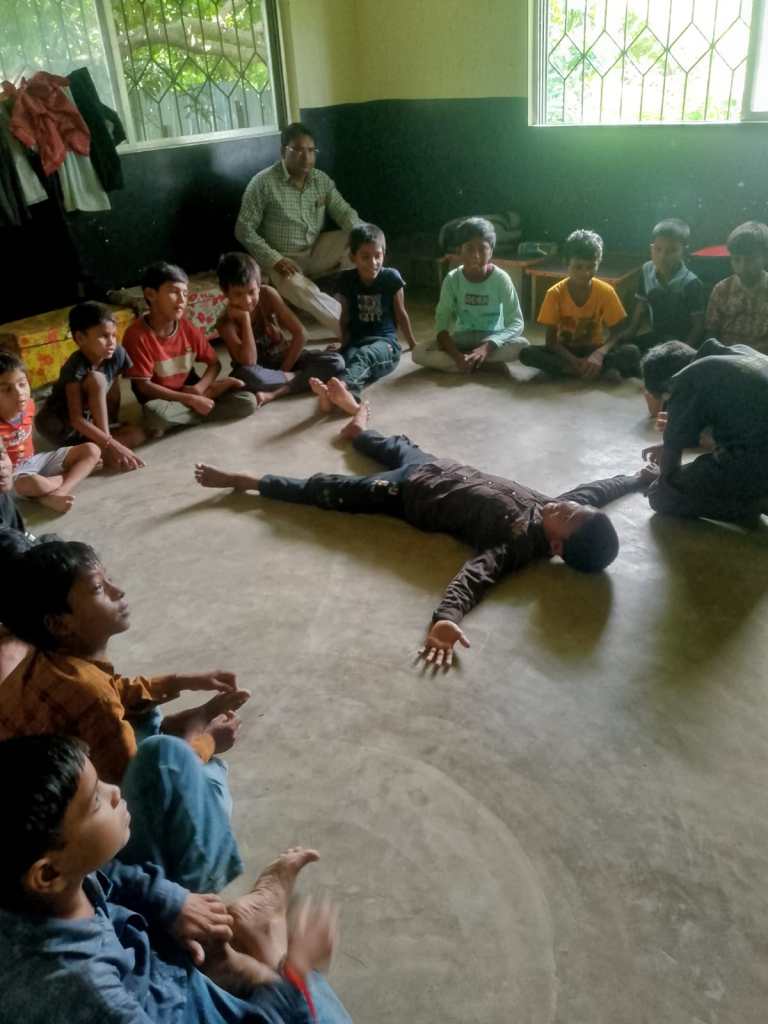
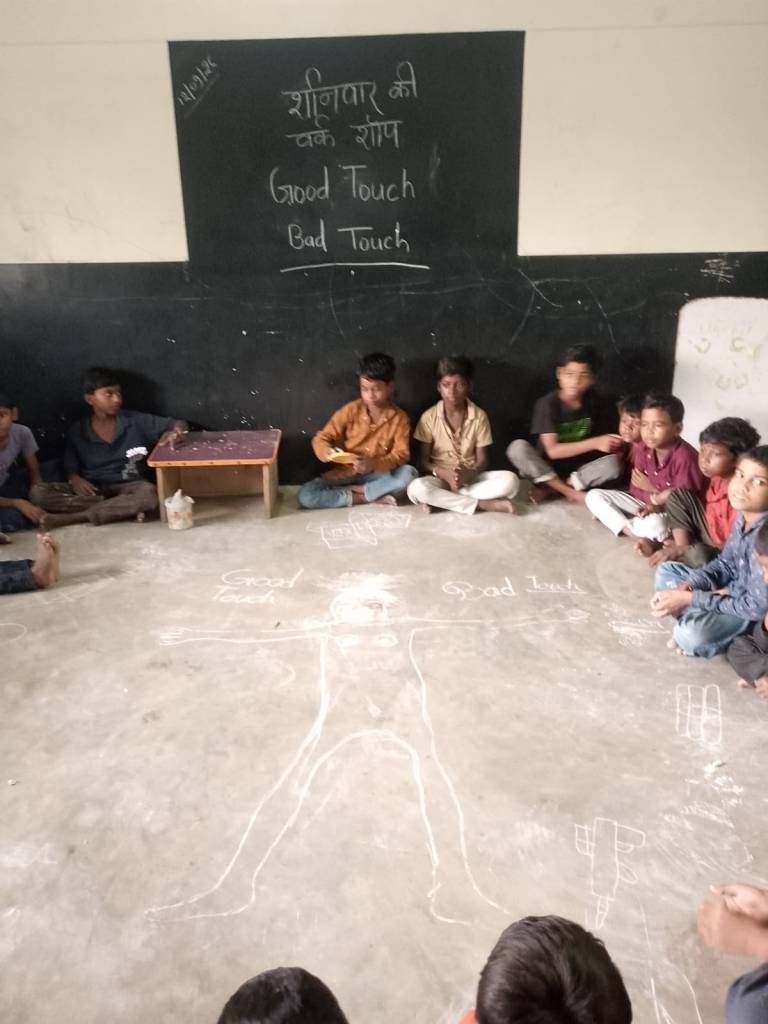
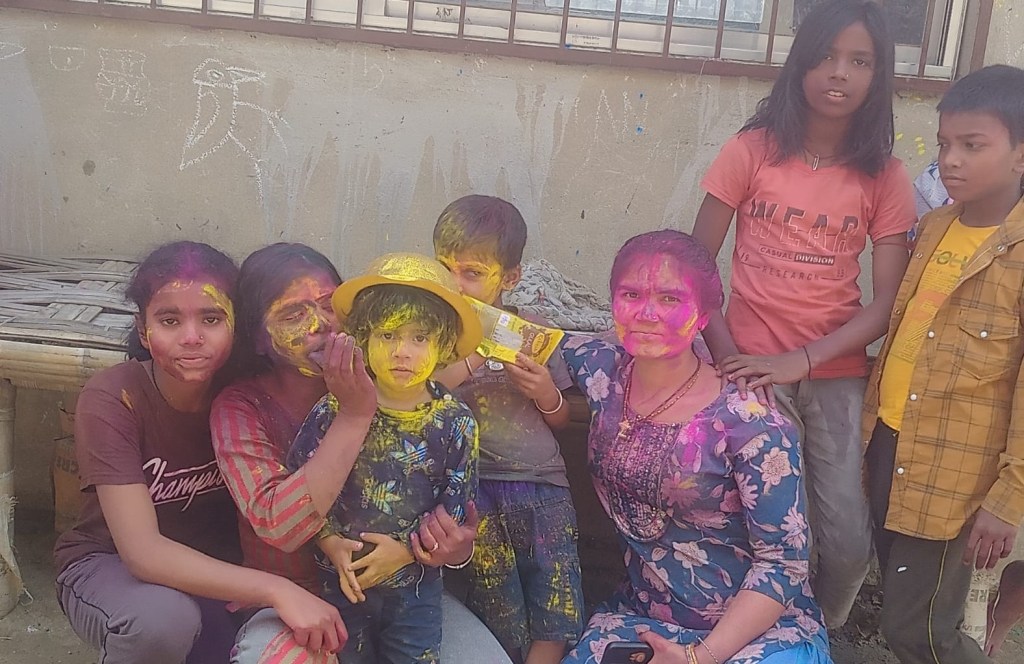
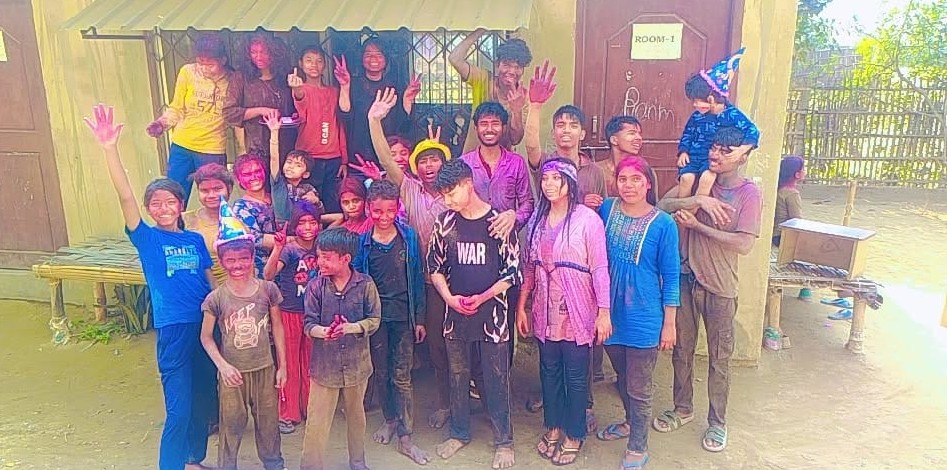
This is an update on May and June at the MBSNS centre. Along with the regular study, Dhyan, and sports, the highlights for this month included a workshop for children on understanding good and bad touch and a parents learners (facilitators and students) meeting.

Focus on learning languages


The Hindi Class – In April, children started with reading simple Hindi text and learning to write summaries. In May and June, they began engaging with the language in new ways. Children prepared a song in Hindi, which they chose from the songs they had heard at the centre. They prepared the song ‘tu zinda hai toh zindagi ki jeet mein yakin kar’.  They also prepared a play with Abhimanyu’s help. It had been over a month since the children moved into the centre, and they started missing their parents. Due to the covid protocol, children were not allowed to meet the parents while at the centre. Although they were allowed to call home on Sundays, a new activity of writing letters to the family was also initiated. Engaging in these activities gave children a sense of achievement, which they could be proud of. Their previous engagement around learning was restricted to just reading and writing, which did not give them that sense of achievement.

In these months, some concepts of grammar were also introduced like सर्वनाम and विशेषण (pronouns and adjectives). At the same time, working on phonetics is a continuous process as few sounds in regional language are quite intermixed in pronunciation like र (Ra) and ड (Da), स (Sa) and श (Sha).


The English Class- In April children learned the basics of phonetics and vocabulary building exercises in English. We made our first phonetic videos and completed all 26 alphabets by June.

In May and June, the two-hour English slot was reorganized into three parts – immersion songs, the introduction of a new concept, and reading or writing groups or games (depending on what children chose).

The children have come a long way since April. When they came to the centre, they knew alphabets and could read three-letter words without understanding the meaning. In these last two months, they now sing along a selection of 6 songs displayed on a projector screen. This repertoire of songs has 3-4 nursery rhymes like Old Mac Donald had a farm, to anthems like Imagine (by John Lennon), what a wonderful world (Louis Armstrong), the sound of silence (Simon & Garfunkel), and action songs like Ram sum sum. These two months focused on understanding and learning nouns, pronouns, verbs, prepositions, and other parts of speech through fun and interesting activities like charades and other games.


Parents Learners (Facilitators- students) meeting (PLM)

13th June was a special day. It was the first parents meeting at the centre. In some cases, both parents could not come due to financial constraints. For example, Jaikrishnaji could not come because he had to tend to the mango orchard, which they have leased this year. Reeta Devi and Hareram Bhaiya had similar financial constraints, while Sanjay Paswan has migrated to Bengal for work. In other cases, younger siblings came, enthusiastic and clingy, curious about their older sibling’s new home – The Centre.

The centre facilitators shared their idea of holistic education with the parents. Abhimanyu emphasized the need for parents to interact with teachers and caregivers, as this provided a two-way interaction and allowed for a common aim for their children. He shared how all children were bright and a joy to work with. He also reiterated that children enjoyed learning and there was more to learning than just memorization. Mithun further talked about the schedule at the centre and how each child followed the same and sometimes went over and above the schedule putting in additional shram daan (manual work) or study hours. He talked about pedagogy and interactions with respective teachers of English, Hindi, Maths, Science, and Computers. Sangeeta talked about children’s well-being and different learning styles.

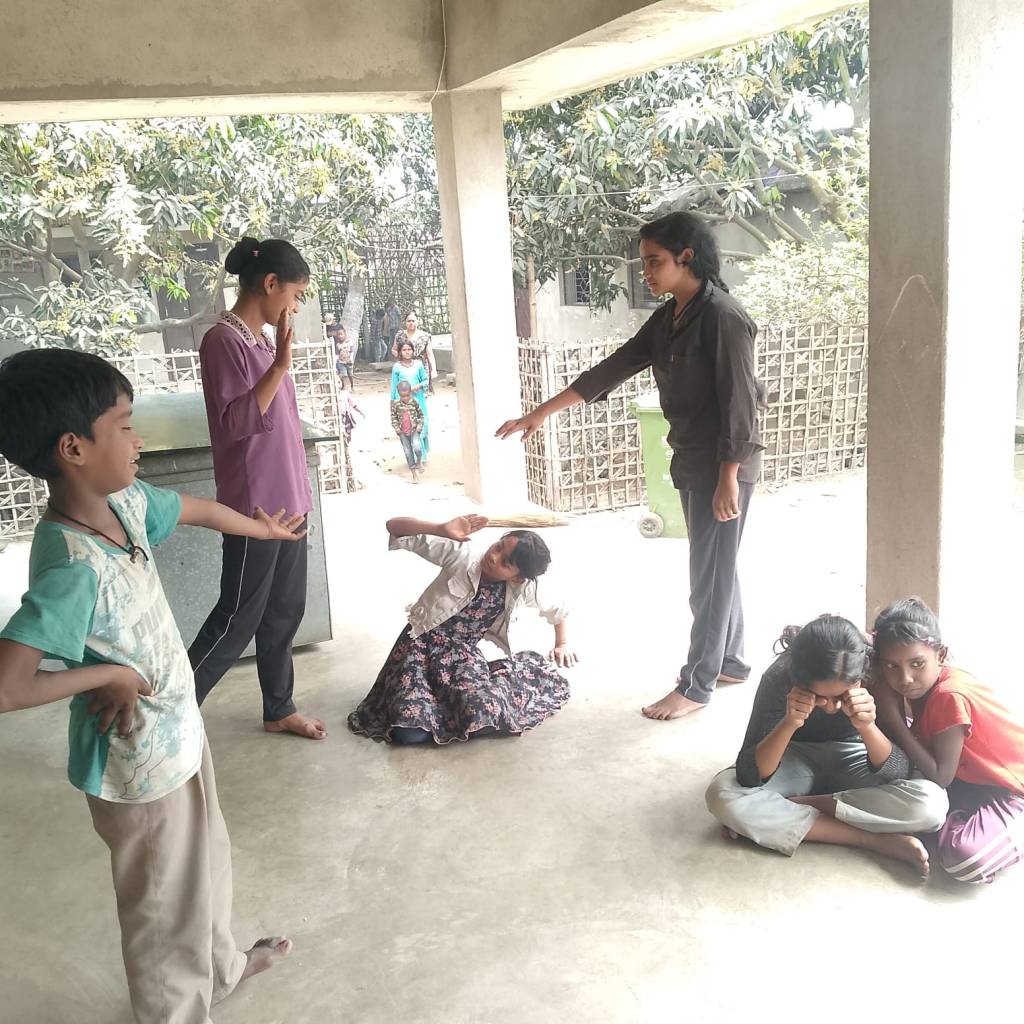
Everybody, including children, parents, and facilitators, introduced themselves. This was followed by a skit that children had prepared as part of their Hindi class. Over the last two months, older children have written stories in their English class, which was also typed in their computer class. Each child chose one story which they read in English and then explained in Hindi. This was followed by the children giving their parents a copy of the compilation of stories named “Our First Book” and a letter each child had written to their parents in Hindi class. This session ended with children singing the song “tu zinda hai to zindagi ki jeet men yakeeen kar.”

After the children left, the parents and caretakers sat for an open session, in which parents gave their feedback and discussed their children’s wellbeing at the centre. Most were very happy to see that their children had adjusted well and did not want to leave the centre to go home. They were also impressed by the confidence they saw in their children. All of them were convinced they wanted their children to continue at the centre. We also discussed holidays and the academic calendar, emphasizing that we did not want children to take frequent leaves. Parents suggested holidays during the festive season, and together we have worked out a holiday calendar till 15th March 2022. Mandavi, one of the mothers asked if all parents should contribute to the running of the centre and it was decided that each would do what they can. For example, those who were daily wage labourers would try and give sharm daan at the centre; those with more stable incomes would try contributing financially; and those with farming would contribute in kind.

The Personal Safety Workshop

On 9th June, we organized a workshop on personal safety facilitated by Mithun and Abhimanyu. The workshop used a module from Arpan, aimed at preventing child sexual abuse. It introduced the idea of good and bad touch and explained the need to reach out for help from adults in their trusted circle.

Tree Plantation

Love is a special quality that children have, and their love has no boundaries. This thought is beautifully captured in a famous Hindi song “जो भी प्यार से मिला हम उसी के हो लिए” (becoming one with everyone who meets us with love). The centre has a patch for planting trees and a small plot marked for farming. From the very first day, children have loved the idea of planting, watering, and caring for plants. They have also found different levels of connections with the stray dogs, who have found a home at the centre, by petting, feeding and hugging them. This is their silent connection with nature – plants and dogs. A world dominated by the anthropocentric view has made nature peripheral to our existence; we hope children growing up at the centre will be able to find their connection with nature. It is with this thought in mind that children were part of a plantation drive this monsoon, taking ownership and responsibility of attending to one tree they planted.

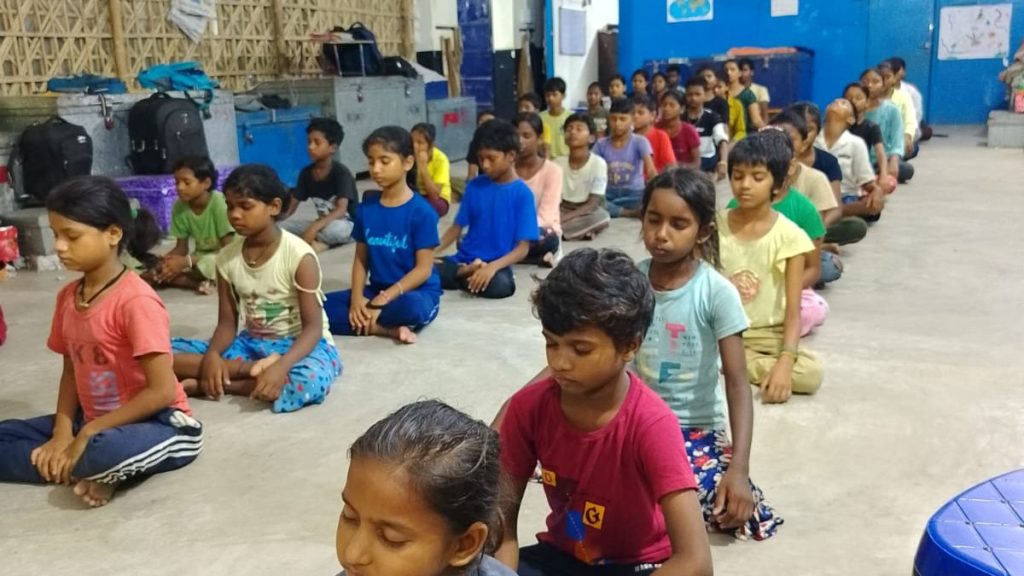
And so it goes on … learning in and out of classrooms. In the spirit of holistic education, children continue to engage with physical exercises, sports like athletics, kho kho and kabaddi in the evening, and Dhyan. Though mostly the everyday shram daan involves cleaning and working in the field and caring for trees on campus, but sometimes children find creative ways of doing shram daan. For instance, Rani decided to be the centre barber, styling children’s hair. Not only was it a creative pursuit but it also meant we could limit the outside exposure of the centre inhabitants during these COVID-19 times- one hairstyle at a time!

We are available at Abhimanyu (9460969188) ashekhawat.16@stu.aud.ac.in kamayani (9771950248) kamayani02@yahoo.com, mbsnsbihar@gmail.com
October 2026: A New Practice of Reciting Doha in the Morning Assembly

Regular learning continues across subjects at Jeevanshala, from electricity and division to languages, waterways, and Social Science. Children beginning to read books willingly is a joyful moment that we never tire of.

Every morning, children have started a new routine of reciting dohas at assembly and exploring language and life values together. Typing is now a regular part of the day, and computer classes build children’s confidence with digital skills. In Hindi, they explore family relationships and practise reading longer words. On the terrace, children run an EVS experiment that uses sunlight to help them understand temperature.

On one Saturday, children took the lead and told us all about a special activity they enjoyed.

We also share part 3 of our series “Jeevanshala Ki Awaazein” on our social media with Teacher-Learner Sulochana who tells the story of how she became an educator with the centre and describes how she teaches our students. Her words bring you closer to the children and to the people who learn alongside them every day.

Before the festive break, a parent-teacher meeting brings families and TLs together to talk about the children’s progress. Children have now left for a month long festive break.

September 2026: Hans aur Siddharth, Litmus Tests and Gilli-Danda

Team Manthan from Patna visited Jeevanshala and spoke with children and TLs about learning, equality, and the importance of education. We also introduced Priyanka, our new Swasthya Snehi, who joins our growing care system.

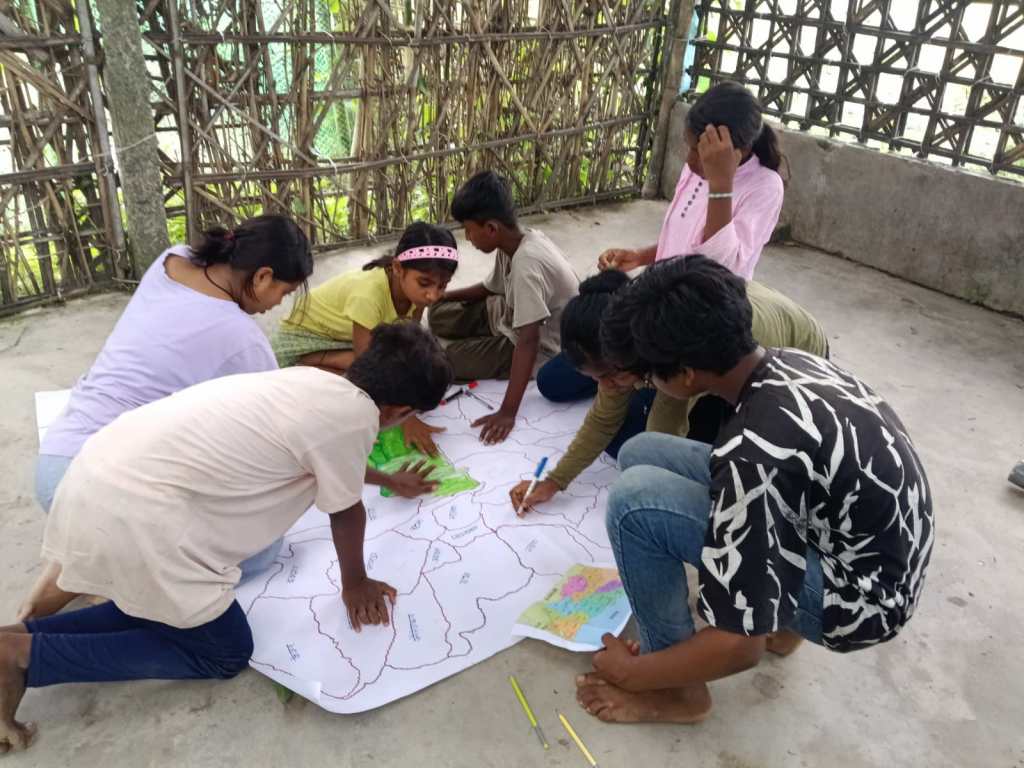
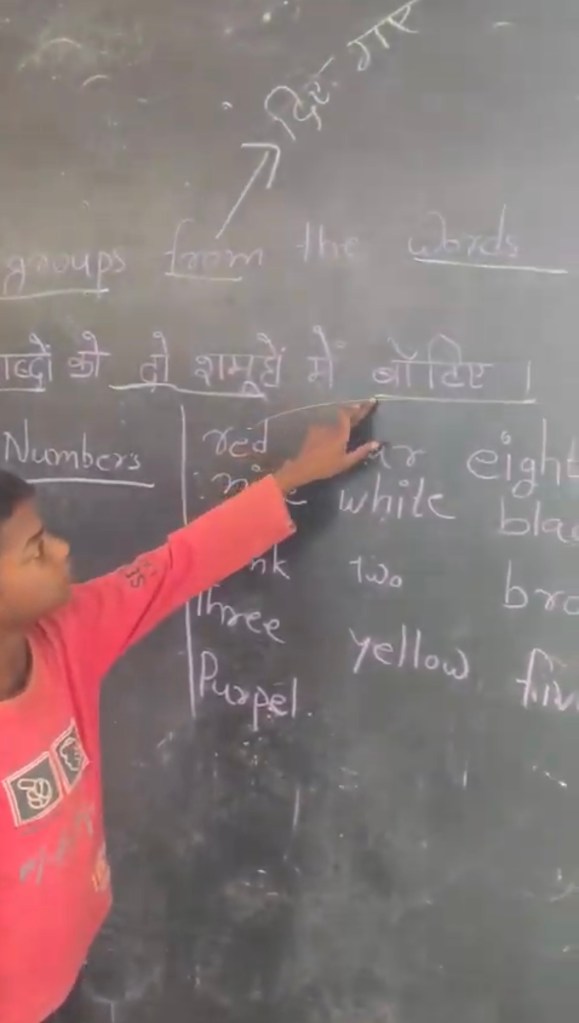
Children finally finished the maps of India and Bihar that they started from scratch weeks ago. They presented their work and shared what they learnt at morning assembly. Younger children moved from speaking English words to writing them and forming small sentences. They also learnt colours through sensory games, practised coupled words in Hindi, and studied Good Touch and Bad Touch. Senior students traced plant growth from germination to the young plant stage, worked on equations in Maths, and studied the stages of human life in Science.

Experiments brought science to life. Children showed that air occupies space through practical experiments and tested the acidity of lemon with litmus paper. They learnt multiplication through movement activities and division through paper activities, and they turned Maths into a group-making game. Others recited dohas at assembly and learnt English through dumb charades.

Children also performed. They turned library stories into a play and staged Hans aur Siddharth amid the greenery to explore compassion and the protection of all living beings. At Saturday’s Theatre of the Oppressed workshop, they wrote and performed plays on education, Gaon aur Baadh, and friendship and trust. Shujaat Ali Khan’s Gaay introduced them to the beauty of classical music.

Evenings stayed lively with sports led by TL Priya, football, frisbee, and gilli-danda. The month ended, as always, with the much-loved chicken party.

August 2026: Independence Day Celebrations and Special Guest Visits

In August, we launched a new series on our social media called Jeevanshala Ki Awaazein, which brings you closer to Jeevanshala through short videos of our Teacher-Learners sharing their journeys with the centre. Sangeeta shared who our children are, what makes learning here different, and why nutritious meals matter to every child’s journey. Munchun Di describes how she teaches with sensitivity, contextual activities, and play-based learning. She explains that we group children by learning level rather than by age or class number, and that our assessments focus on constructive feedback instead of marks, which helps children build confidence and stay motivated.

After the monsoon break, children came back with holiday stories, and we held health and hygiene checks. Goldy returned through the Artist fellowship and led creative activities that helped children and TLs see everyday things differently. Children sorted paper, plastic, leaves, and other waste by their properties and possible uses. Goldy also introduced TLs to Bloom’s Taxonomy and showed them how to strengthen critical thinking through engaging activities.

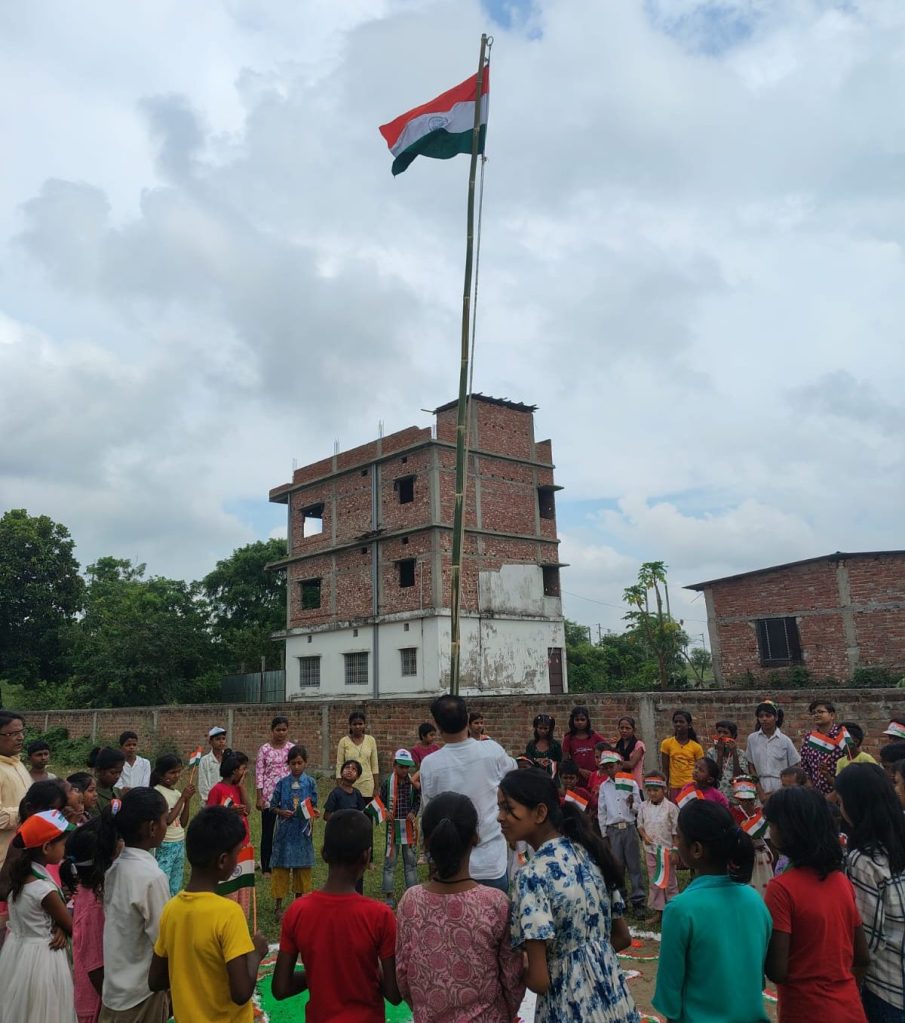
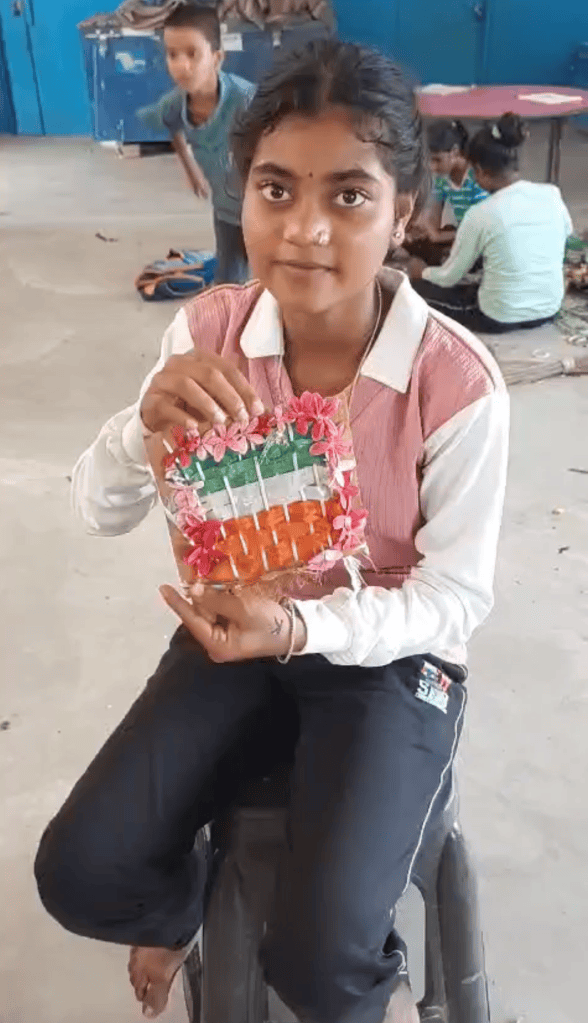
On Independence Day, children painted a colourful rangoli of India that celebrates freedom, fraternity, and equality. Shankar ji hoisted the flag, and everyone shared bhujia and boondi.

Visitors filled the centre with energy. Bhojpuri folk singer Raju ji also came to the centre to interact with our children. He sang cultural folk songs with them and spoke about the roots of Bhojpuri music. Kannan Gopinathan led mental maths activities, shared his journey, and encouraged children to dream big. Children also pulled on their new house-wise T-shirts and felt a stronger sense of belonging.

July 2026: Monsoon Energy, 15 New Students and a First Pasta Party

When the seasons changed, some children fell sick, and we gave them extra care so they could return to their studies soon. During the monsoon, we also made sure children received timely medicines, and we took them on a refreshing walk around the Van Vibhag area.

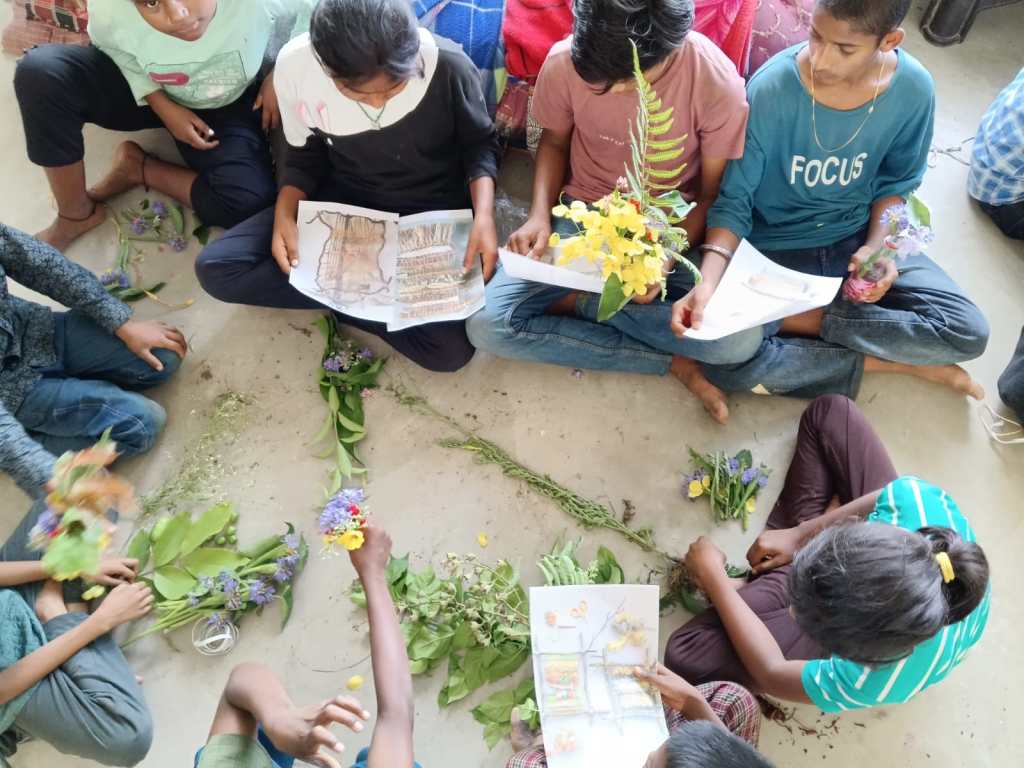
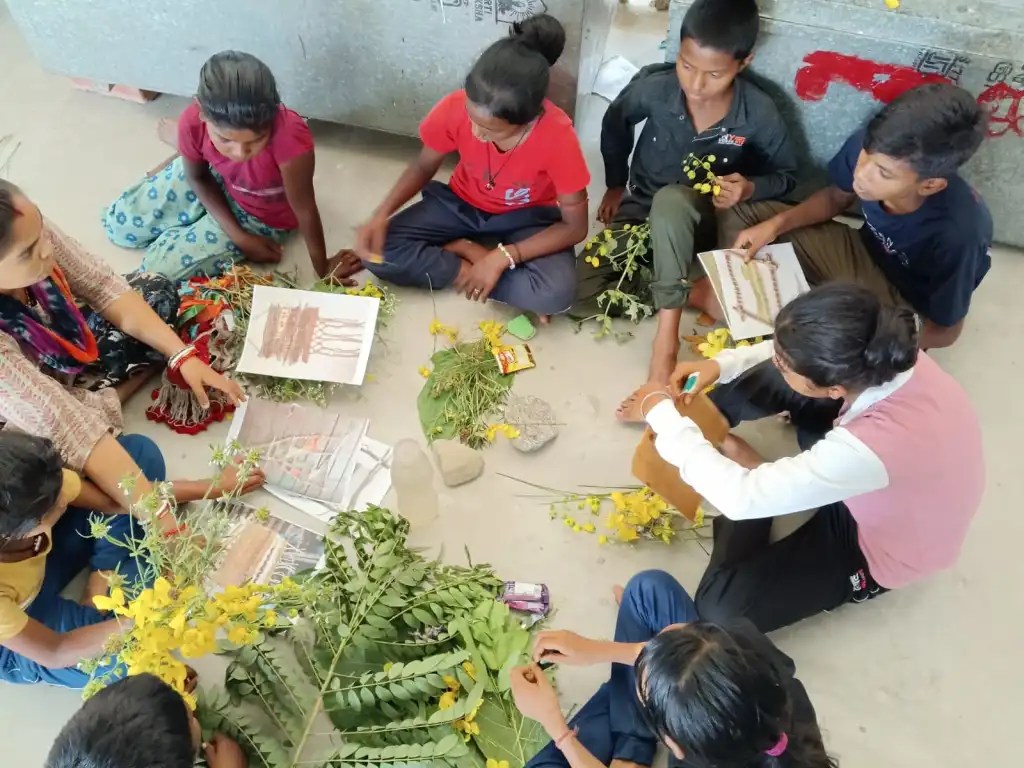
Senior students learnt percentages, while younger children made herbariums to understand plants and leaves. In science, children ran experiments on physical changes and cloud formation. Hindi classes read stories aloud and built new words with paper cut-outs and vowel signs (matras). EVS lessons explored state capitals through word games and activities on the power of collective action. Children also coloured states and districts together to finish their large maps of India, Bihar, and India’s rivers. Younger children drew and wrote about family, village, nature, and farming.

After admission interviews for Classes 5–8, 15 new students joined Jeevanshala. They started with games that helped them learn each other’s names, and they quickly made friends.

Teacher-learners kept growing too. While children enjoyed extended playtime one Saturday, teachers watched a film by the Muskan organisation on innovative teaching methods and reflected on building more trusting relationships with students.

The Monsoon Quiz brought teams Hariyali, Saavan, Baadal, and Baarish together to compete in English, Science, Maths, and EVS Team Hariyali took the win.

The month ended on a delicious note. Children made pasta for the first time, enjoyed chocolate ice cream, and watched Mulan. After the parent-TL meeting, they headed home for a two-week monsoon break.

June 2026: Jeevanshala Students Learn on Floors, Walls and Under Mango Tree

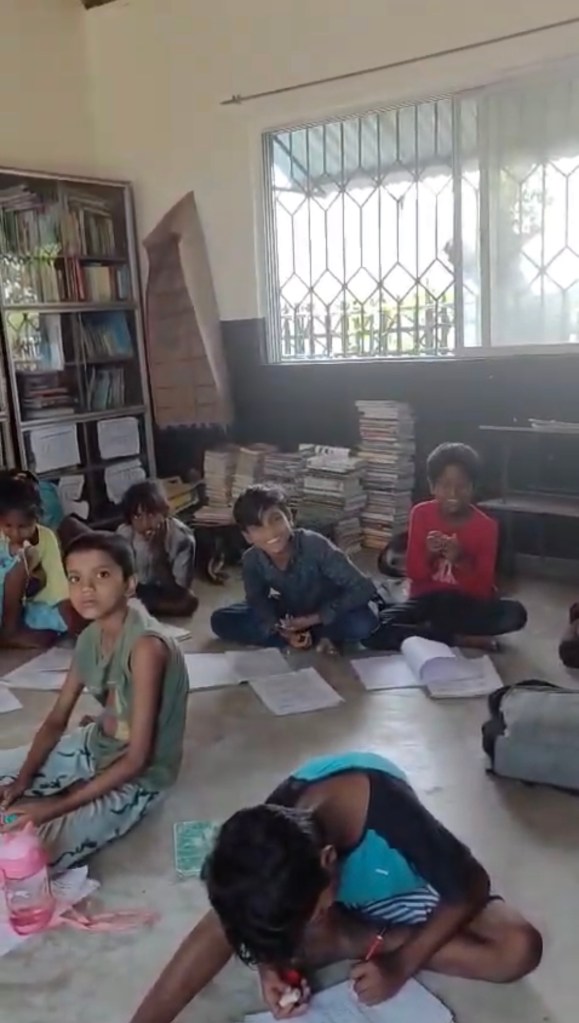
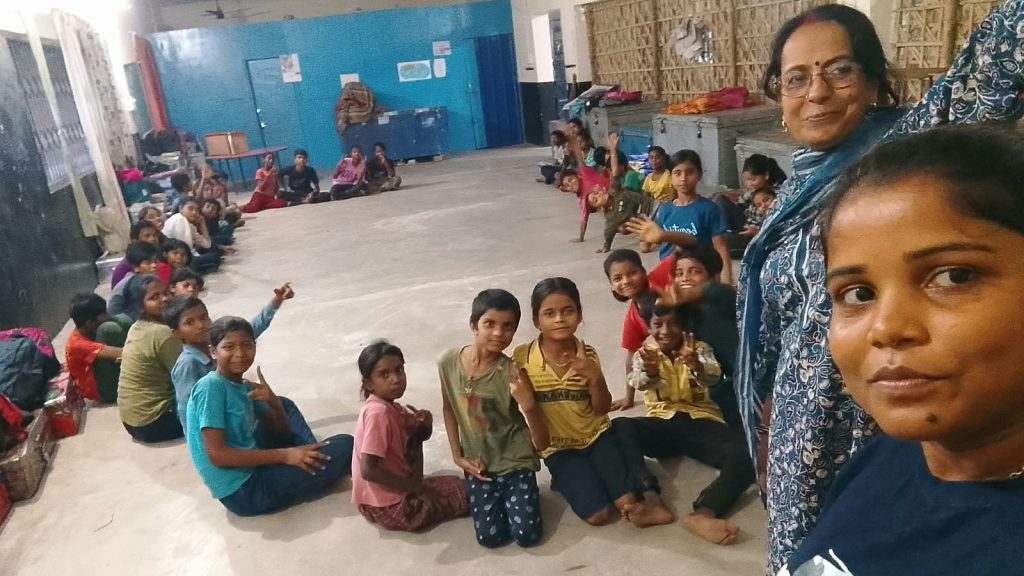
Gulab Group children turned the floor into their notebook as they practise English sentences. Others learn at their own pace, on the floor or against the walls, wherever they feel most comfortable. In Hindi, children read a chapter of Hind Mahasagar Mein Ek Chota Sa Hindustan and built confidence reading aloud.

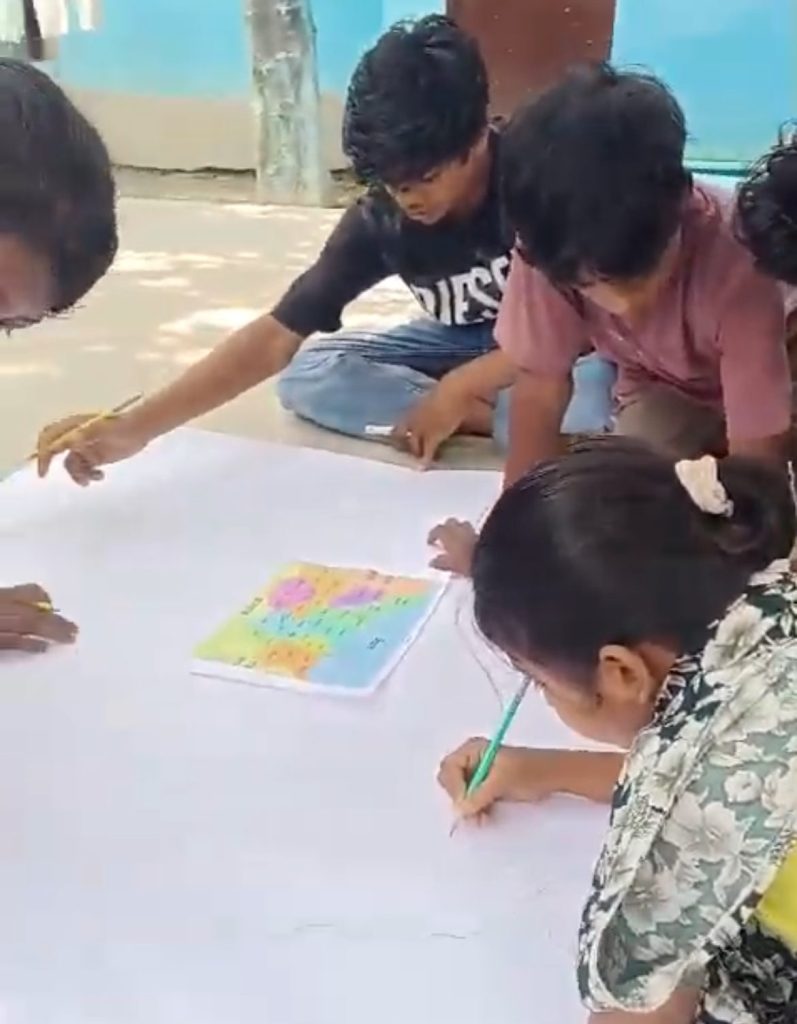
For Maths classes, TLs used leaves, scrap materials, and play money to explore numbers and transactions. In science, children watched planted seeds grow and wired up batteries and bulbs to build electric circuits. EVS lessons cover state capitals, sports, butterflies, fish, and colourful birds. A visit to the forest department area teaches them about plant parts and the diversity of nature. Instead of buying maps, children are drawing large maps of India, Bihar, and India’s rivers using the grid method, blending art with geography.

Children rescue a baby squirrel and help it reach safety. Together they cleaned the playground and learned responsibility through action. Saturday workshops focus on cleanliness, organisation, hygiene, and necessities. Music teacher Rimjhim visits in person, and we welcome Rehman Ji, who joins Jeevanshala to teach Urdu.

Children pluck mangoes straight from the trees around the centre as the season arrives. At the Saturday sports meet, they play games, build teamwork, and cheer on a mixed match with girls and boys playing side by side.

From grid-drawn maps to rescued squirrels, June shows that at Jeevanshala, learning happens everywhere.

May 2026: Homemade Scales, Tree-Shade Classrooms and a Month of Learning by Doing

May was a month of fresh starts, curious hands, and plenty of learning under the open sky. Jeevanshala reopened after the summer break with children arriving full of energy for the new semester. The centre got a fresh coat of paint, yet its bamboo spaces and grounded spirit stayed just as they were. Children began Math lessons by building their own weighing scales from discarded bottles and sticks, and started typing practice with plenty of curiosity.

When the heatwave hit, Hindi classes moved under the shade of trees. Maths lessons explored volume through water measurement, and the newly painted black walls turned into surfaces for practising shapes and drawings. Students from TISS visited and spent time with the children, who shared stories about their villages, their culture, and the practical ways they learn. PE Team Leader Priya introduced Frisbee after attending a workshop in Assam.

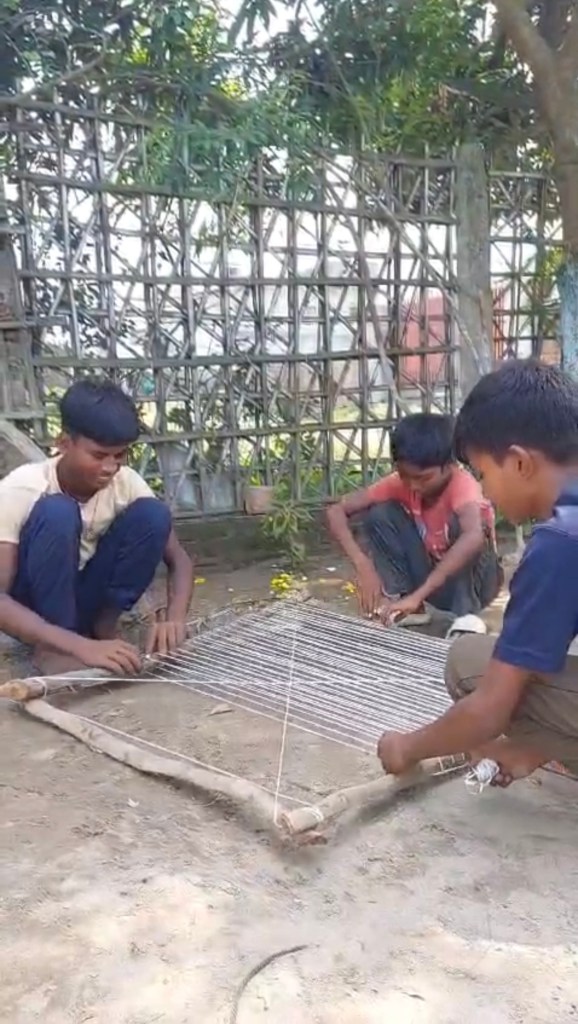
Making, testing, and observing. Artist Educator Grant Fellow Goldy joined us through the Artist India collaboration, working with children through art, touch, and observation. In science, children tested protein in different foods, learnt about types of roots, and explored natural and synthetic fibres before trying the basics of weaving. Hindi classes explored vowels.

For the Saturday workshops, senior students learnt sewing, while younger children wrote and shared stories in a reading circle. In another session, students observed Jeevanshala closely and described their favourite and least favourite spaces in detail.

From homemade scales to woven threads, May showed what happens when children learn by doing, observing, and creating. We can’t wait to see what June brings.

March-April, 2026: Celebrating Holi, International Women’s Day and Attending Deena Bhadri

The month opened with a spirit of togetherness as Ramzan was marked with a joyful community Iftar, accompanied by thoughtful conversations about fasting and self-discipline. Senior students took the initiative to organise a science exhibition on species extinction for younger learners. Saturday plays explored themes of groundwater depletion and the importance of honesty, while a visit to the local Deena Bhadri fair brought learning to life through a colourful community experience.

Saturday plays
Saturday plays

The following week brought lessons in care, mindfulness and resourcefulness into everyday life. Students learned to mend their own torn mosquito nets, understanding the value of repairing and reusing things. On Holika Dahan, each child wrote down a habit or thought they wished to let go of and consigned it to the flames as part of a simple yet meaningful ritual. Holi was celebrated with laughter, colours and hands-on cooking activities. The school also marked International Women’s Day through student-made peace posters and a neighbourhood rally, taking its values of peace and equality beyond the school premises and into the wider community.

Mid-month brought imagination and creative expression to the forefront. Theatre of the Oppressed sessions conducted by Kaushika, a volunteer from Banaras, introduced students to new ways of storytelling, participation and self-expression. Music learners were equally excited by the arrival of a new Casio keyboard, which brought fresh enthusiasm to their regular practice and learning.

As March drew to a close, students began preparing for their end-of-session assessments with the steady guidance and support of their TLs. Parent–TL meetings were planned for after the assessments, allowing everyone to reflect on the children’s progress and learning journey. With the completion of the academic session, Jeevanshala prepared to pause for its month-long summer break before welcoming everyone back for another year of learning and discovery.

February 2026: Experiments, Exhibition and Iftaar at Jeevanshala

The month began on a warm note as students returned refreshed from the winter break, eager to reconnect with friends and settle back into the flow of learning. Students built historical models of iconic Indian monuments as part of an interactive game for their history lessons. Hindi lessons sharpened their ear for different-sounding words, while Geography turned into an adventure as students explored mountains, rivers, and terrains through an engaging 3D learning game. It was a steady, spirited return to everyday learning.

Students build models of iconic Indian monuments as part of an interactive history learning activity.
Exploring mountains, rivers, and terrains through an engaging 3D geography learning game.

The second week brought a spark of scientific curiosity. Senior students conducted hands-on experiments to discover why paper stays dry inside a submerged glass jar and to understand how electric circuits function. Reading practice showed visible progress, with children now reading Hindi clearly and with growing confidence. The Saturday workshop became a highlight of the month: a lively cricket tournament played between student houses that filled the day with teamwork, focus, and infectious energy.

Students deepen their learning through digital lessons and shared discussions.

Students got together with their Teacher-Learners to craft broomsticks from dried coconut leaves, which are now used daily during morning shram daan — a living, practical lesson in sustainability and responsibility. A special workshop helped students learn how to read and navigate newspapers, from local stories to national news. Building on this, morning assemblies now feature daily news highlights presented by rotating student houses, nurturing confidence, awareness, and a shared sense of citizenship.

February closed on a note of celebration and community spirit. Ramzan was marked with a joyful Iftar bringing together students, team leaders, and friends, accompanied by thoughtful discussions on fasting, self-discipline, and reflection. Senior students organized a science exhibition on species extinction for their juniors, demonstrating leadership and curiosity in equal measure. Saturday plays explored groundwater loss and a story on Gautam Buddha on trust and honesty, while a visit to the local Deena Bhadri fair rounded off the month with fun and entertainment.

Students and teacher-learners come together to celebrate Ramzan with a joyful Iftar.
Students and teacher-learners during their visit to the local Deena Bhadri fair.

February was a reminder that the richest learning happens when classrooms extend beyond four walls and when every child is both a student and a contributor.

January 2026: Welcoming 2026 in Jeevanshala’s unique way and a winter break

We welcomed 2026 with a joyful picnic under the gentle winter sun. Children and teacher-learners came together to cook, share meals, sing, and celebrate. It was a simple yet powerful reminder that learning communities are built not just in classrooms, but around shared plates, laughter, and time spent together. This spirit of togetherness defined the year’s beginning.

Welcoming 2026 with shared cooking and community spirit.
Meals shared together mark the joy of a winter picnic.

The first week also carried a deep moment of reflection. On the birth anniversary of Savitribai Phule, children watched Phule and engaged with her legacy as a pioneering educator. What followed was especially moving — students wrote heartfelt letters to Savitribai Phule, expressing gratitude, dreams, and their commitment to learning. These letters reflected how history, when taught with care, becomes personal and transformative.

Focused writing sessions strengthen expression and confidence.

As the month progressed, Dr. Vasu and Dr. Aditya from Jan Swasthya Abhiyan visited the centre for an in-depth conversation on health. Children asked curious, thoughtful questions and worked through common myths around the human body and illnesses, strengthening their understanding through dialogue rather than fear.

Daily news reading became a regular practice, helping students slowly build awareness of the world around them. Special English grammar classes were introduced to strengthen written expression, with teacher-learners participating alongside students — reinforcing the idea that learning is a shared journey.

Daily news reading builds awareness and critical thinking.

To understand children’s learning curve better, we arranged for special assessment tests. Staying true to Jeevanshala’s philosophy, there were no marks or grades. Instead, teacher-learners held one-on-one conversations with each child during parent–teacher meetings, focusing on individual progress rather than comparison.

Thoughtful conversations deepen learning beyond textbooks.

The month ended quietly, as children headed home for a well-deserved break – carrying with them not report cards, but reflections and confidence.

December 2025: Exploring world cinema and celebrating Christmas at Jeevanshala

December unfolded at Jeevanshala like a thoughtfully crafted film—full of stories and reflection. As the year came to a close, learning continued to deepen, moving seamlessly between classrooms, conversations, and community life.

Cinema became an important window into imagination and expression this month. Children balanced regular lessons – making herbariums, learning new English words, and exploring concepts across subjects. A special film screening of the Oscar-nominated Chello Show was organised by the teacher-learners, which sparked conversations about dreams, childhood, and the power of storytelling among our students. Inspired by it, children reflected on the movies that have shaped their own imaginations, reminding us why exposing young minds to world cinema remains a core part of learning at Jeevanshala.

Children explore creativity together during art-based learning sessions.
Hands-on activities bring imagination and collaboration to life.
Learning continues outdoors in the warmth of the winter sun.

Health and hygiene also took centre stage. Through stories, videos, and everyday practice, children explored the importance of cleanliness and self-care. Younger children revised habits like brushing teeth and washing hands, while regular classes in maths, reading, and geography continued alongside these lessons. Older students balanced academics with music sessions, learning both online and offline.

December was also a time to look inward at social behaviours and beliefs. After Hindi lessons and playful English word games, children watched Ab Toh Sab Bhagwan Bharose, a sensitive film that explores inclusion, friendship, and community beyond religious divides. The screening opened up honest reflections, emotions, and questions. It highlighted how powerful stories can nurture empathy and critical thinking.

As the year drew to a close, Jeevanshala celebrated Christmas in its own joyful way. Children made decorations, lit up the mango tree, shared cake and pakodas, and created a festive atmosphere rooted in togetherness.

Jeevanshala celebrates Christmas with joy, cake, and togetherness.

December reminded us that education is not just about knowledge. It is about becoming thoughtful and caring human beings.