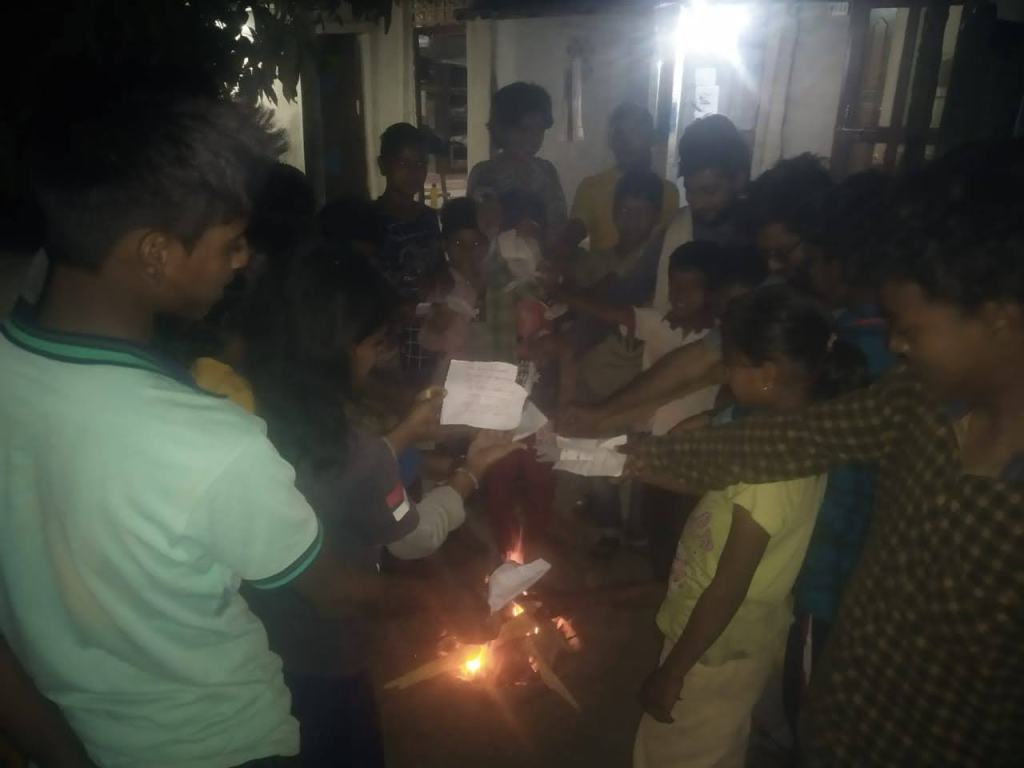
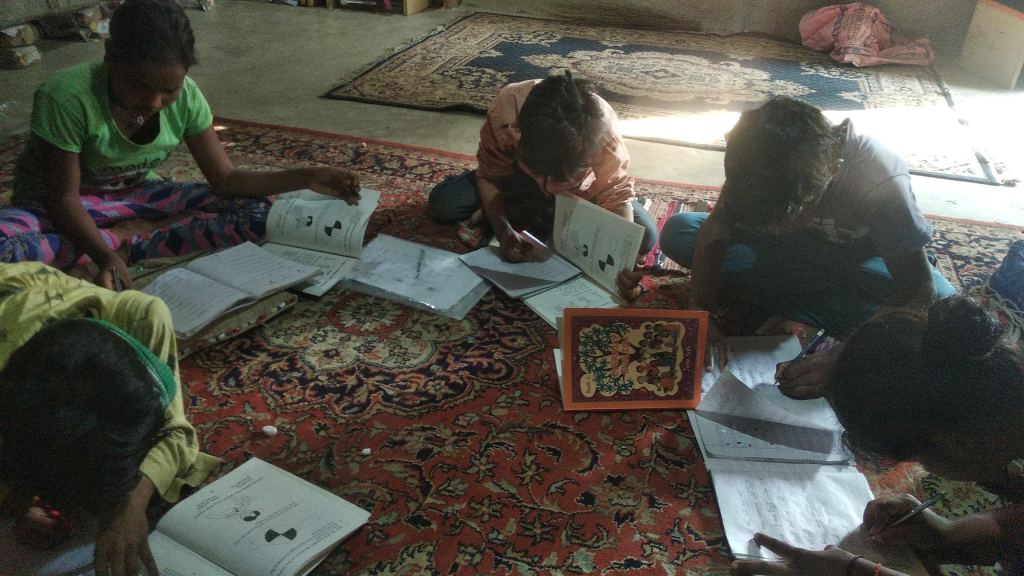
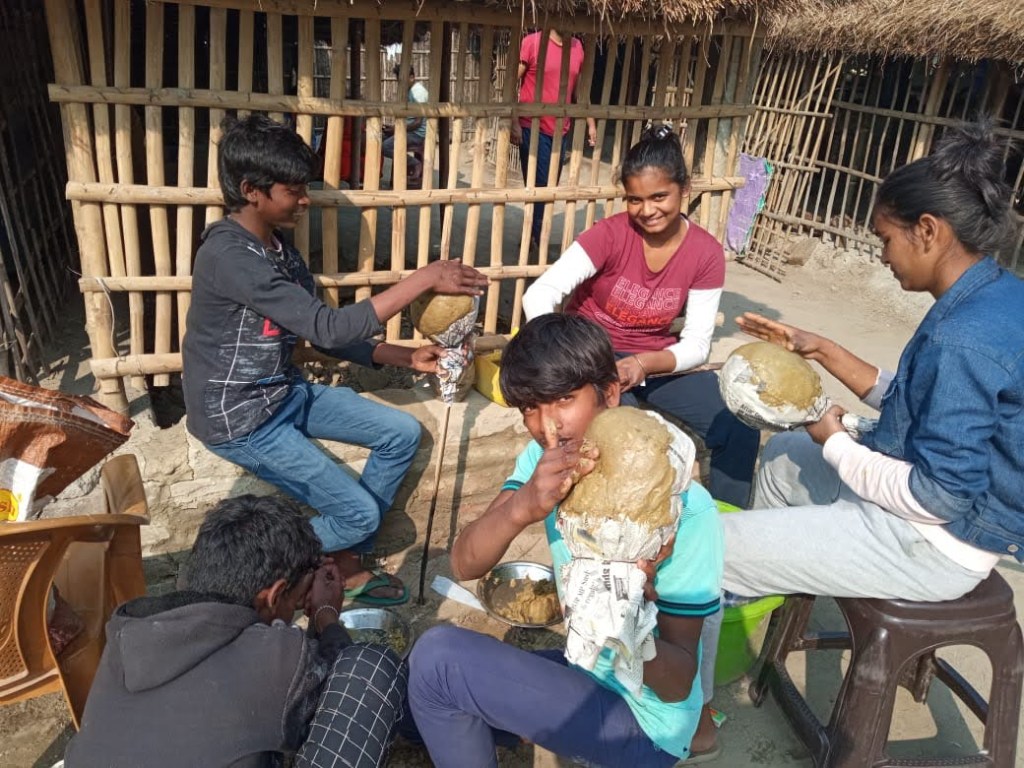
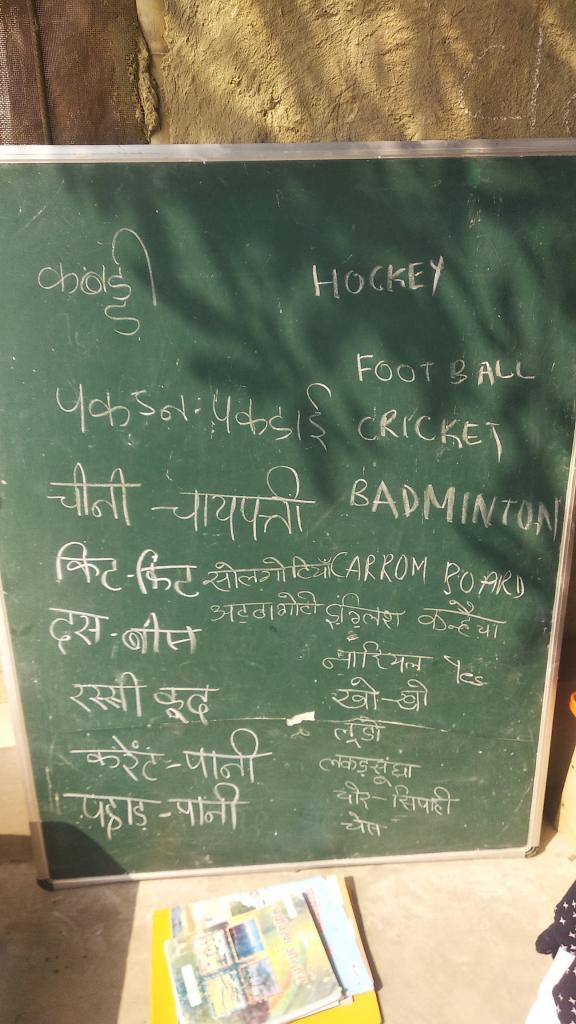
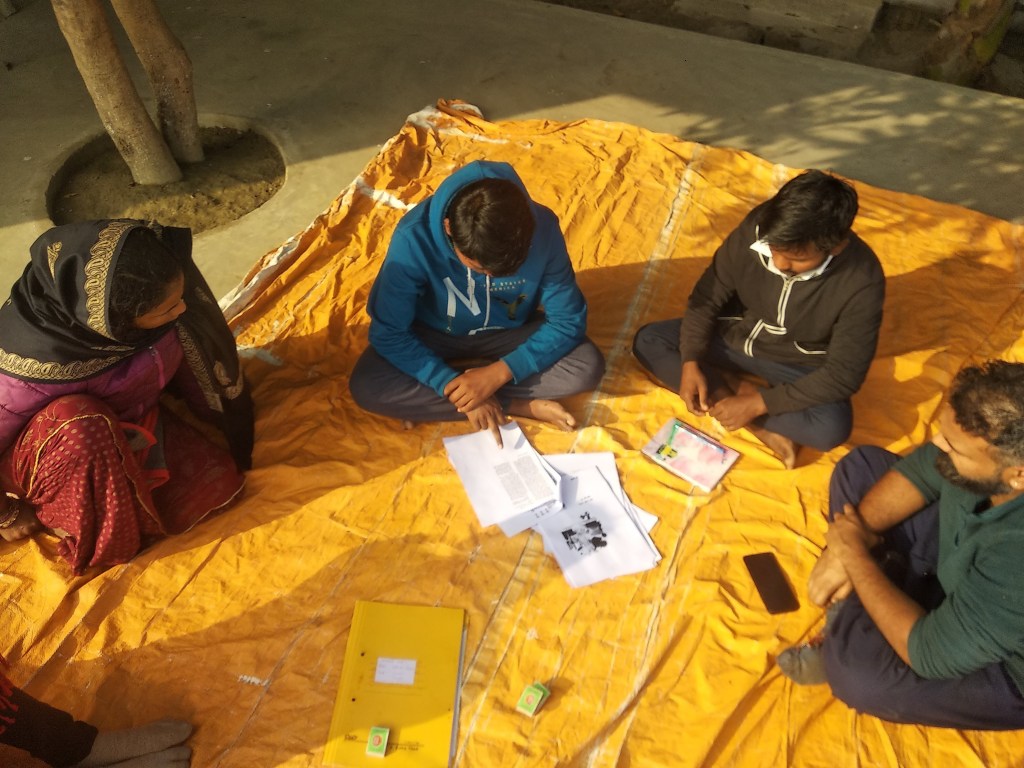
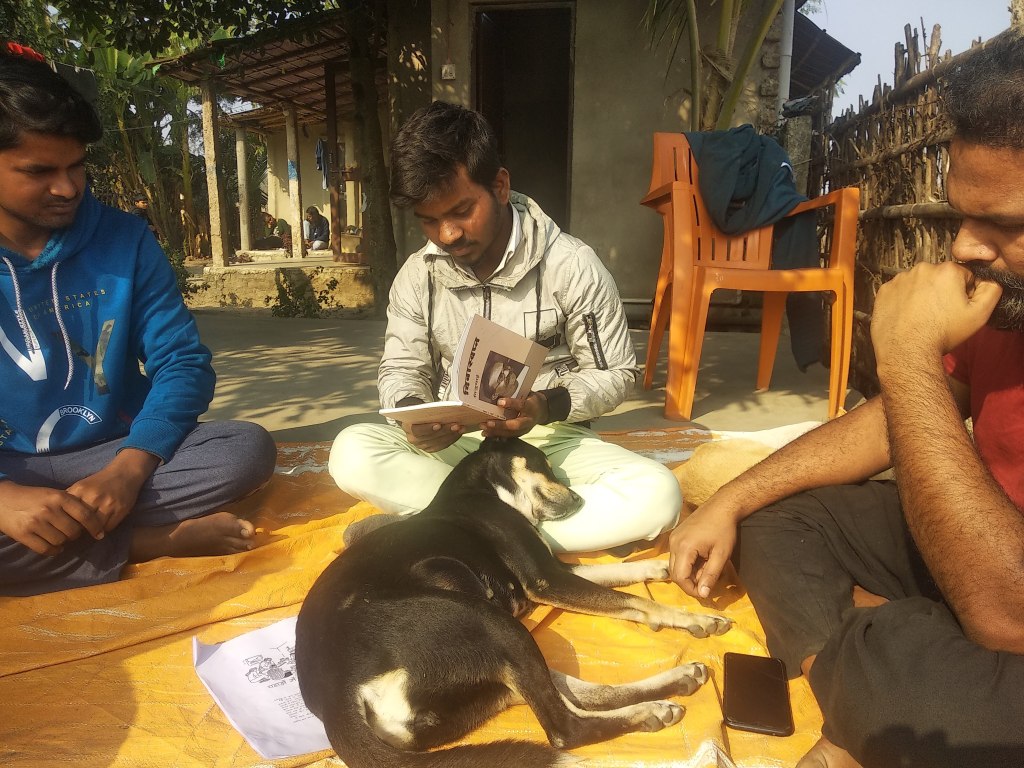
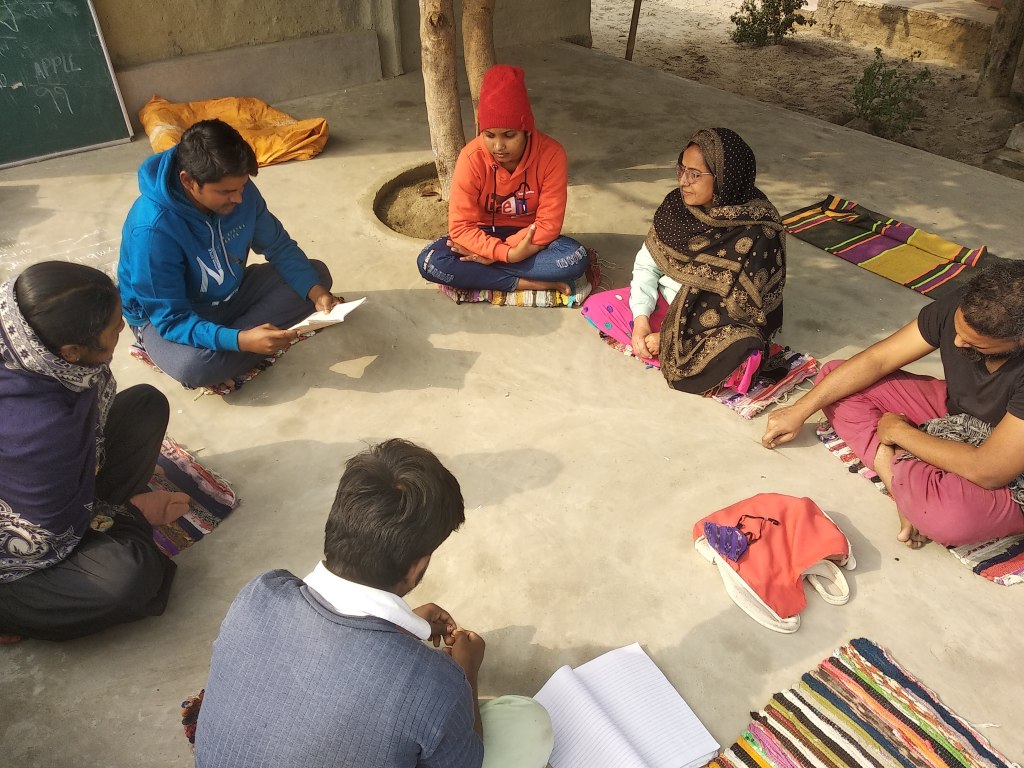
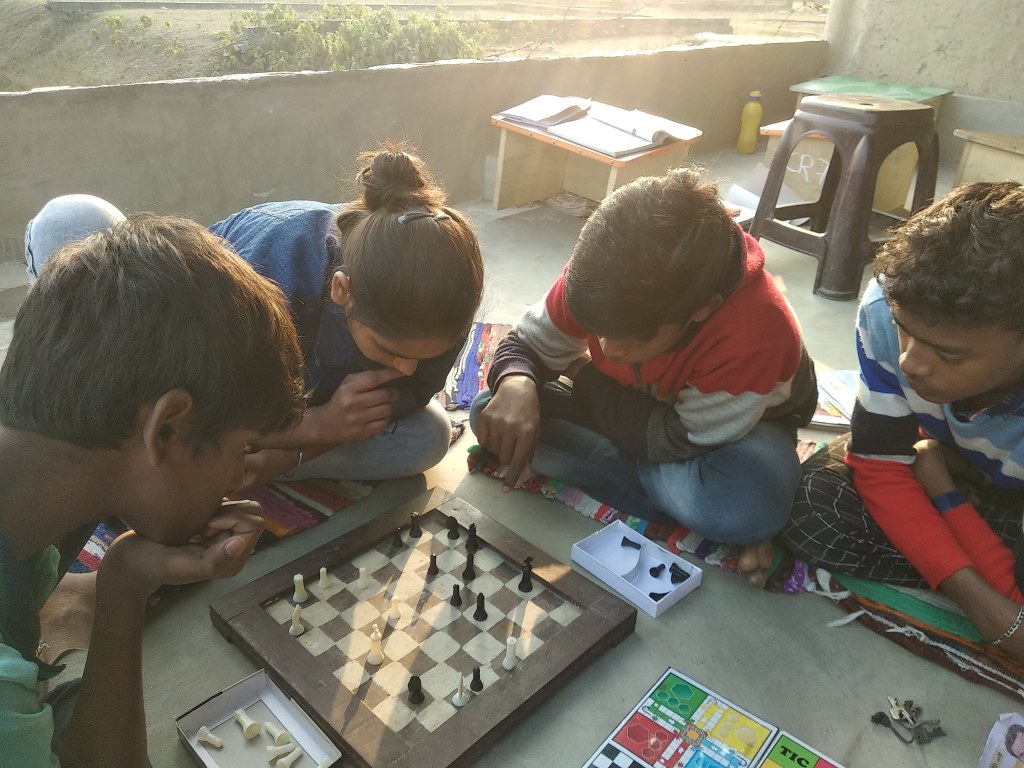
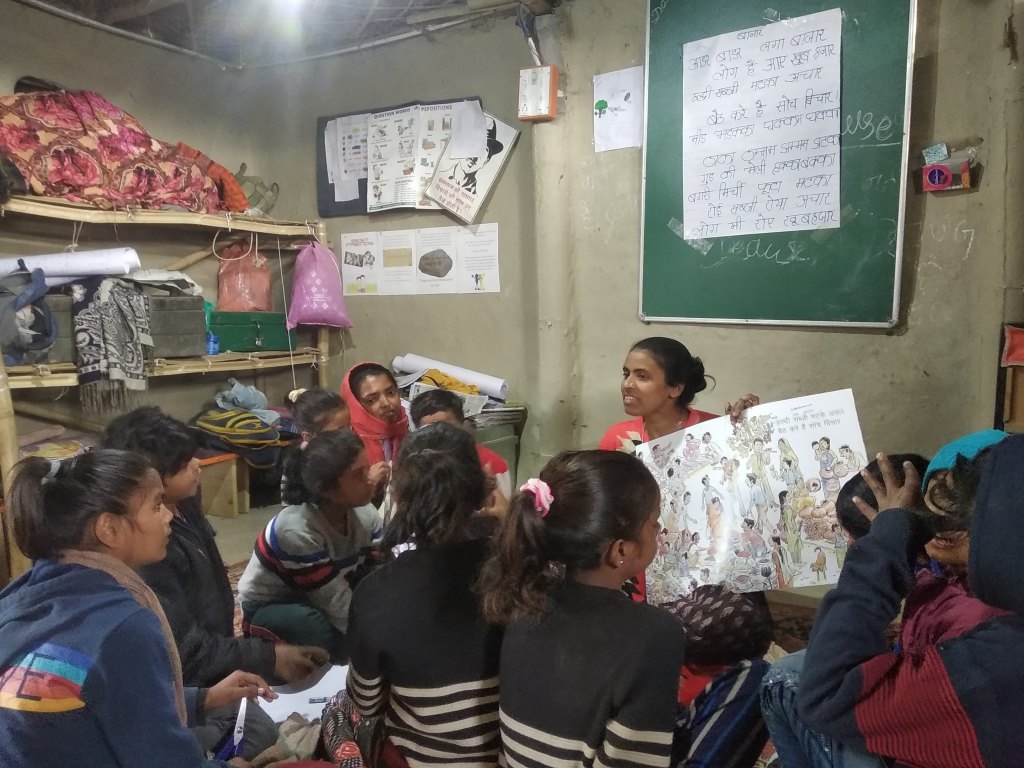
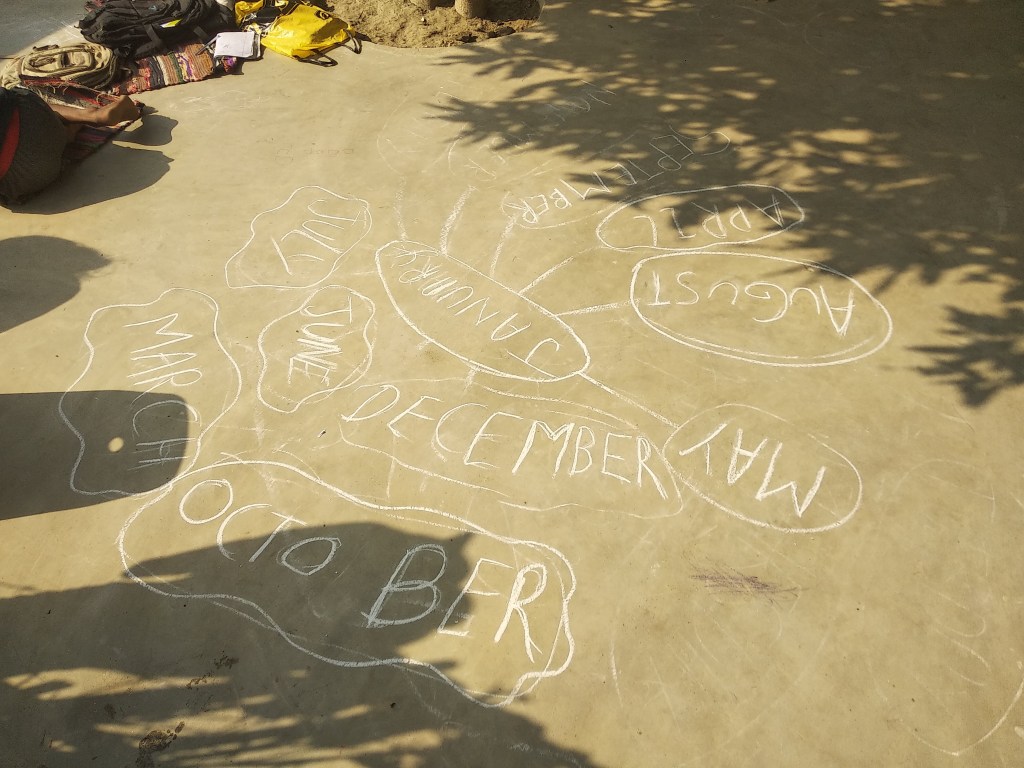
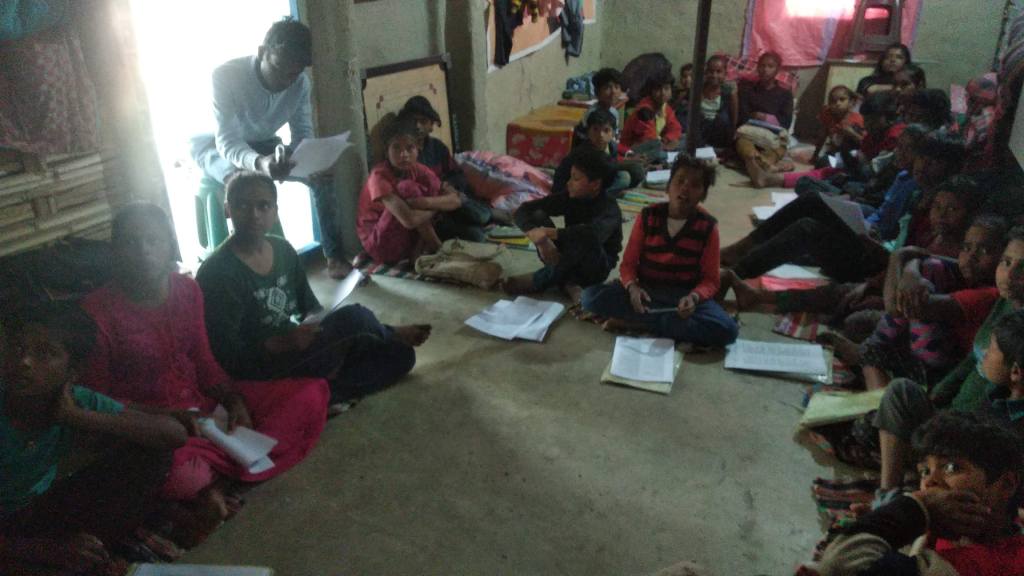
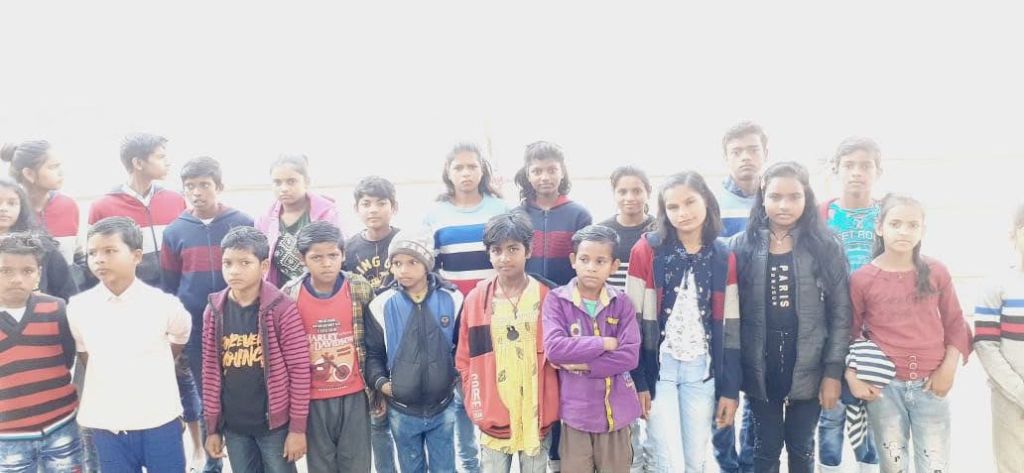
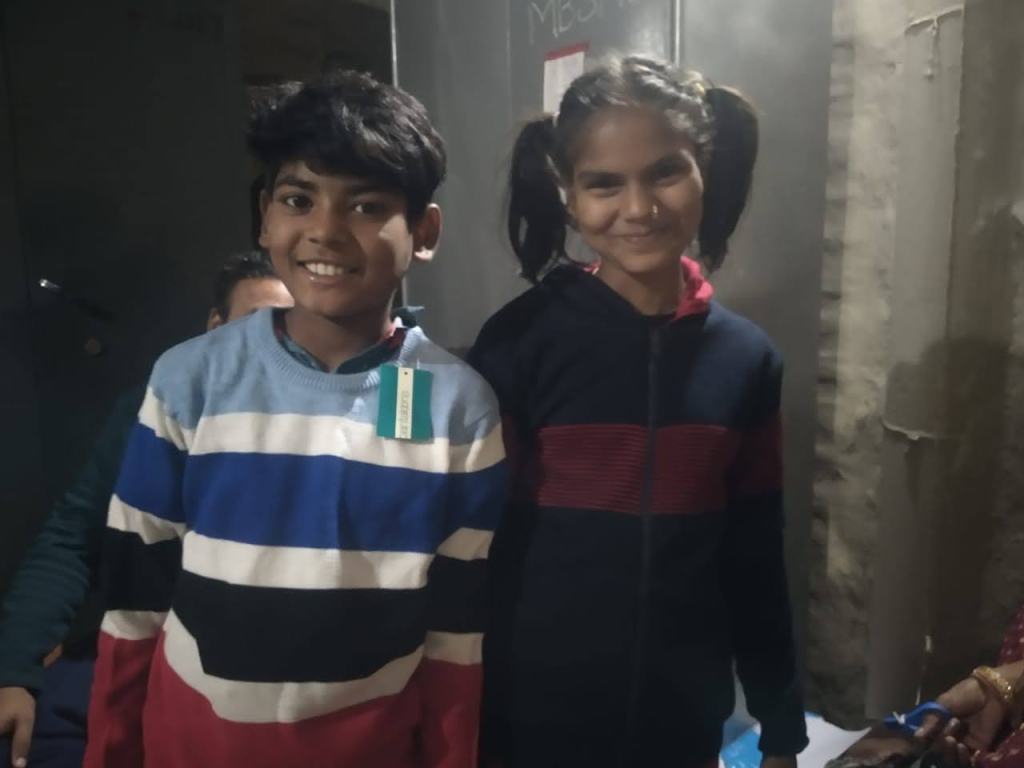
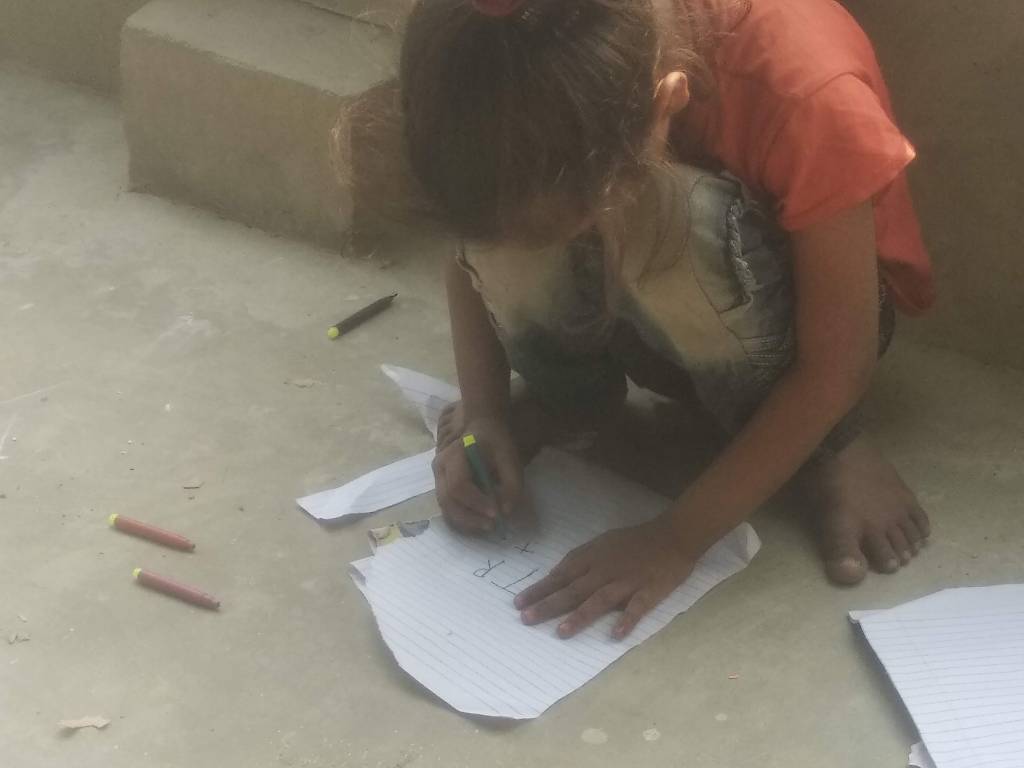
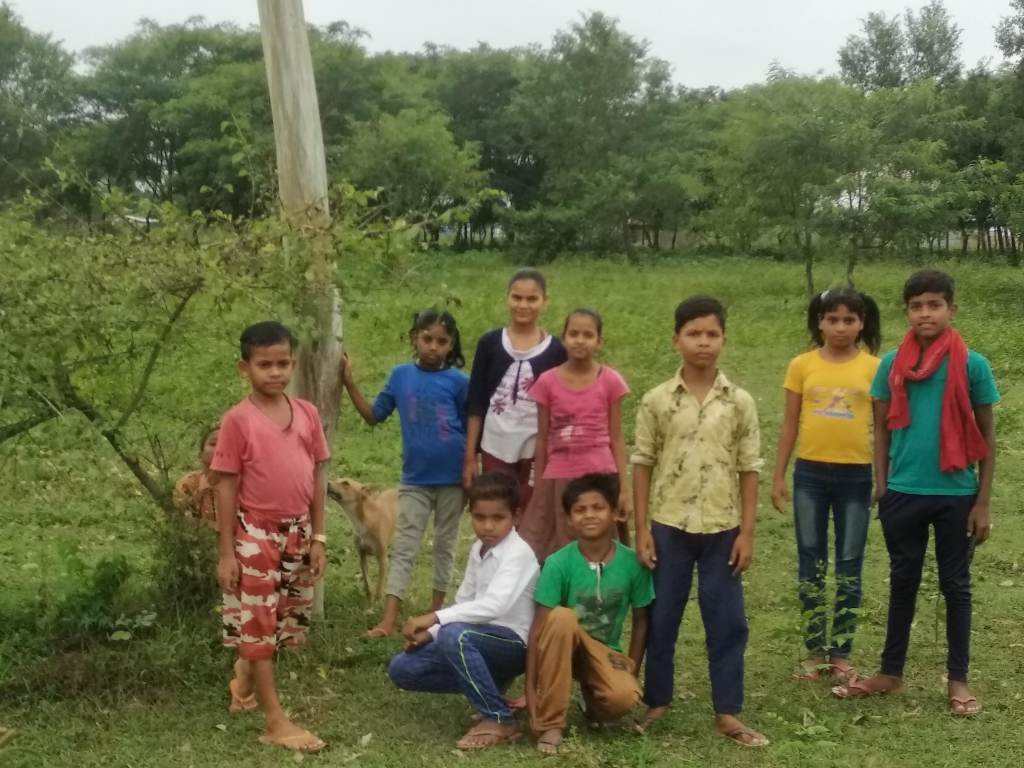
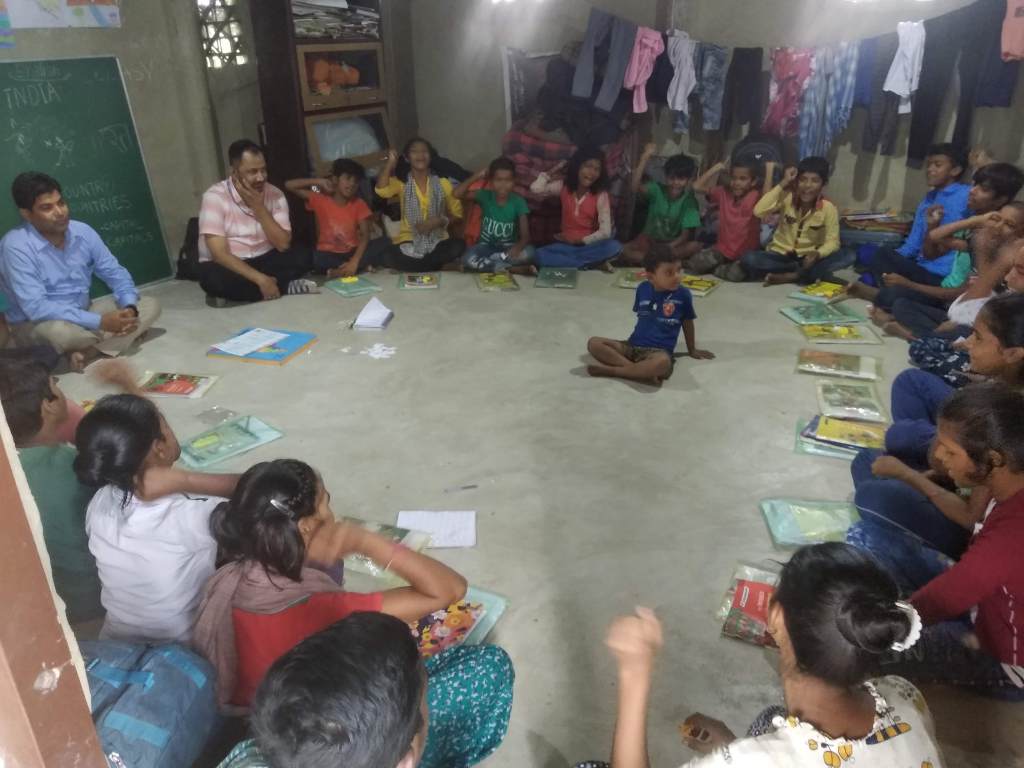
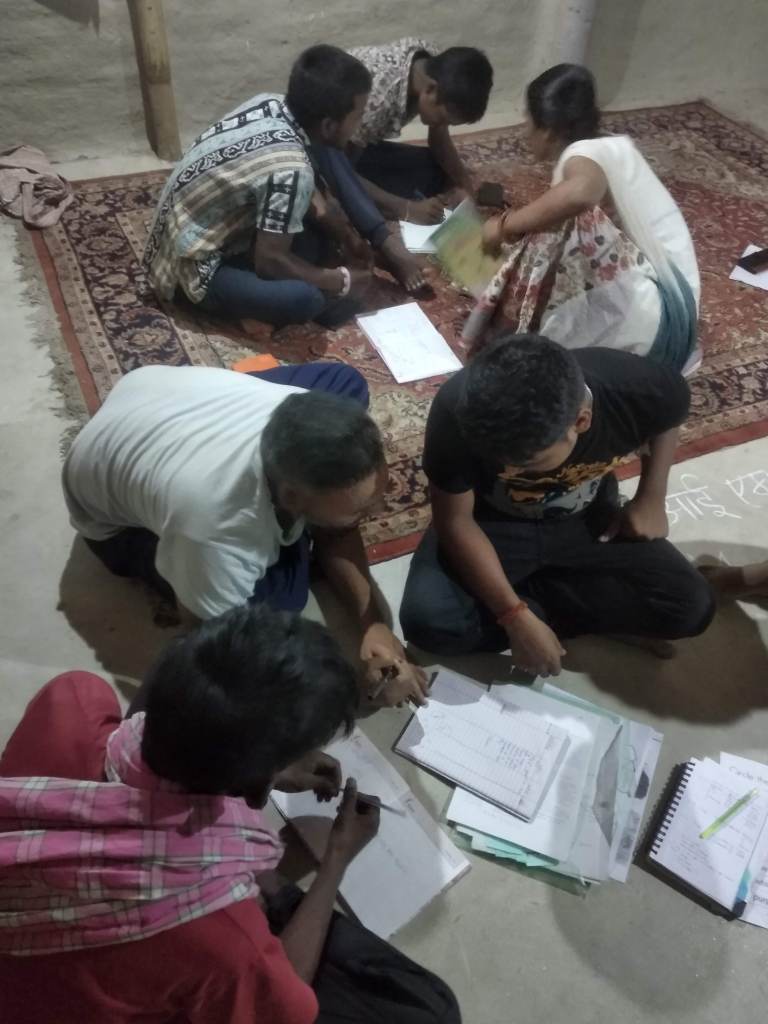
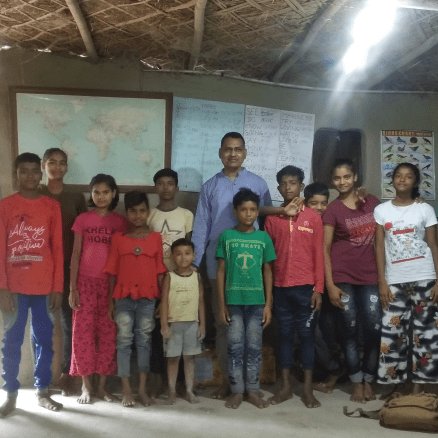
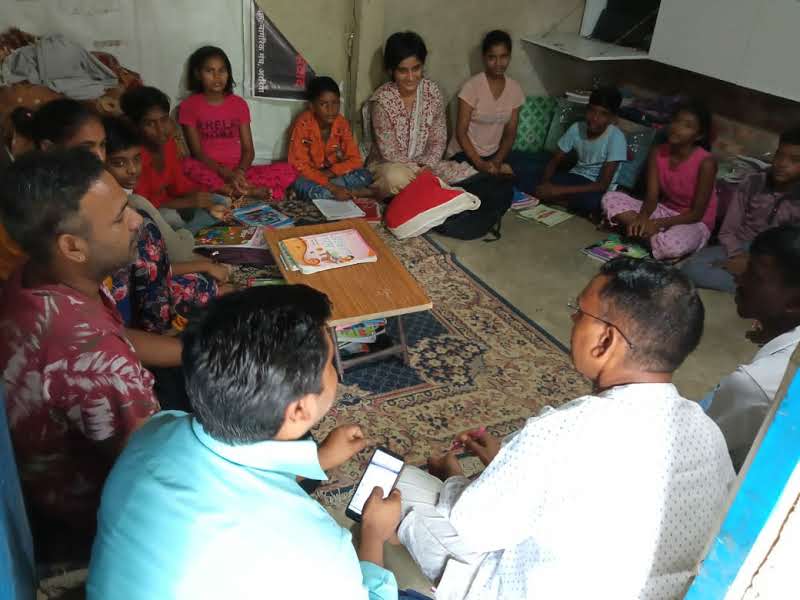
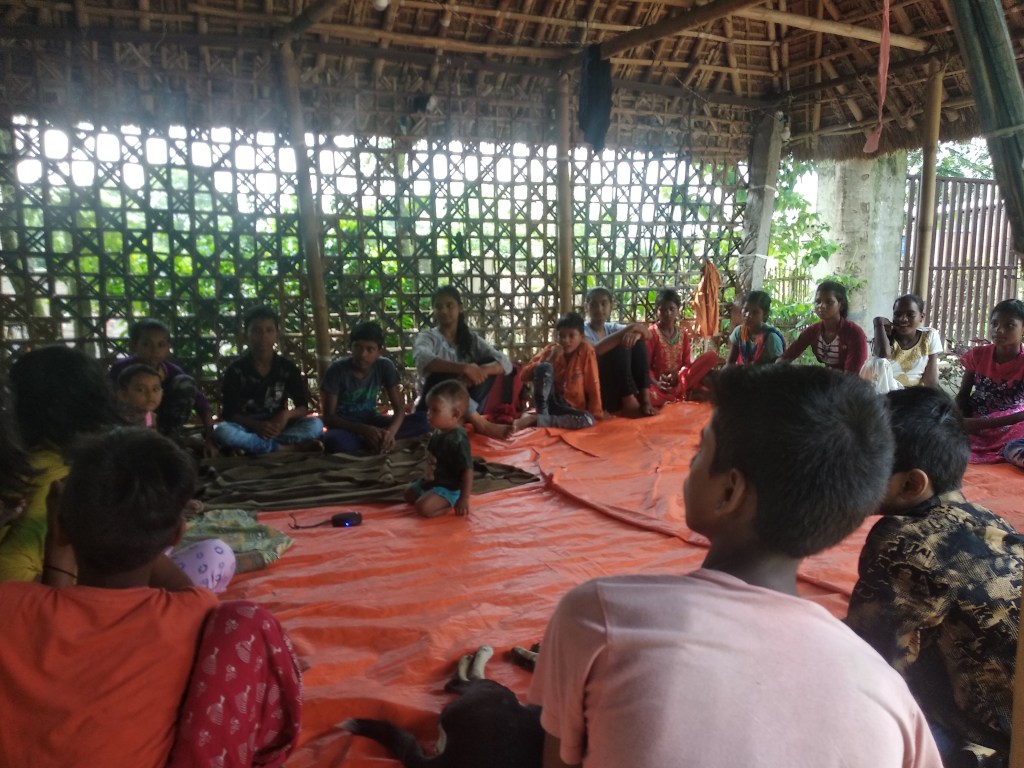
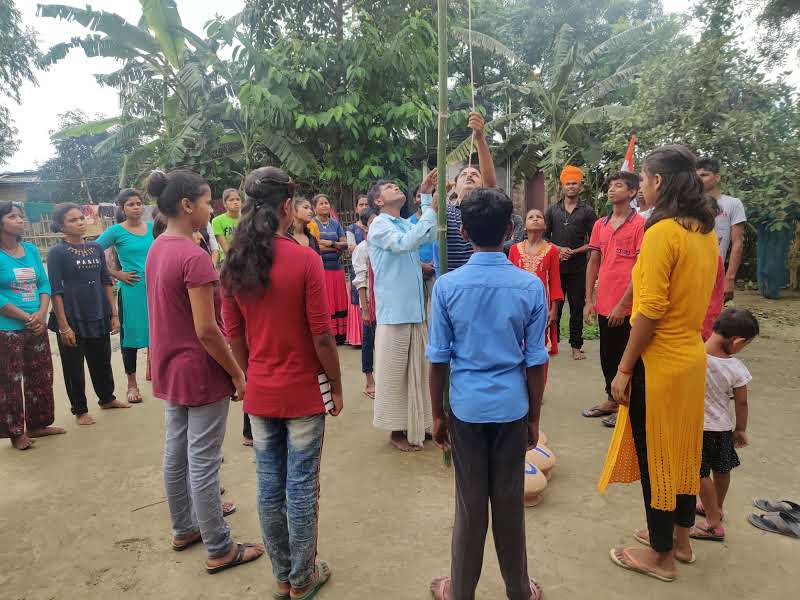
After the festive break in October, the Jeevanshala reconvened in November. The Teacher Learner (TL) team, was excited to try out all the beautiful things we had learned on our trip to Bhopal. Here is a glimpse of November.
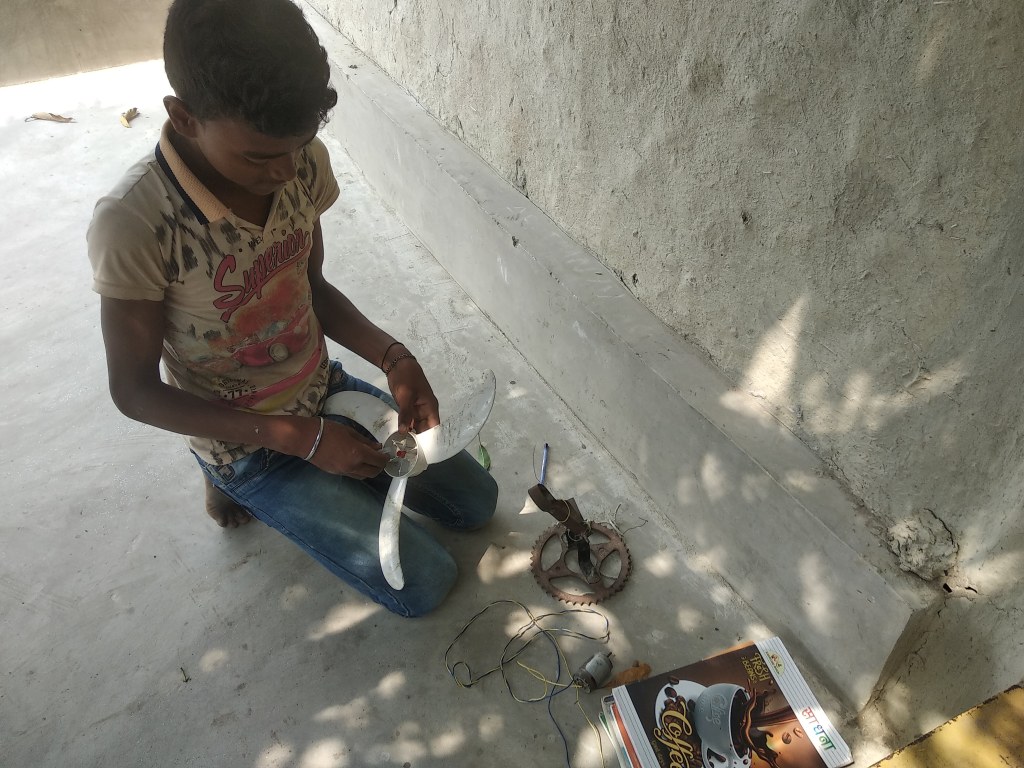
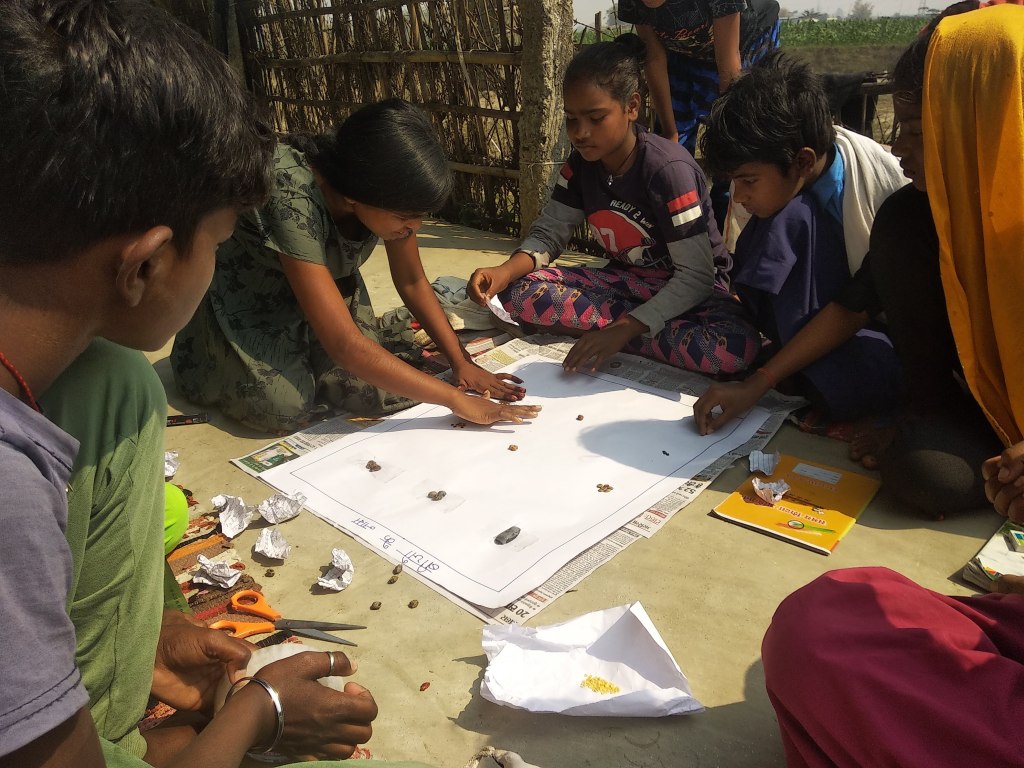
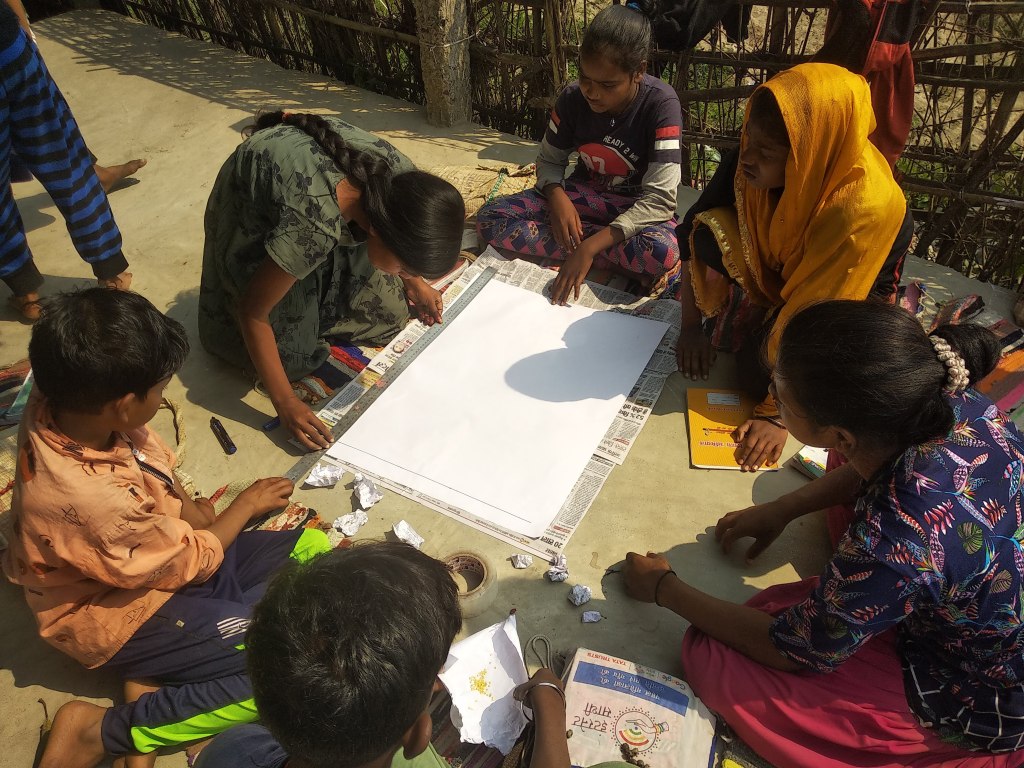
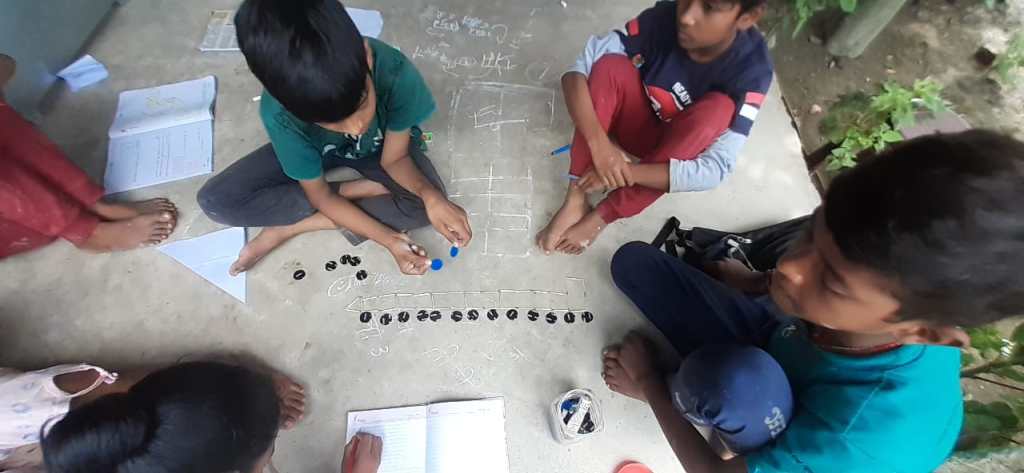
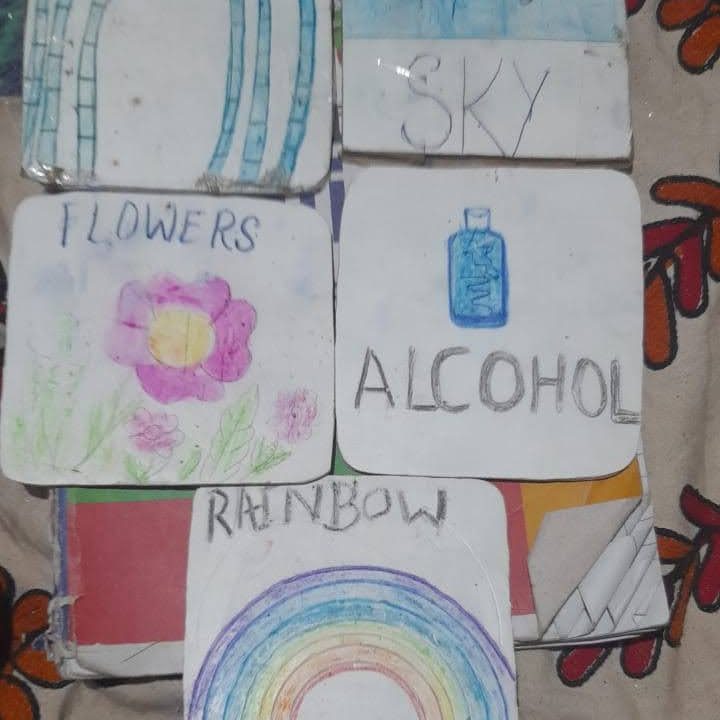
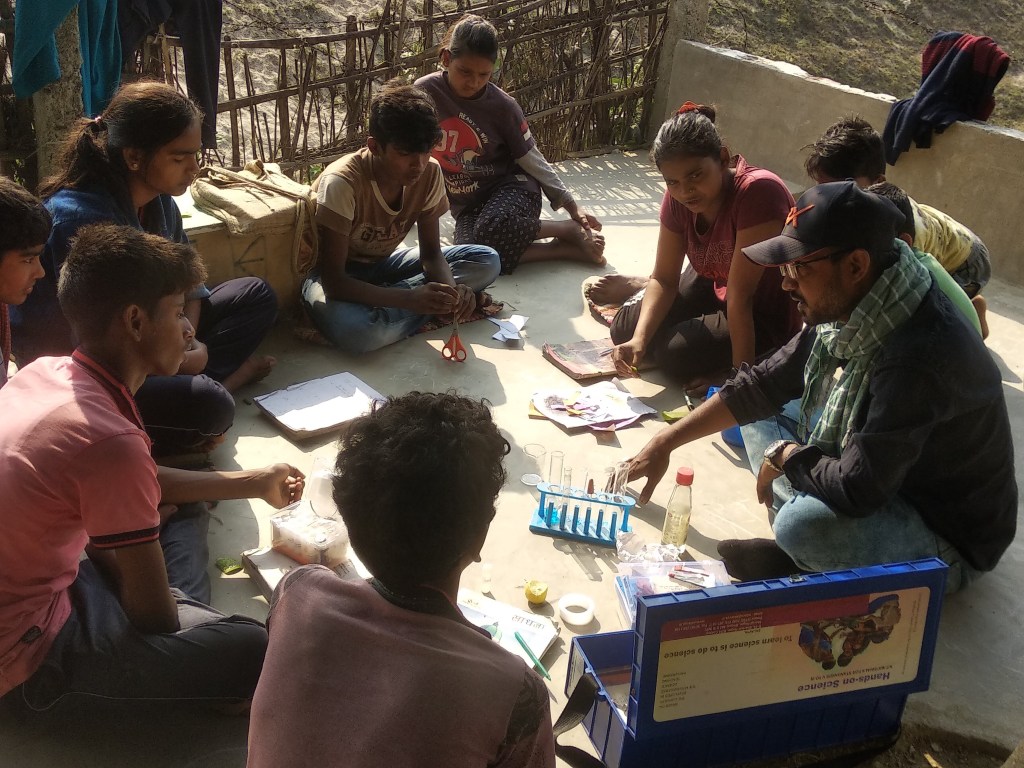
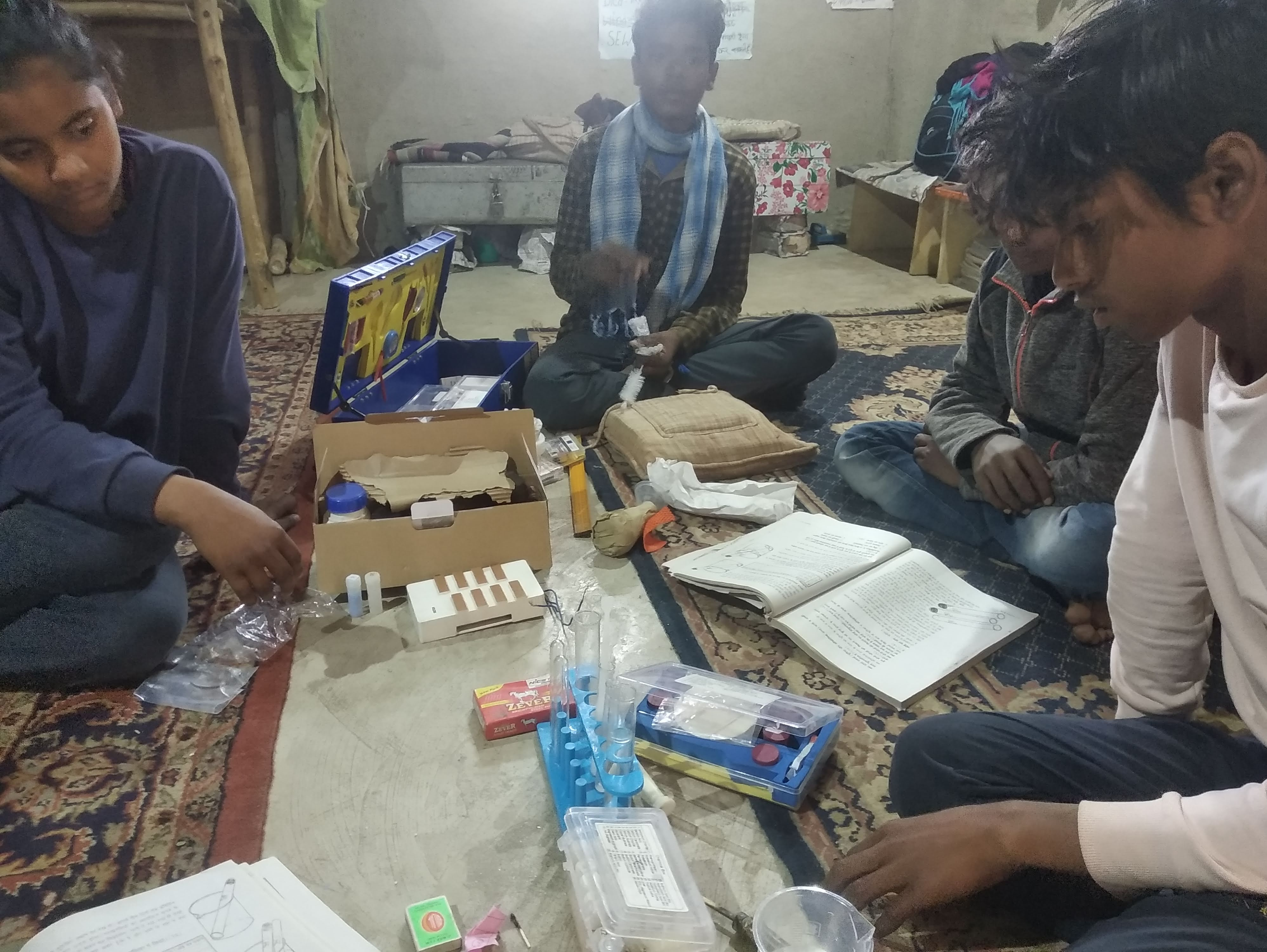
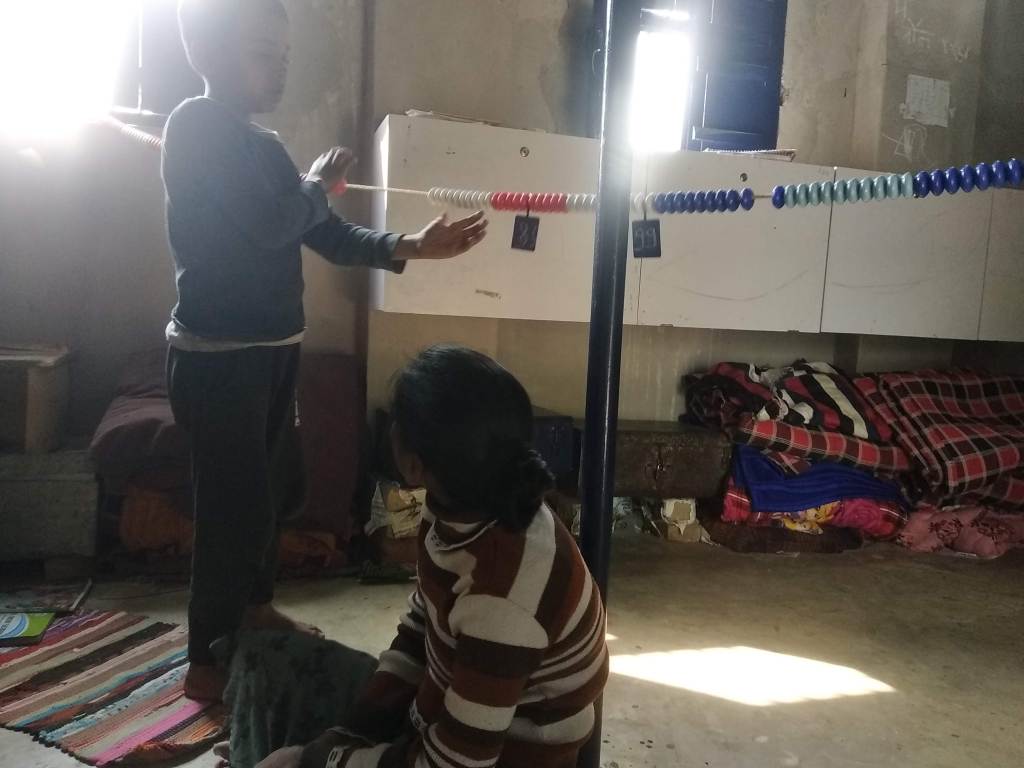
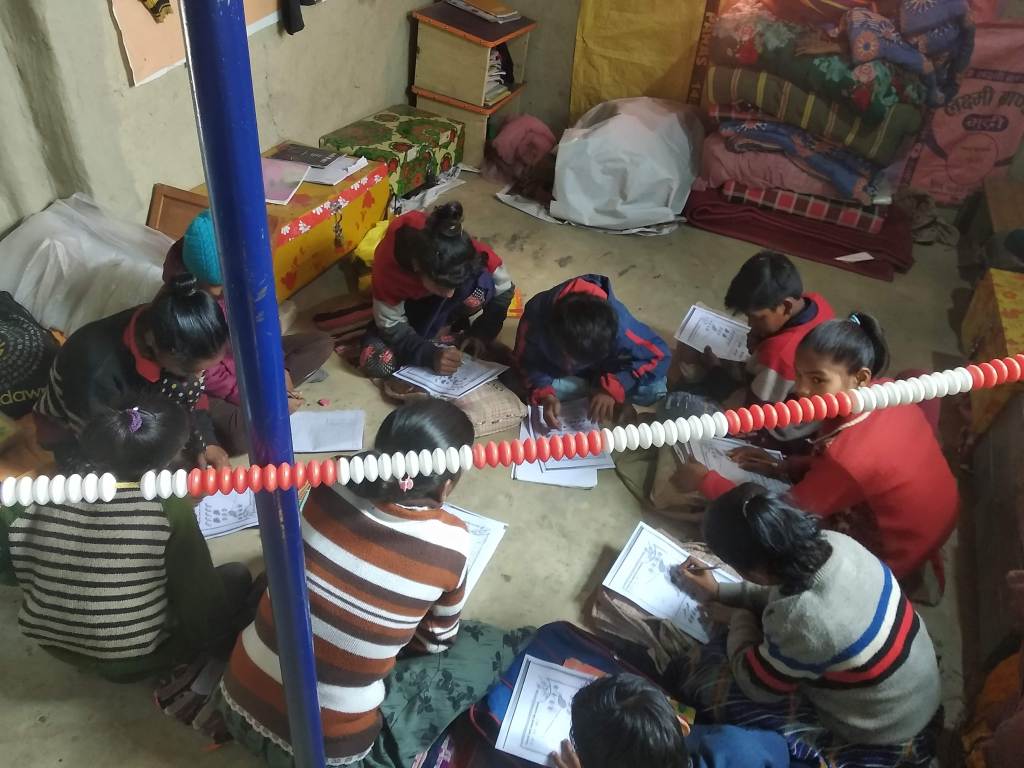
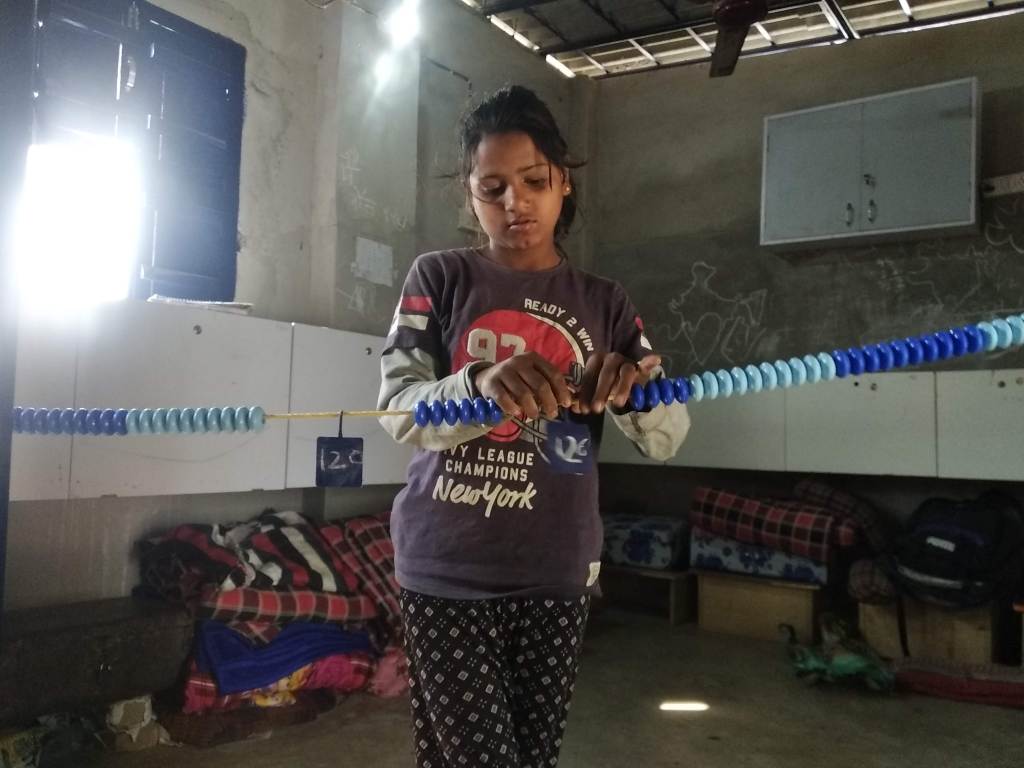
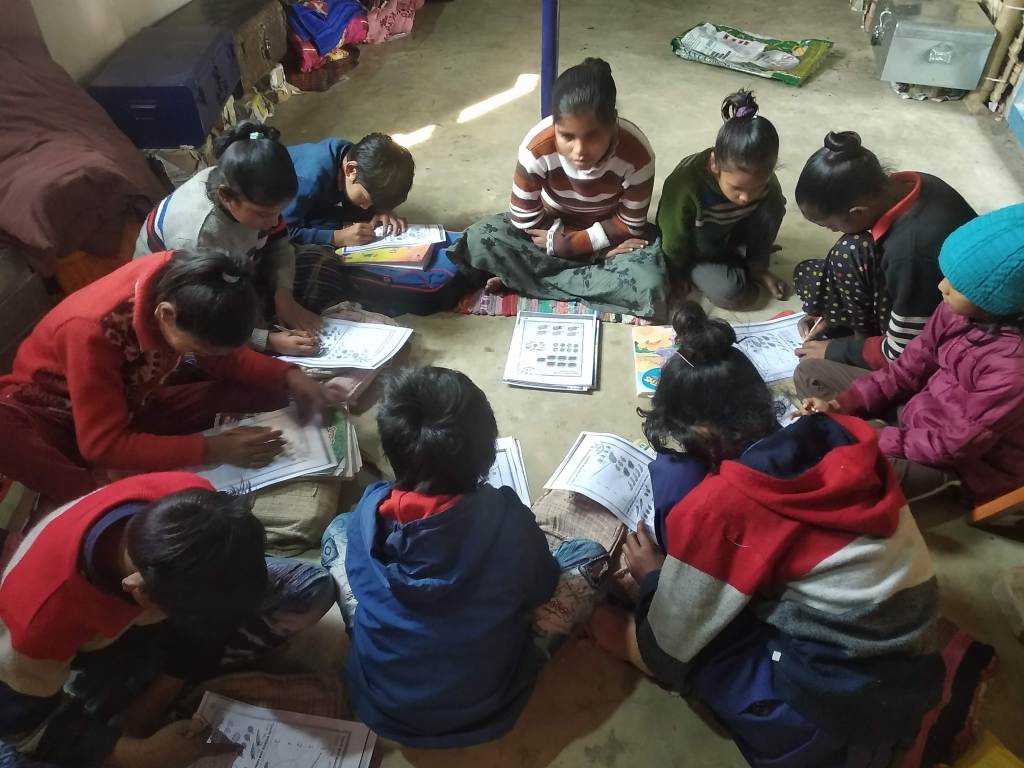
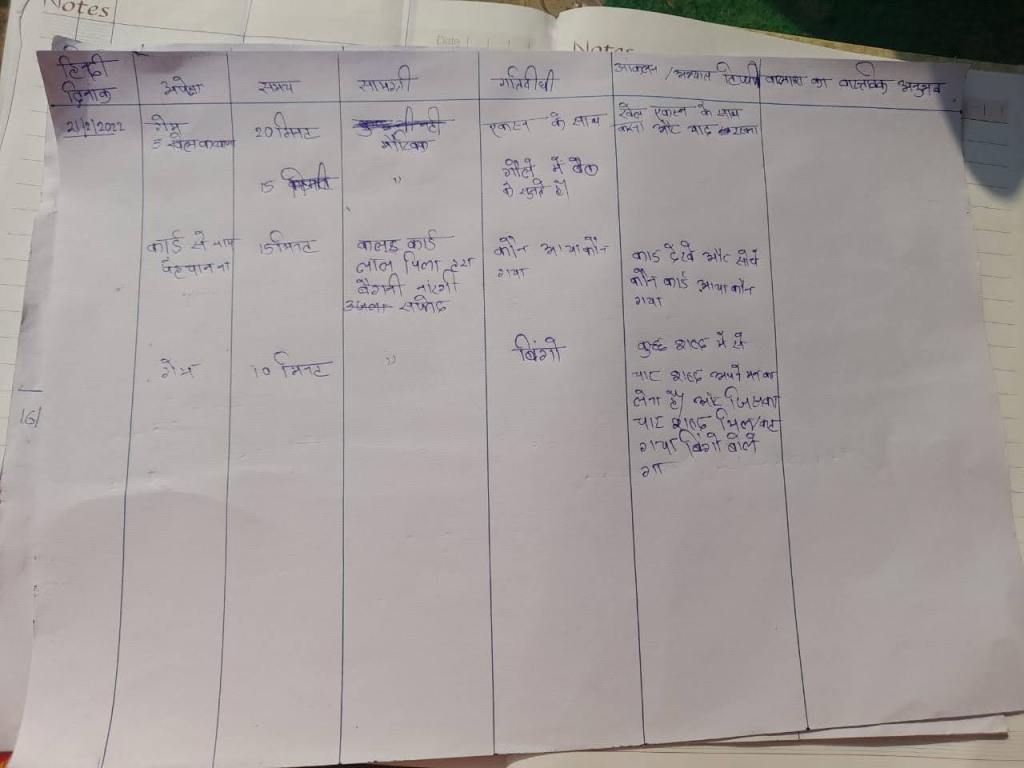
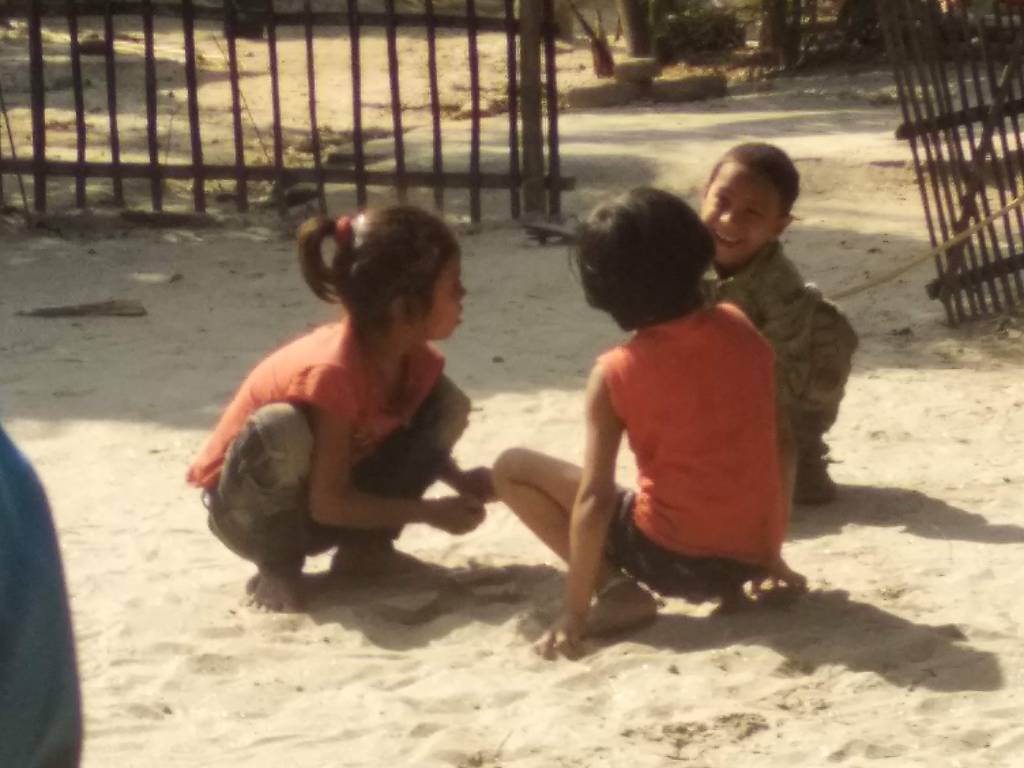
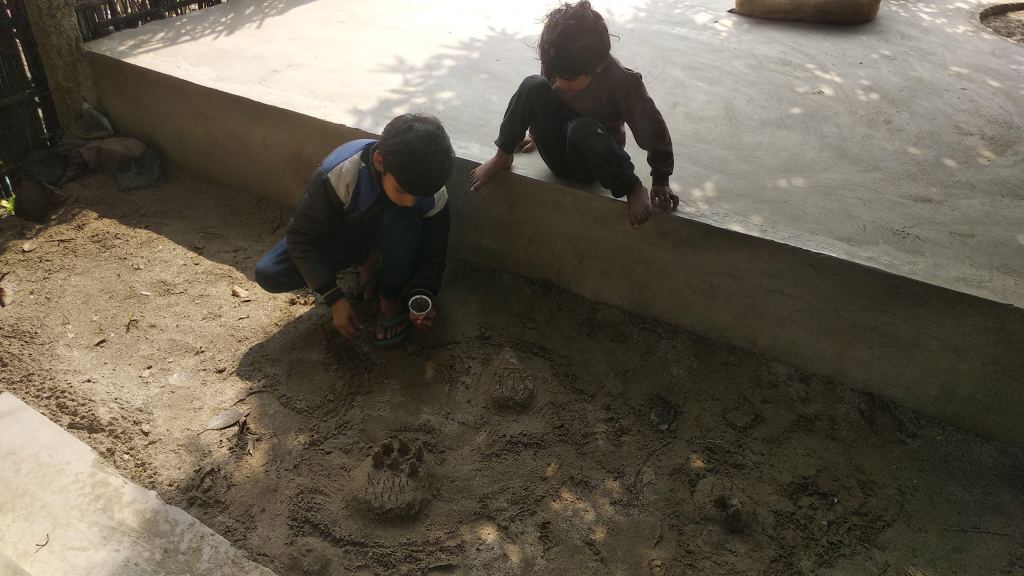
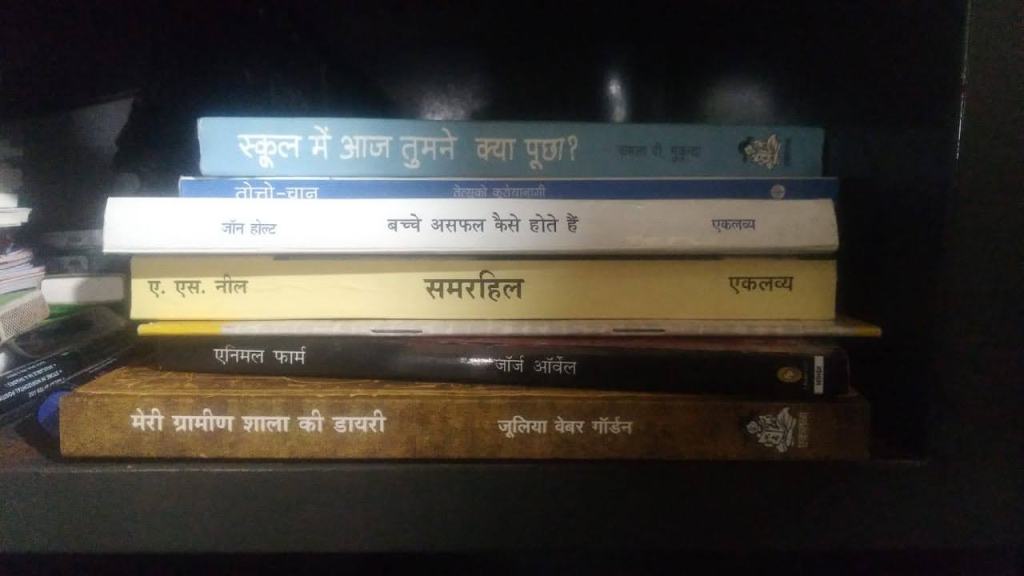
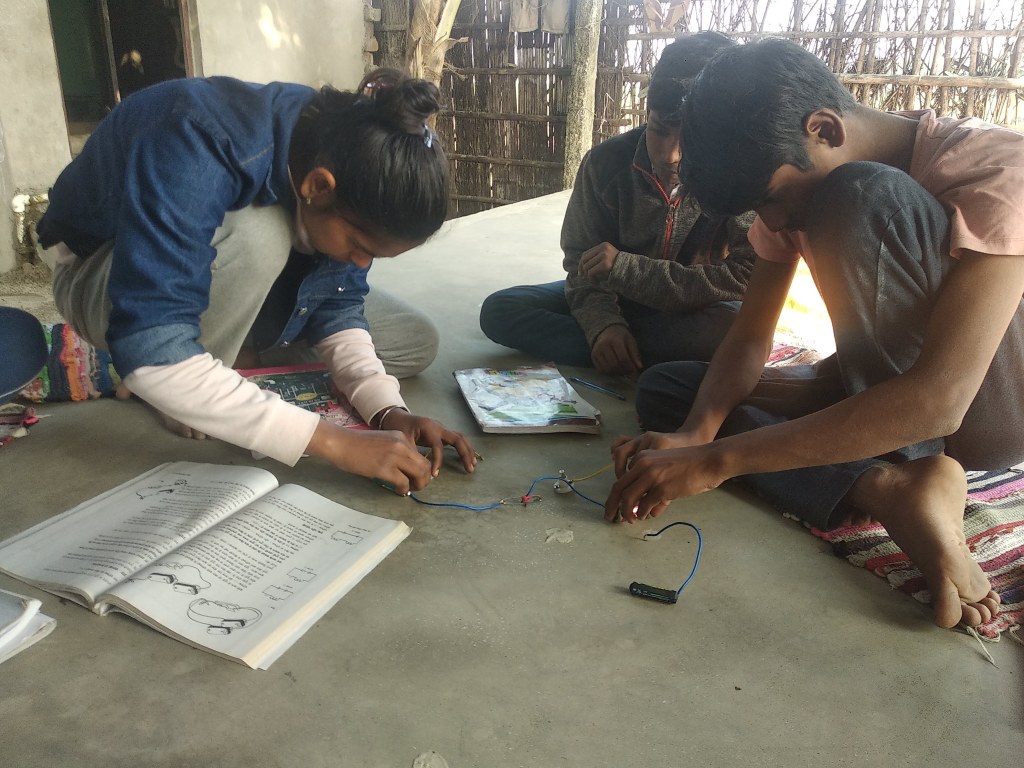
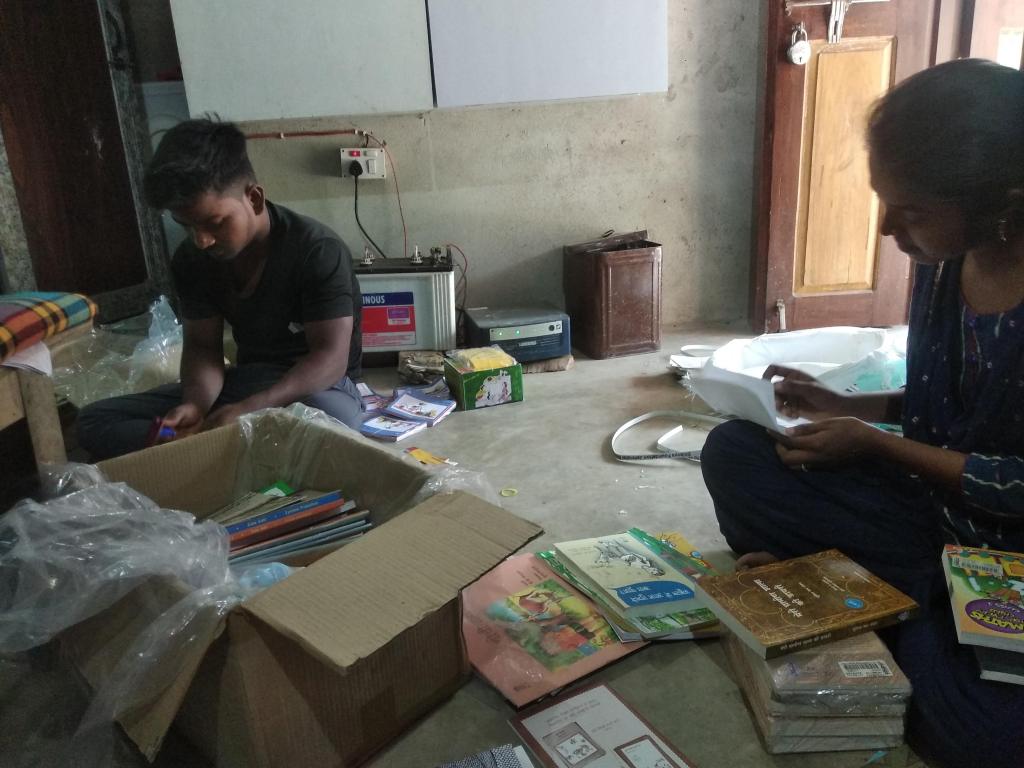
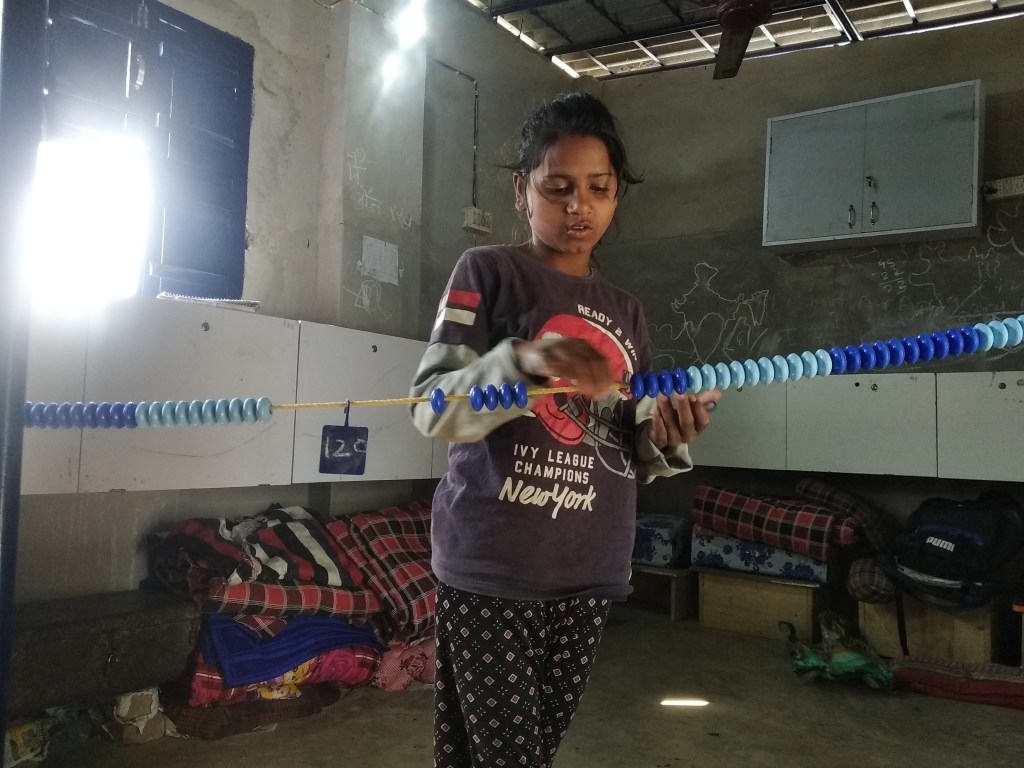
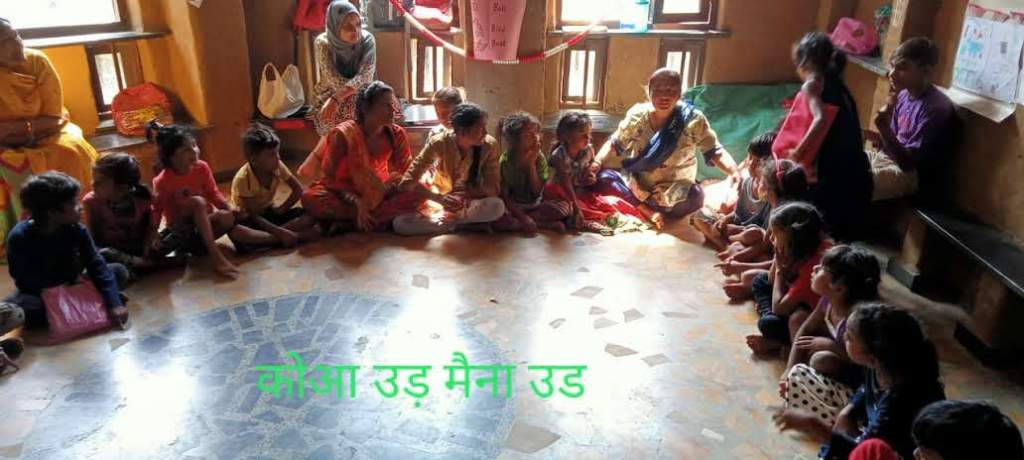
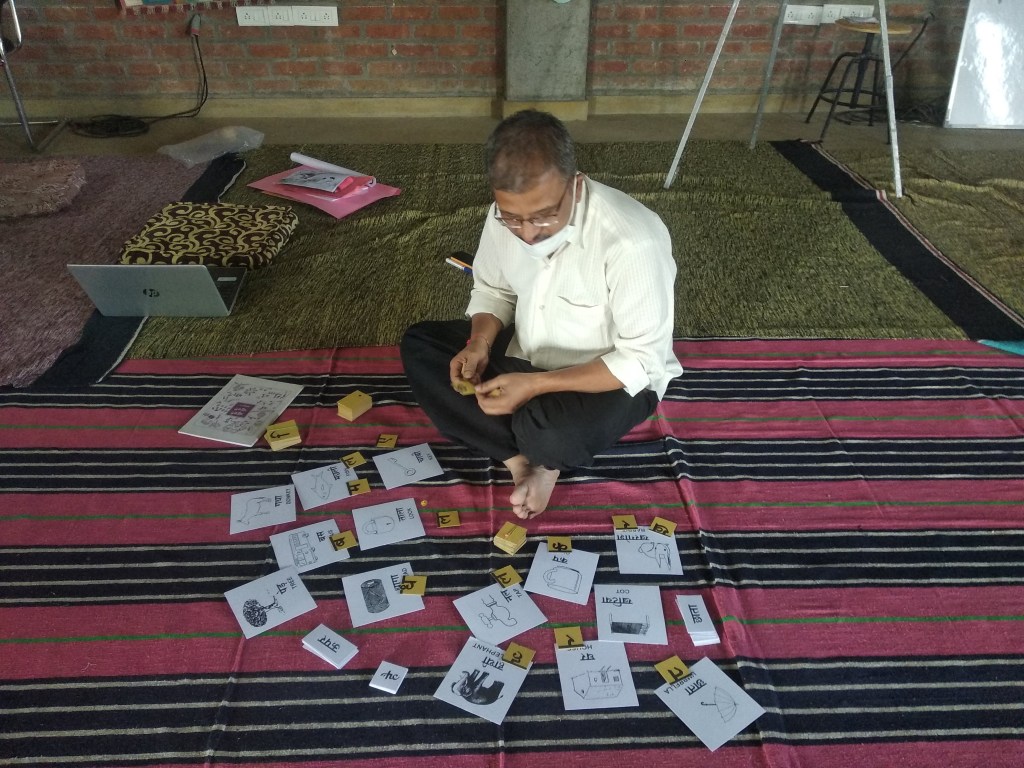
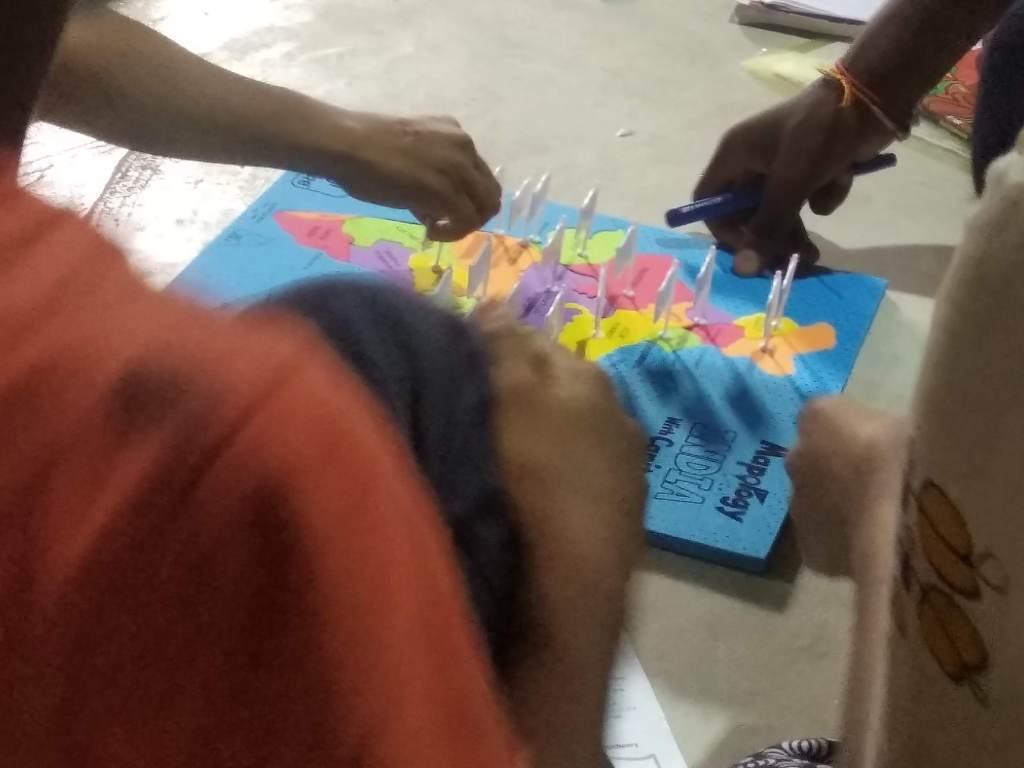
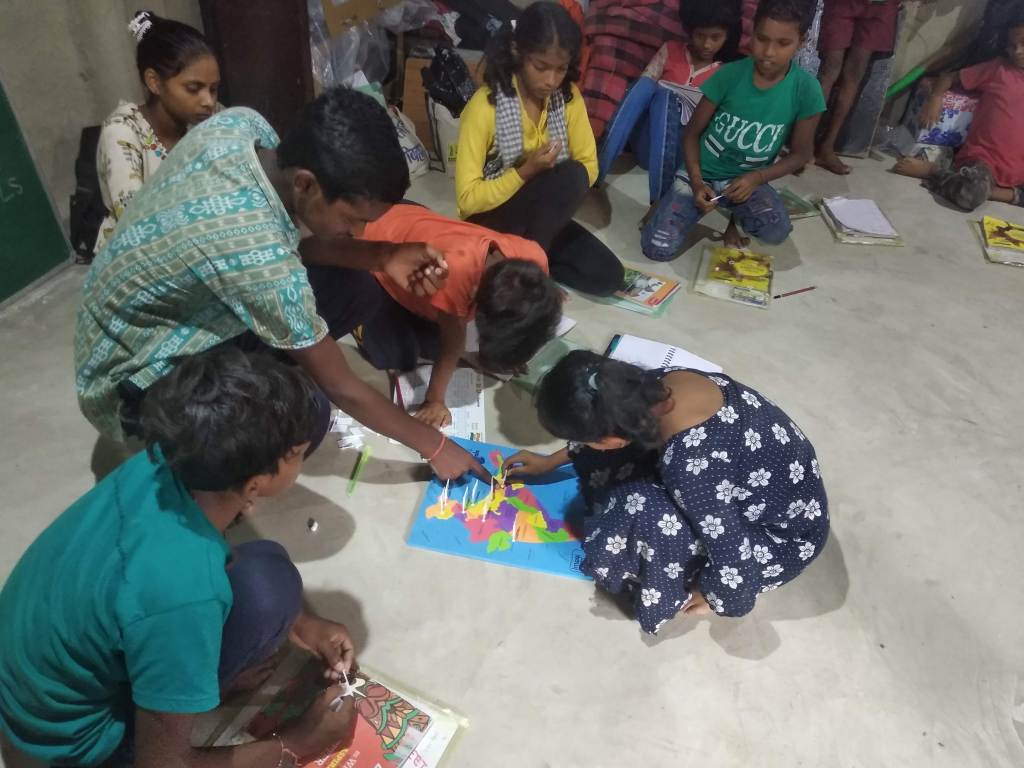
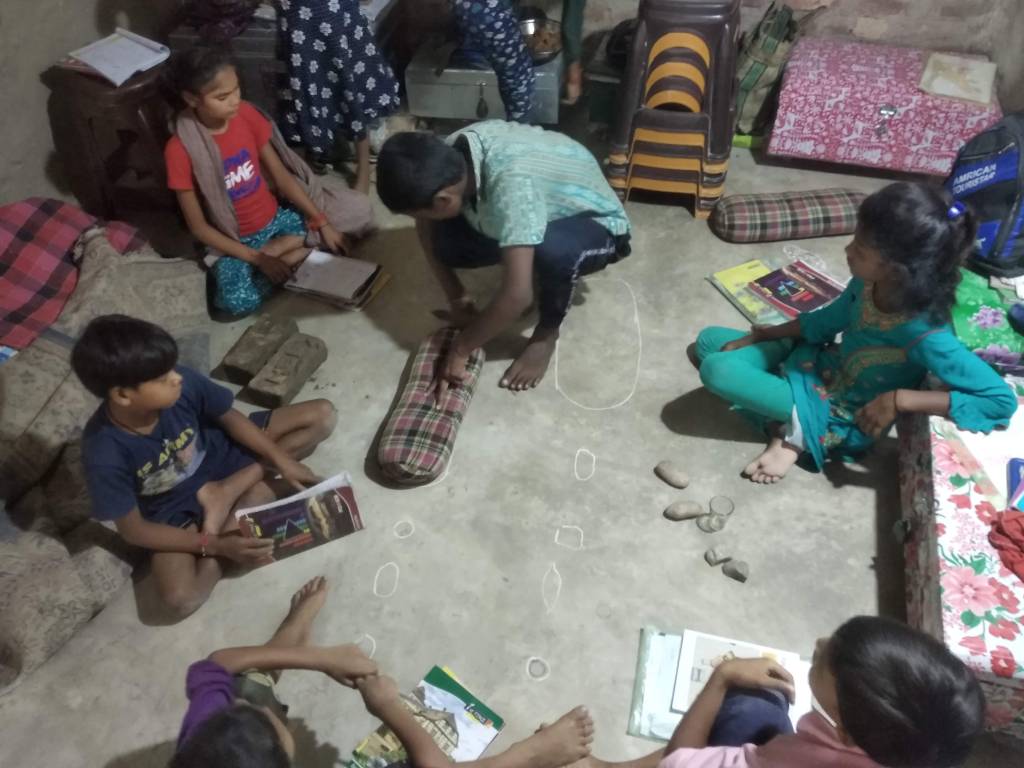
New books for children and TL team, unpacking after Bhopal trip Strengthening hindi-english vocabulary through a game of kaun aaya kaun gaya Ginmala in the classroom Siddhi using the ginmala for simple addition Science is learning by doing – Using the Eklavya Science kit
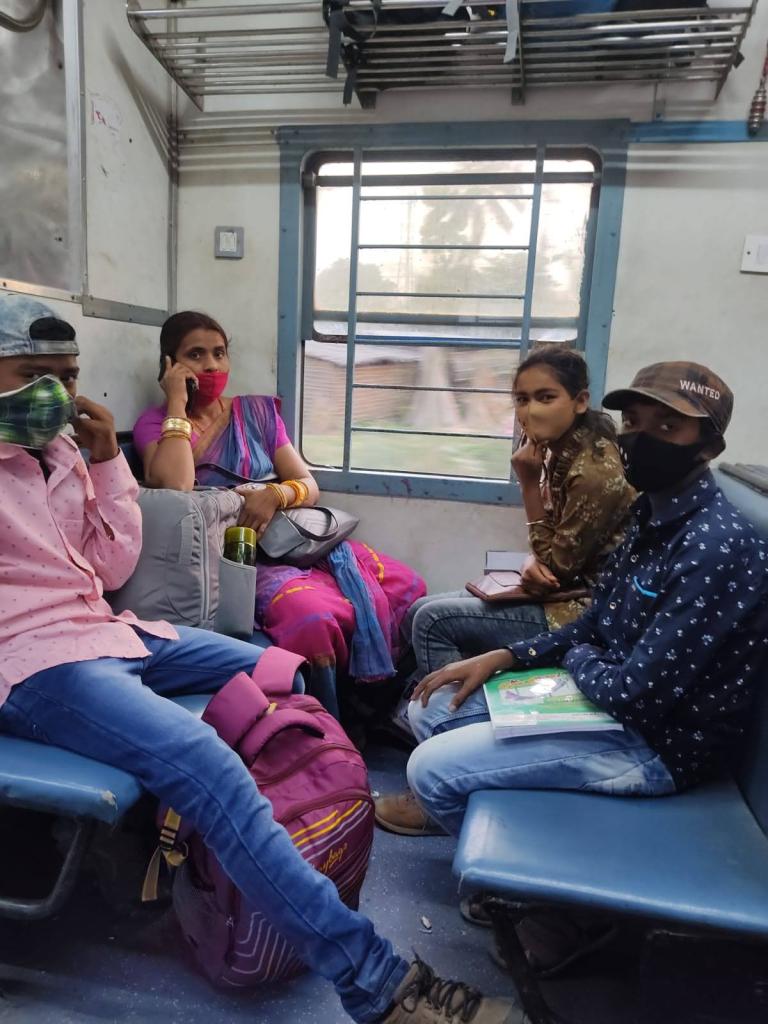
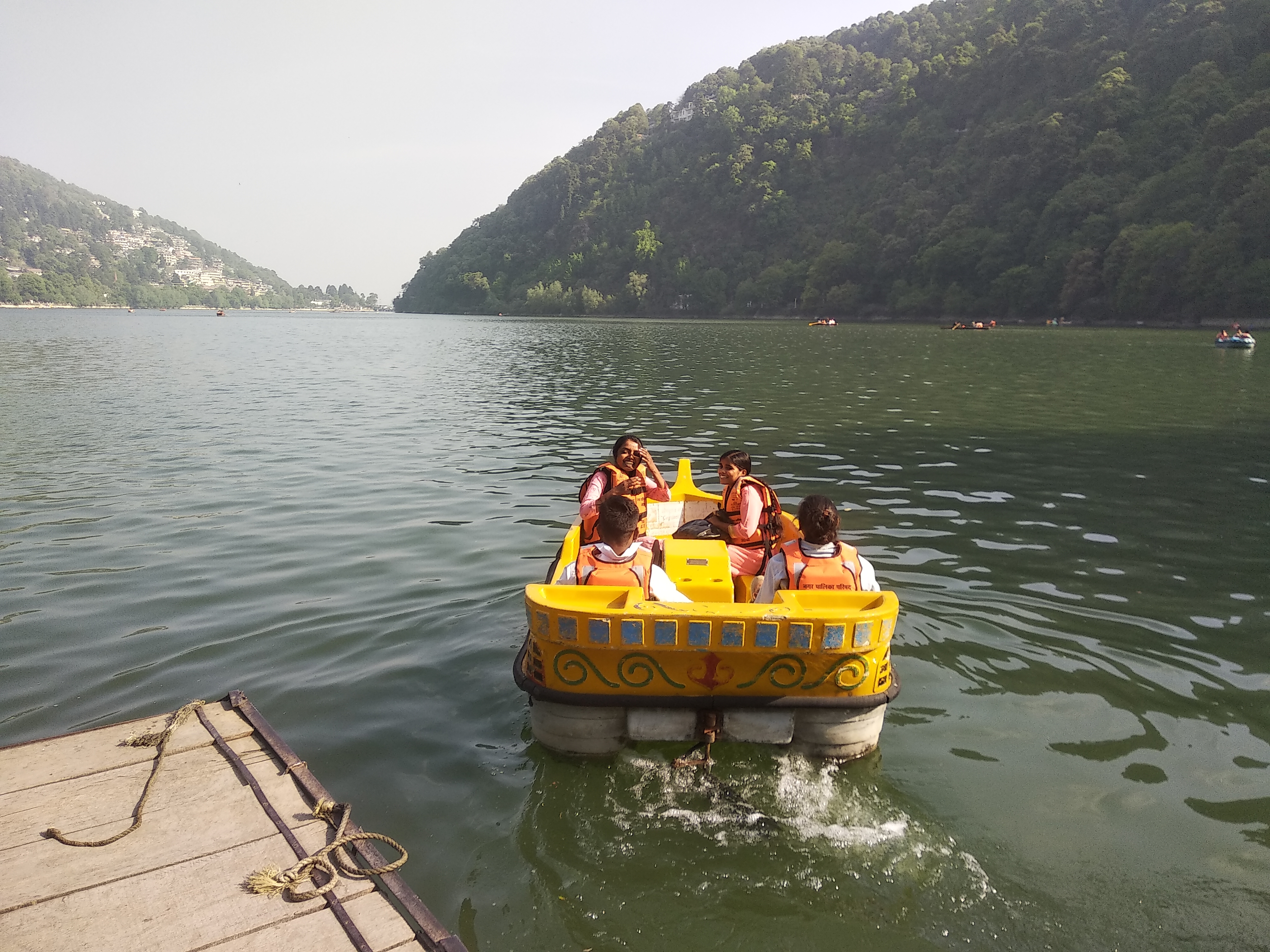
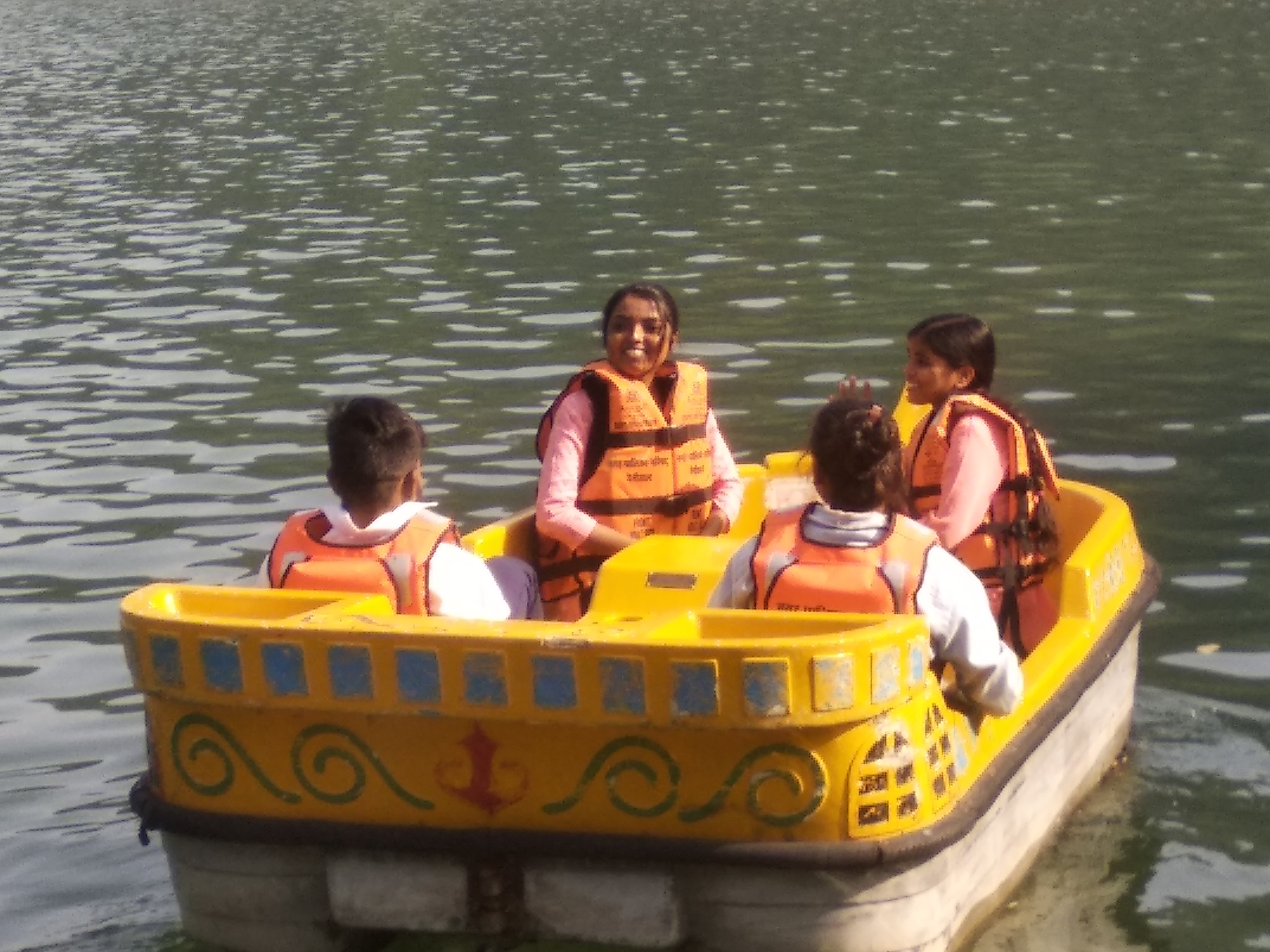
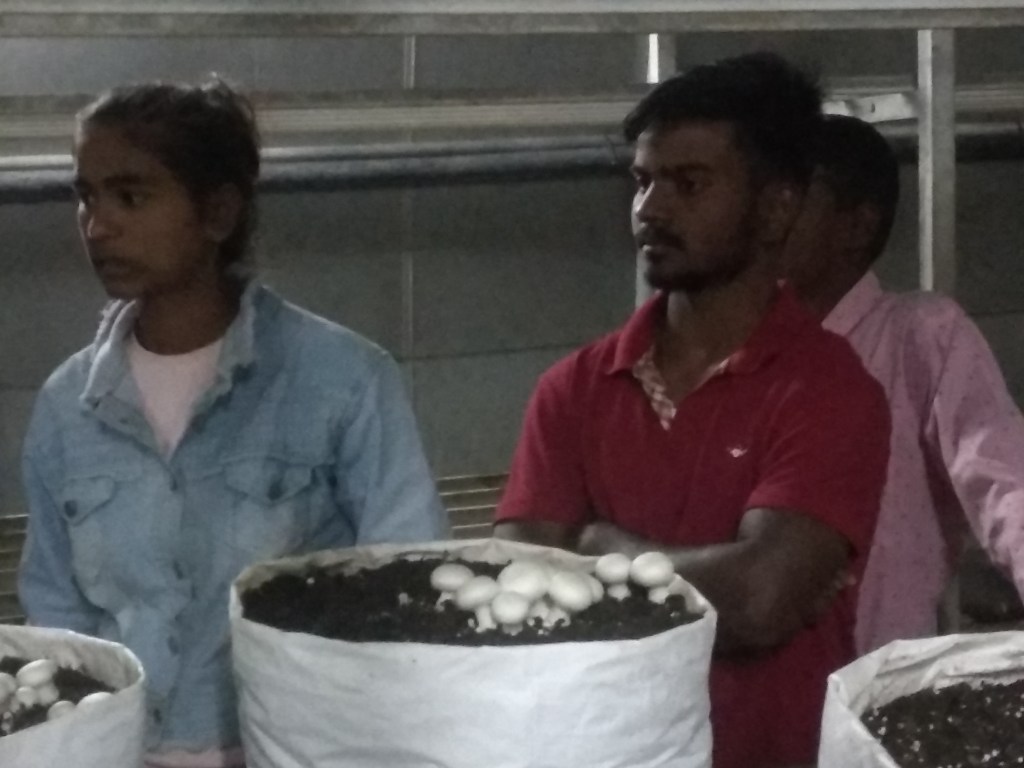
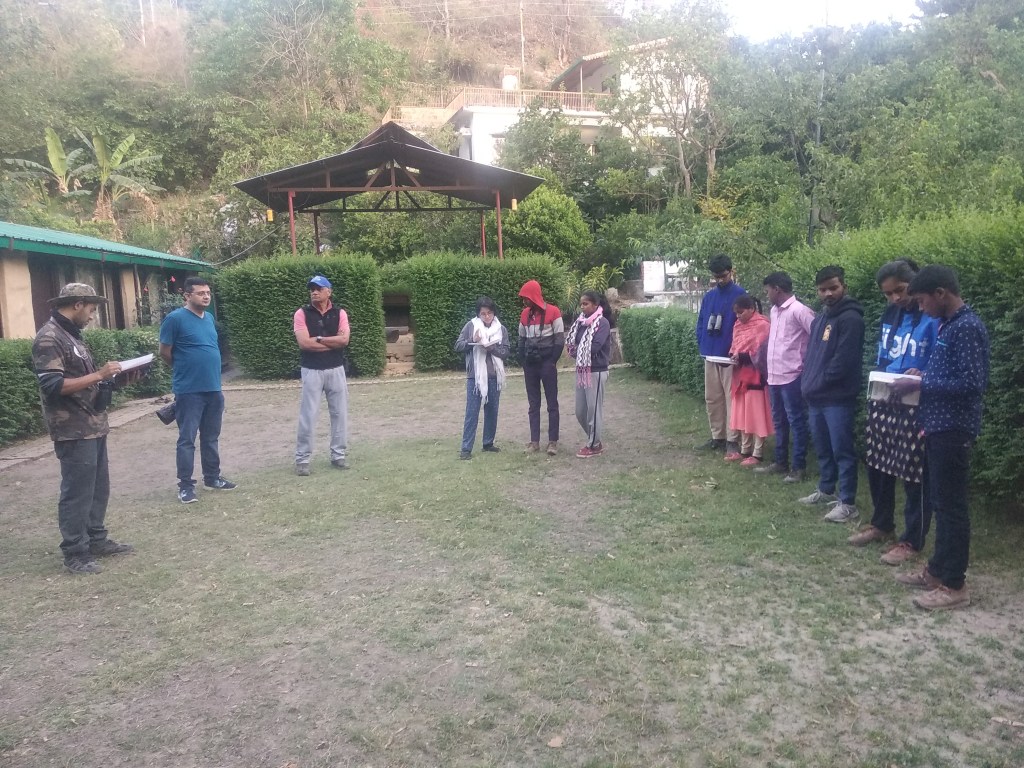
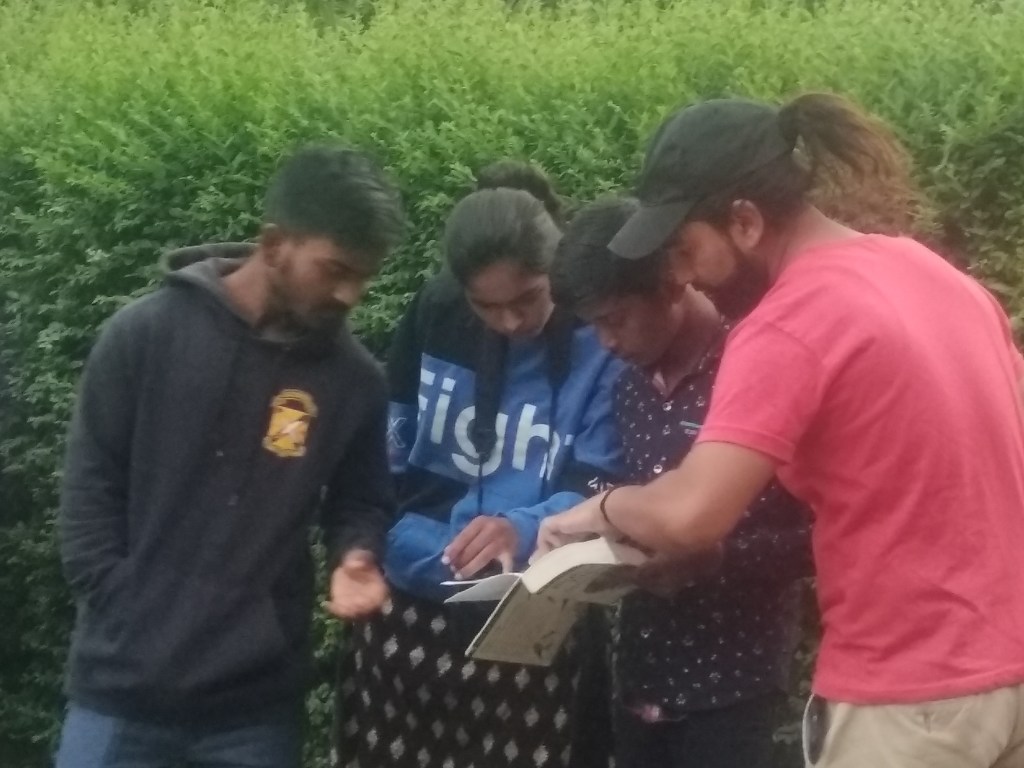
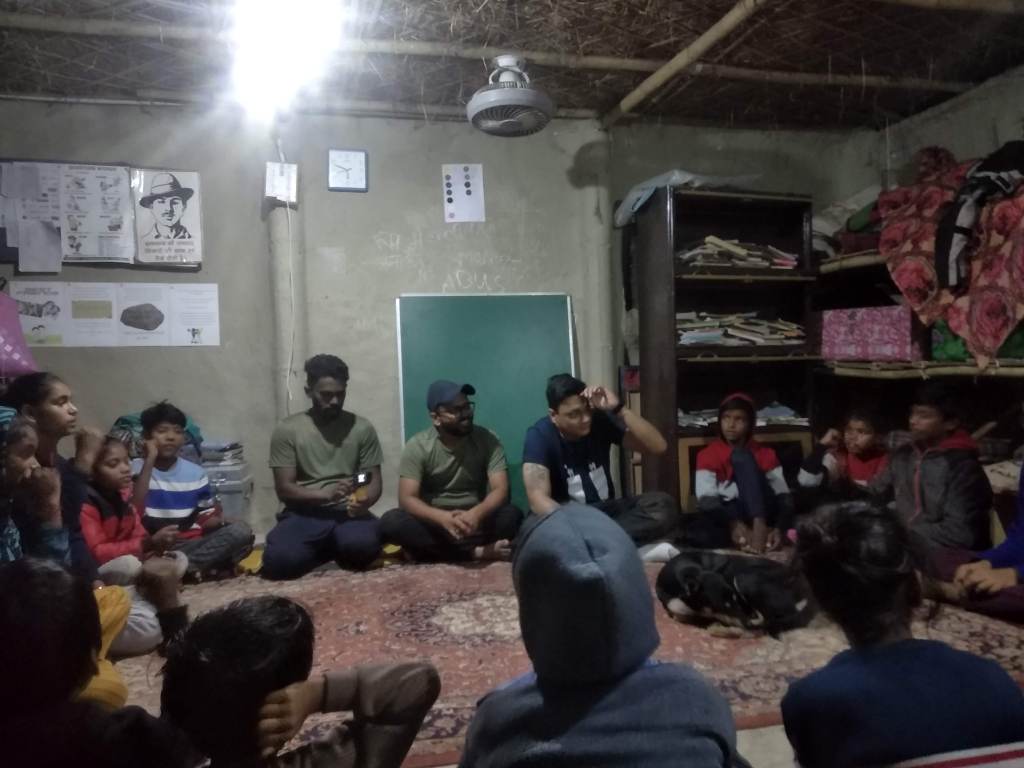
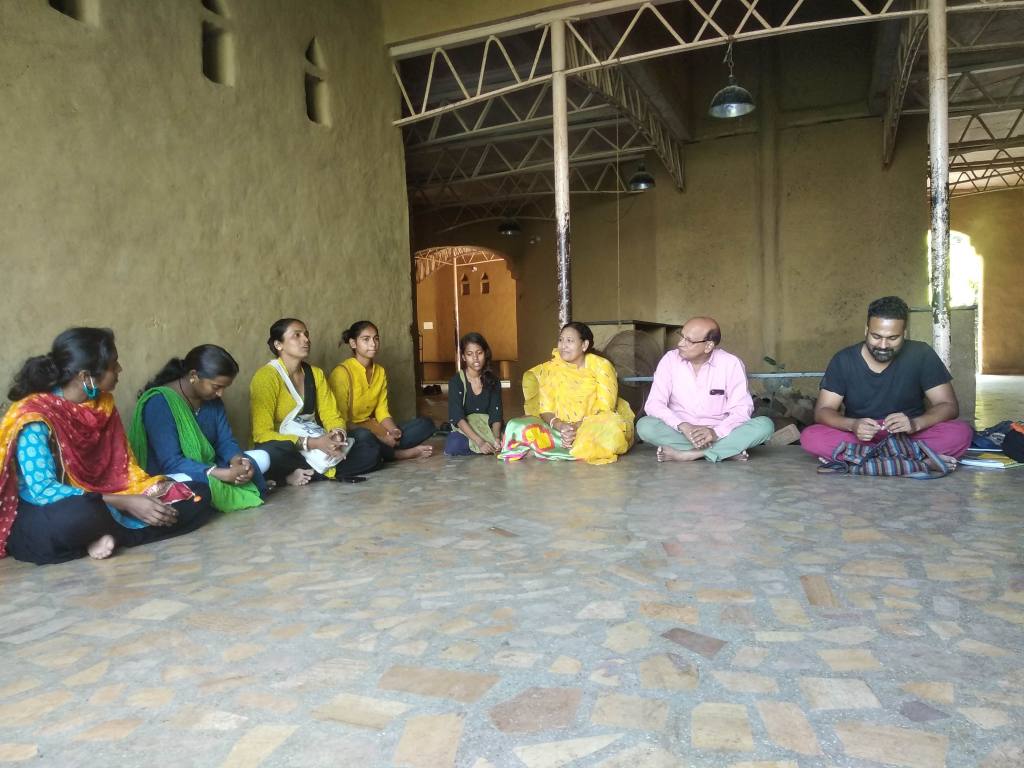
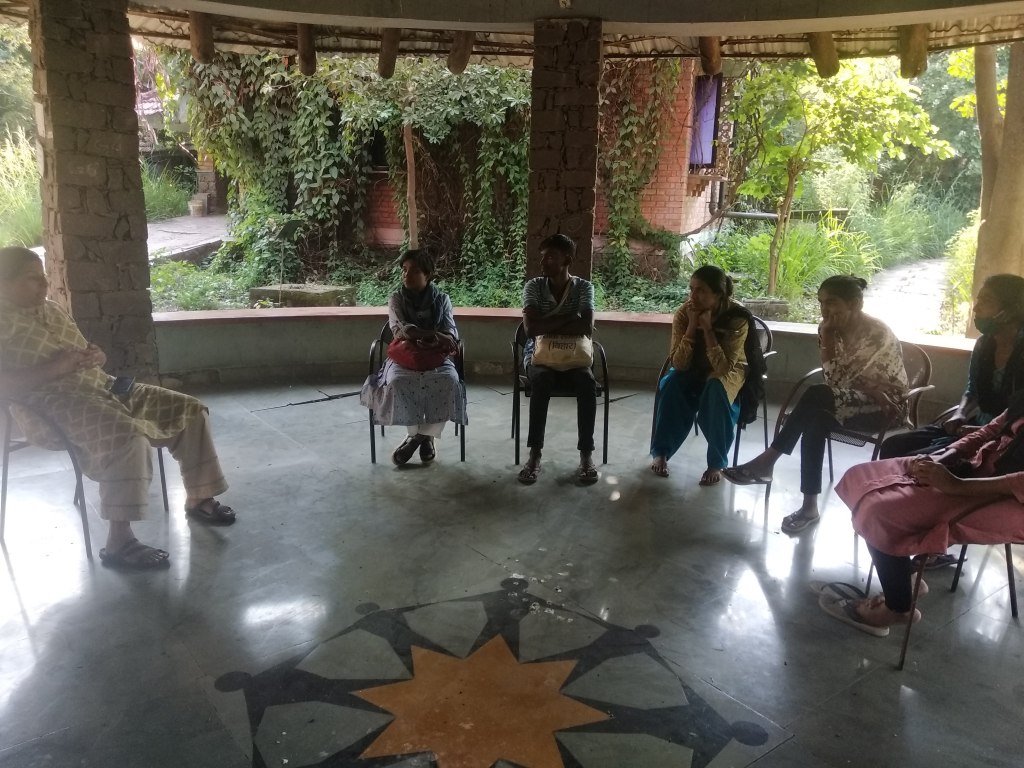
Another beautiful thing that happened at the JS in November, was a visit by Manoj, Shruthi and Paras. While Manoj works with a corporation in the USA, and hails from Bihar, Shruti and Paras are young environmentalists. Paras is also an environmental photographer and film maker. One can check out his work at https://www.youtube.com/c/ParasRajBoraFilms Their interaction with the children, really enthused them and Shruthi didi and Paras Bhaiya, said they would have the children over at their place in Nainital (Uttarakhand).
Interacting with Shruthi and Paras
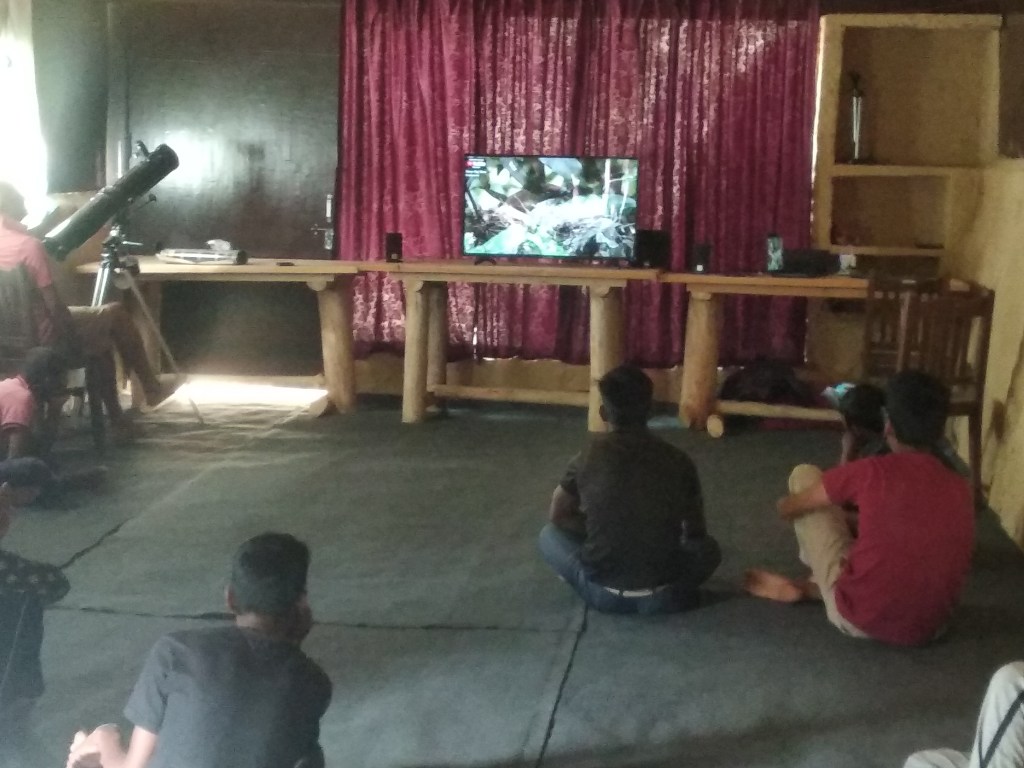
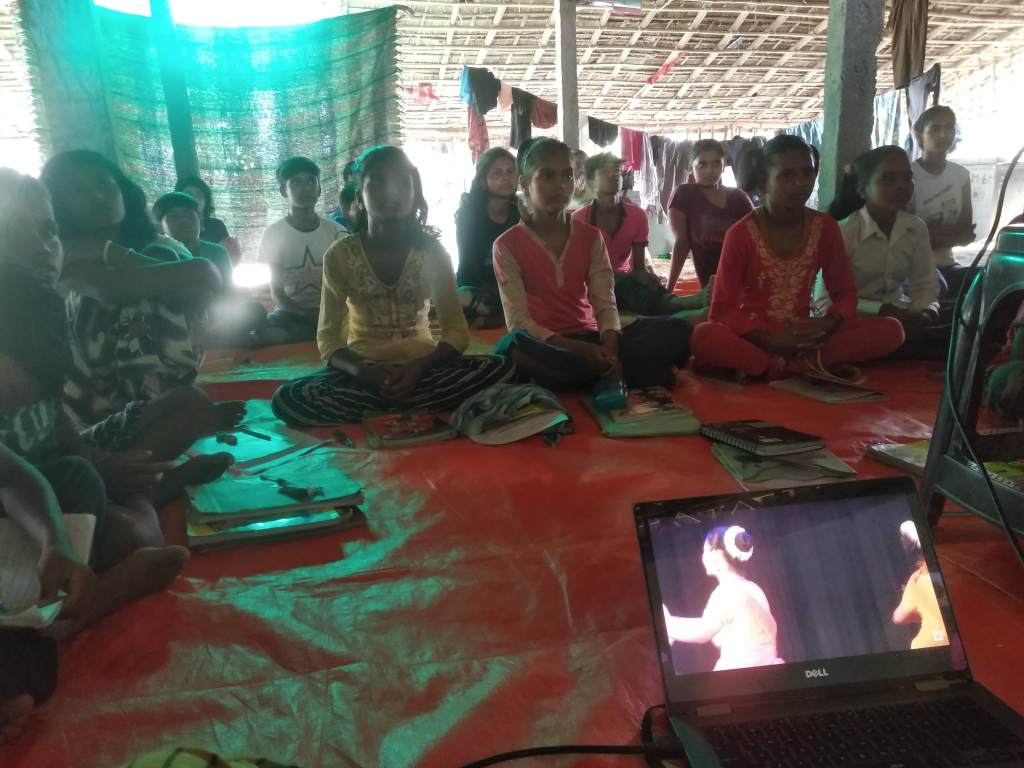
PARAS SHOWS ONE OF HIS FILMS FROM THE UTTRAKHAND HILLS AND TALKS ABOUT THE ECOLOGICAL ISSUES FACING US
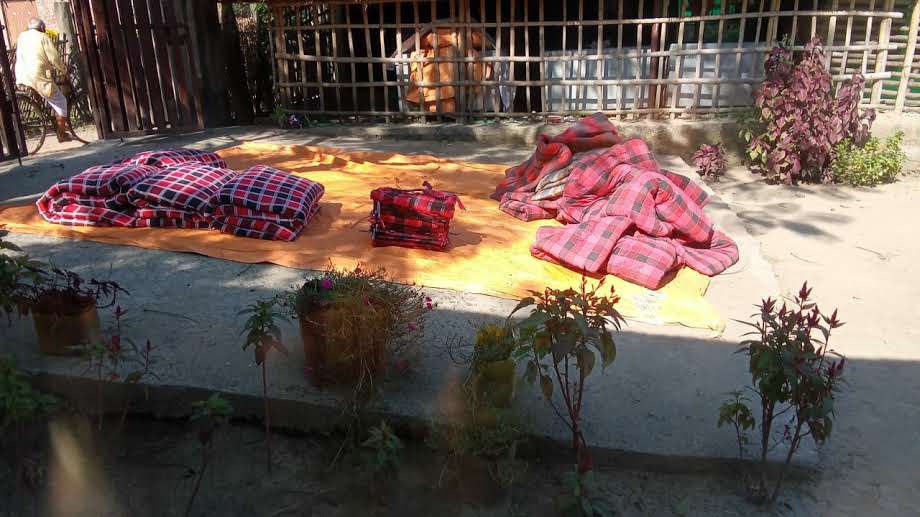
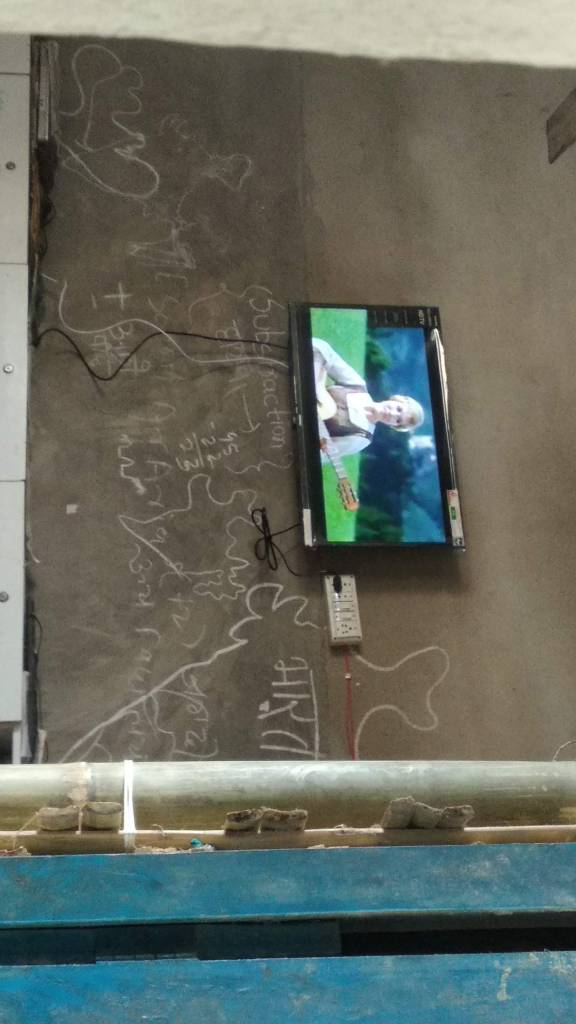
READINESS FOR NOVEMBER, GETTING BEDDING READY FOR THE CHILDREN WE GOT OUT TELEVISION SET, PLAYING ON IT SOUND OF SILENCE, PAUL SIMON AND GARFUNKEL ON THE NEW TV, DO RE MI FA … SOUND OF MUSIC CHILDREN IN THEIR NEW RAZAIS AND TOSHAKS
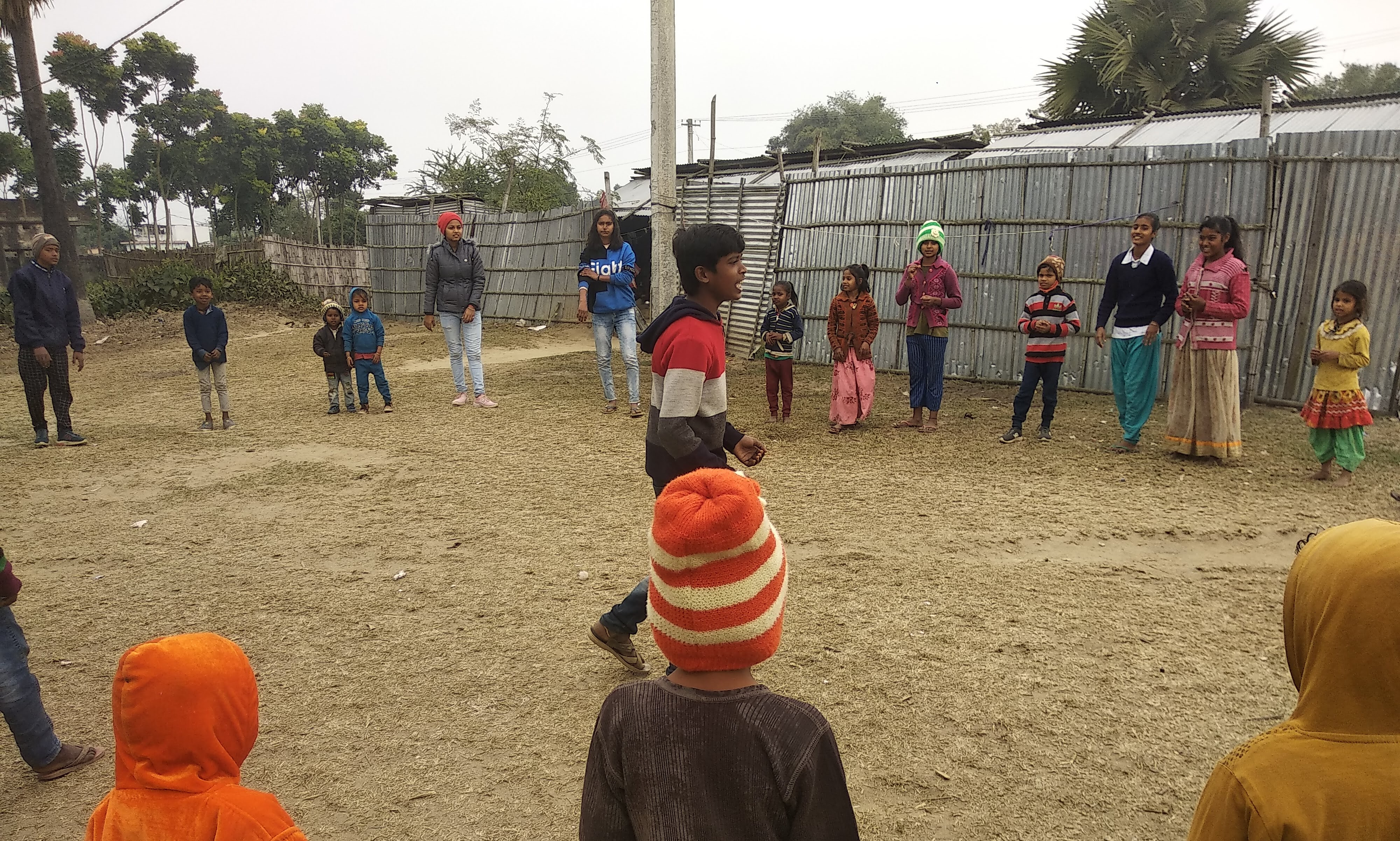
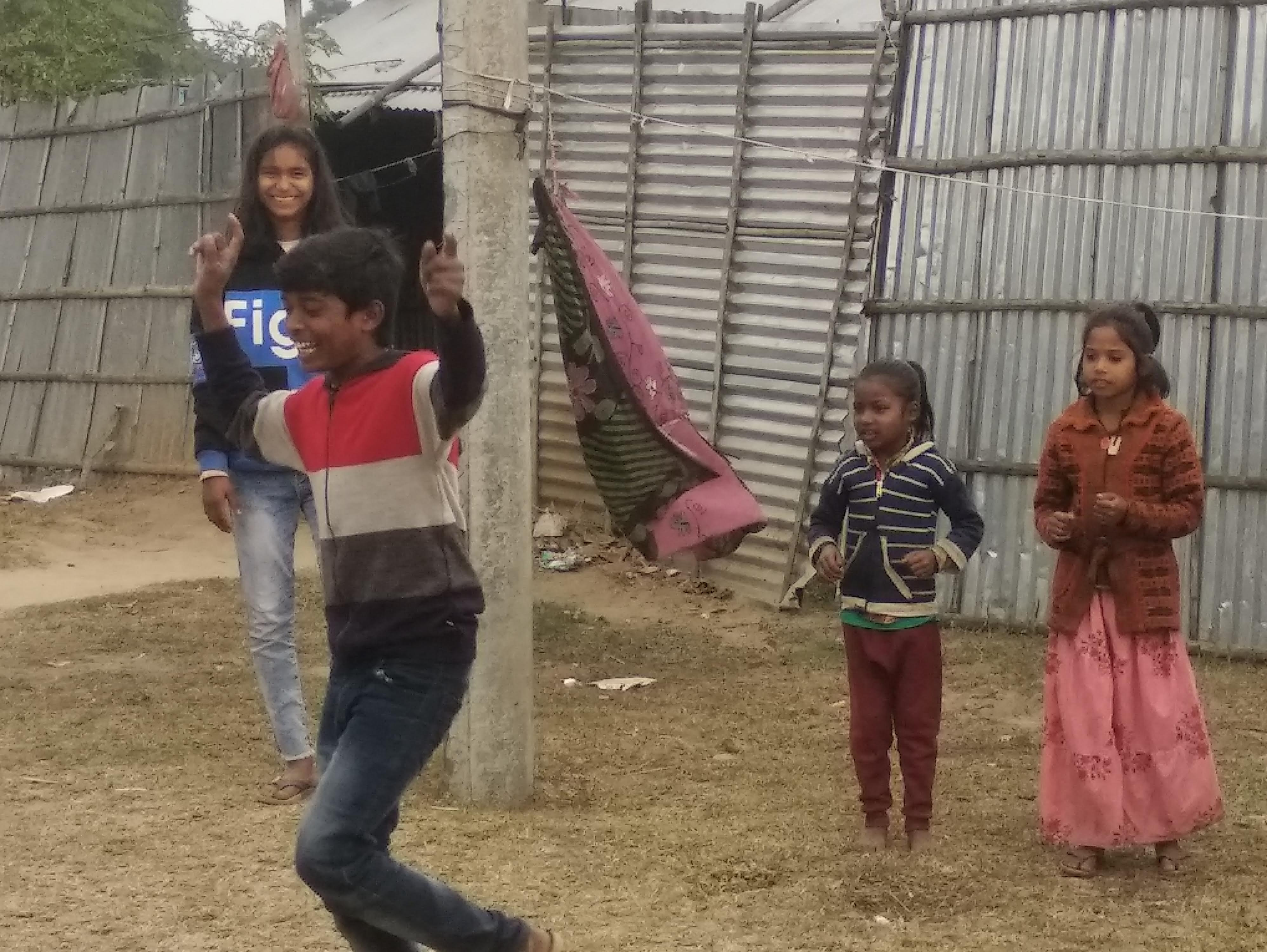
Like every month, sharamdaan, classes in english, hindi, maths and science continued, along with sports and zumba.
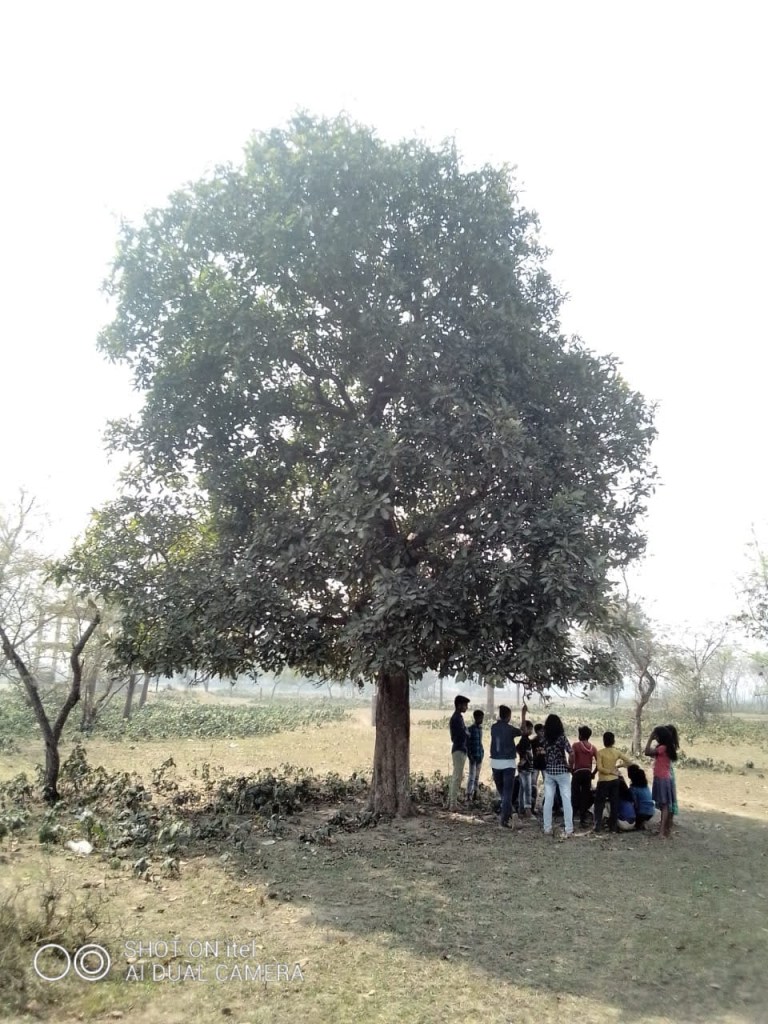
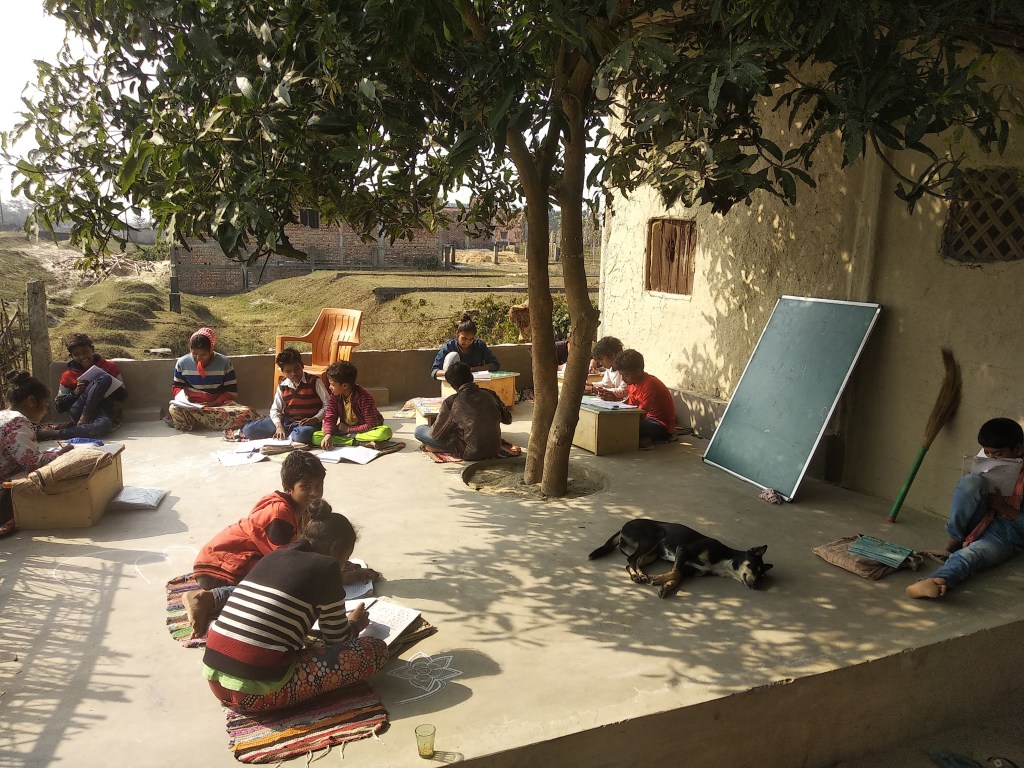
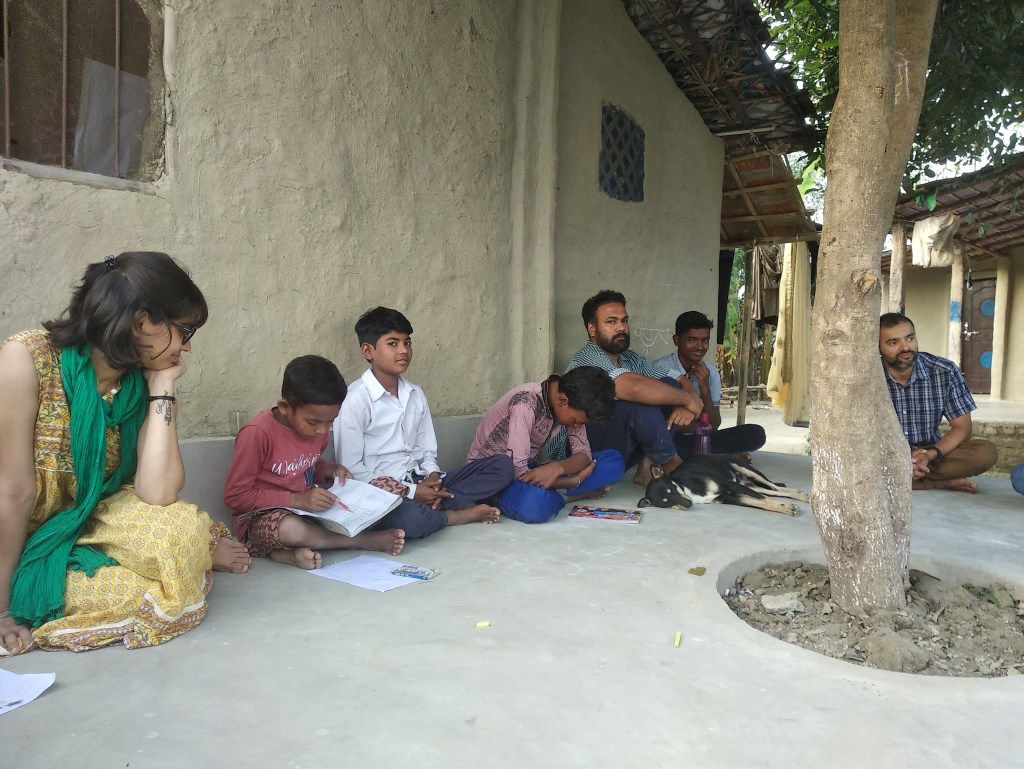
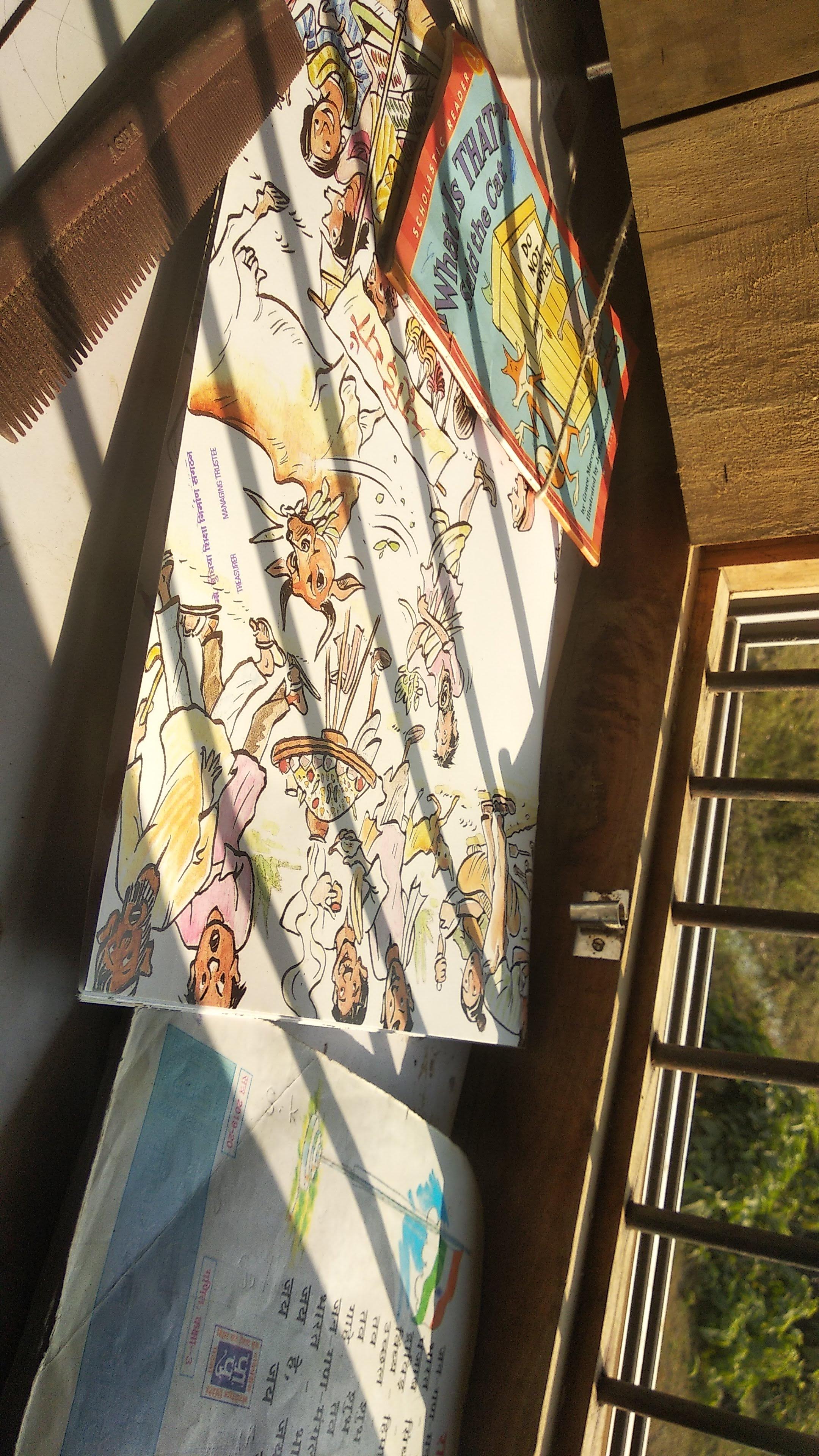
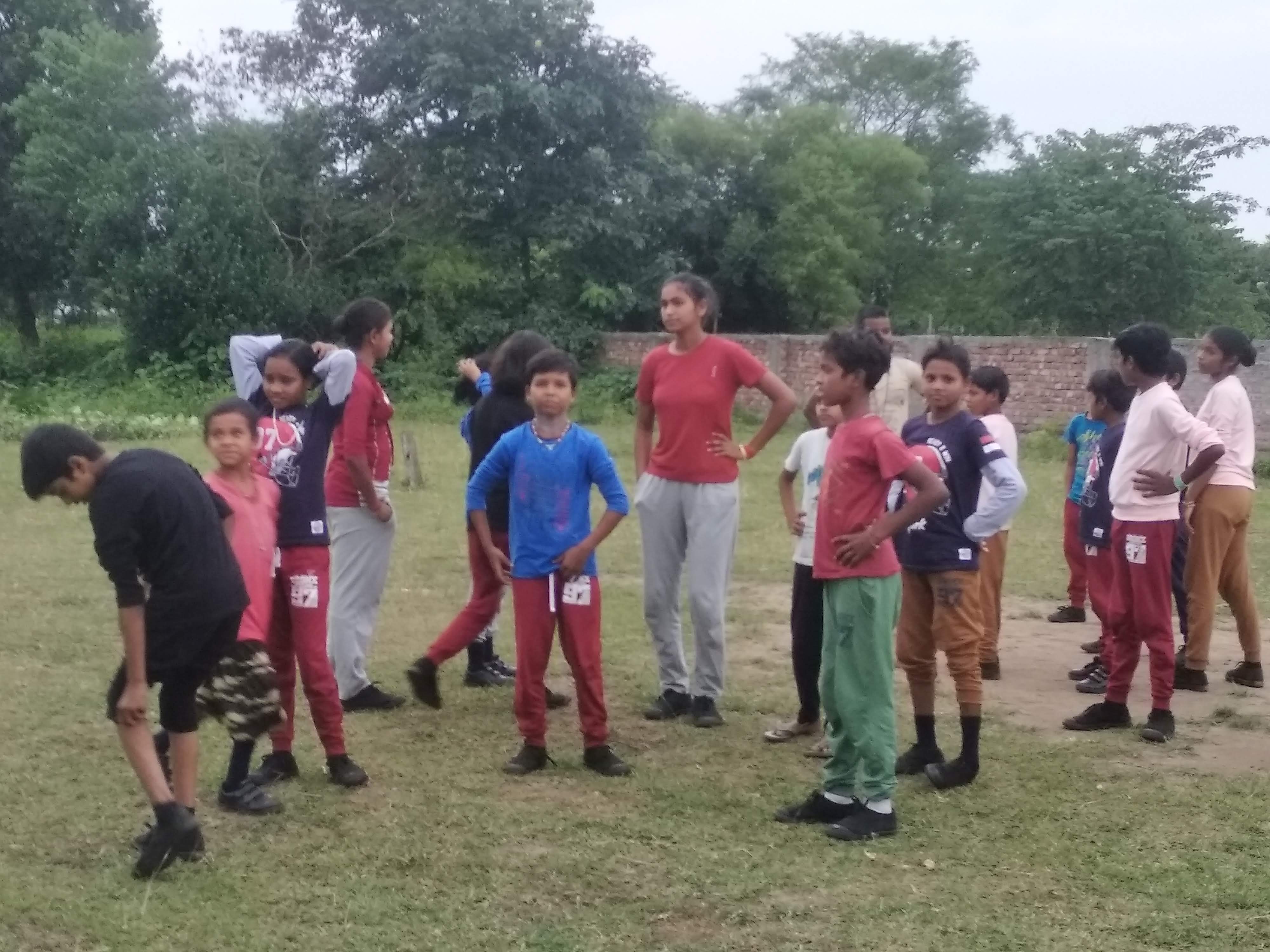
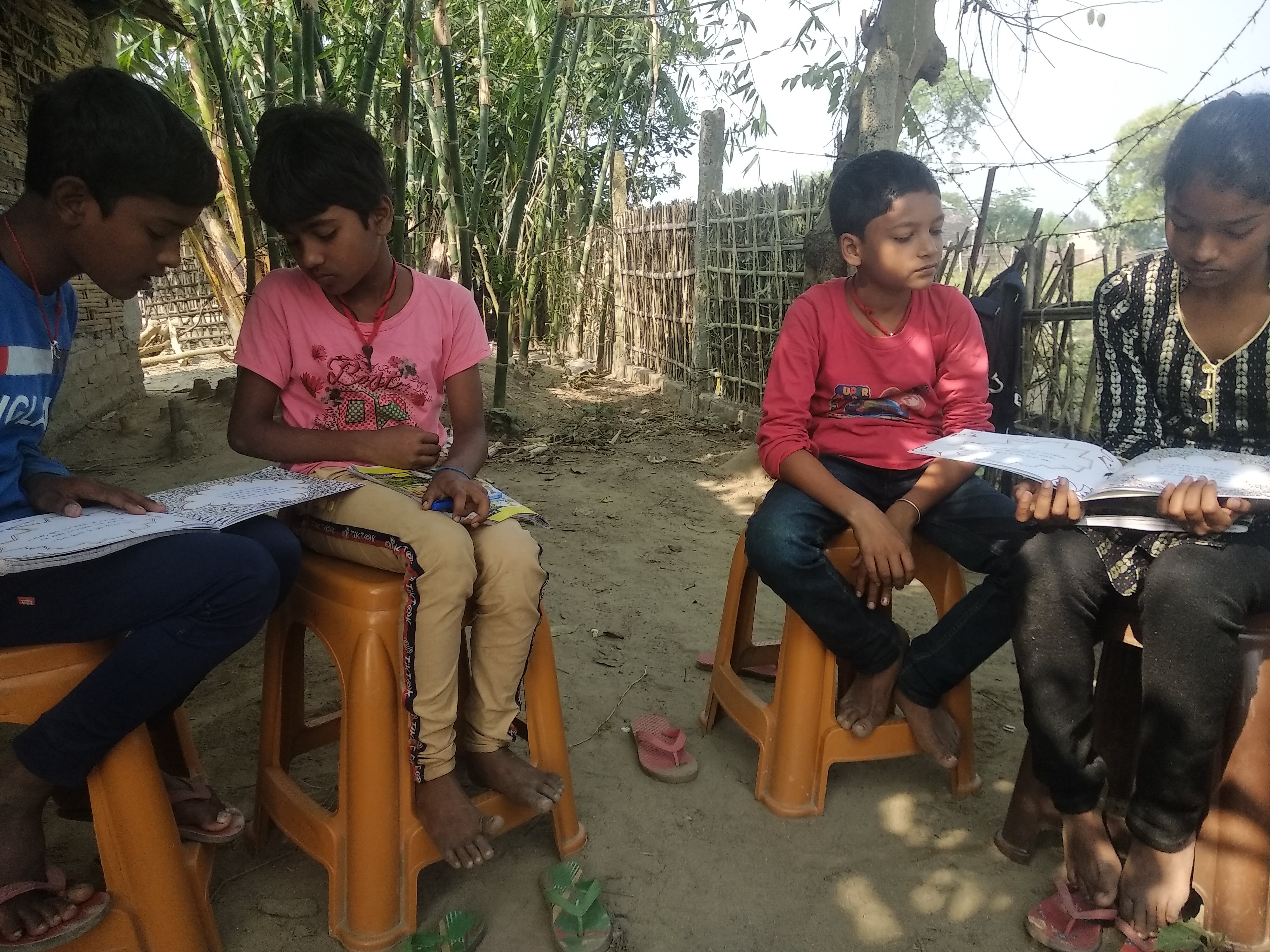
Clockwise: a play of light and shade on the children’s books; On the field in their new winter clothes; classroom in the open
Though the centre officially, closed in the first week of October. The Teacher Learner (TL) Team, went to Bhopal for the first exposure visit. Please do browse below for a short photo update of October at the Jeevanshala.
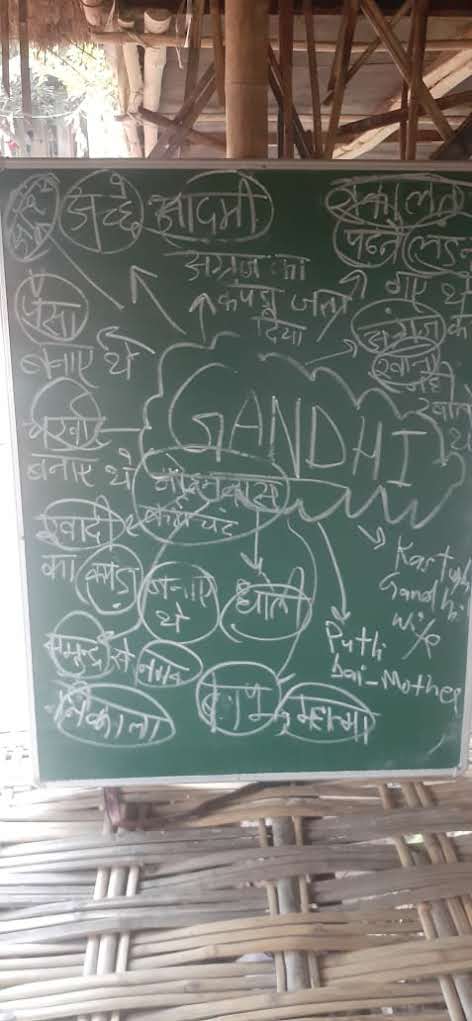
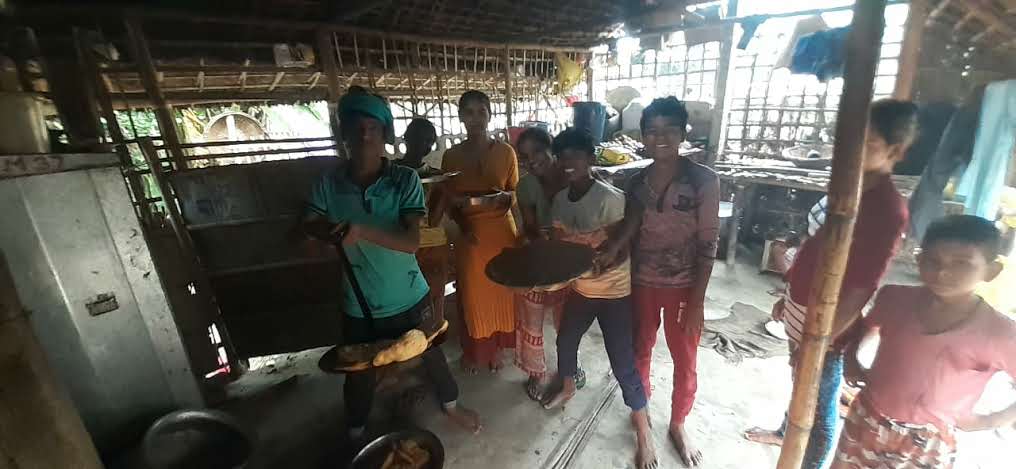
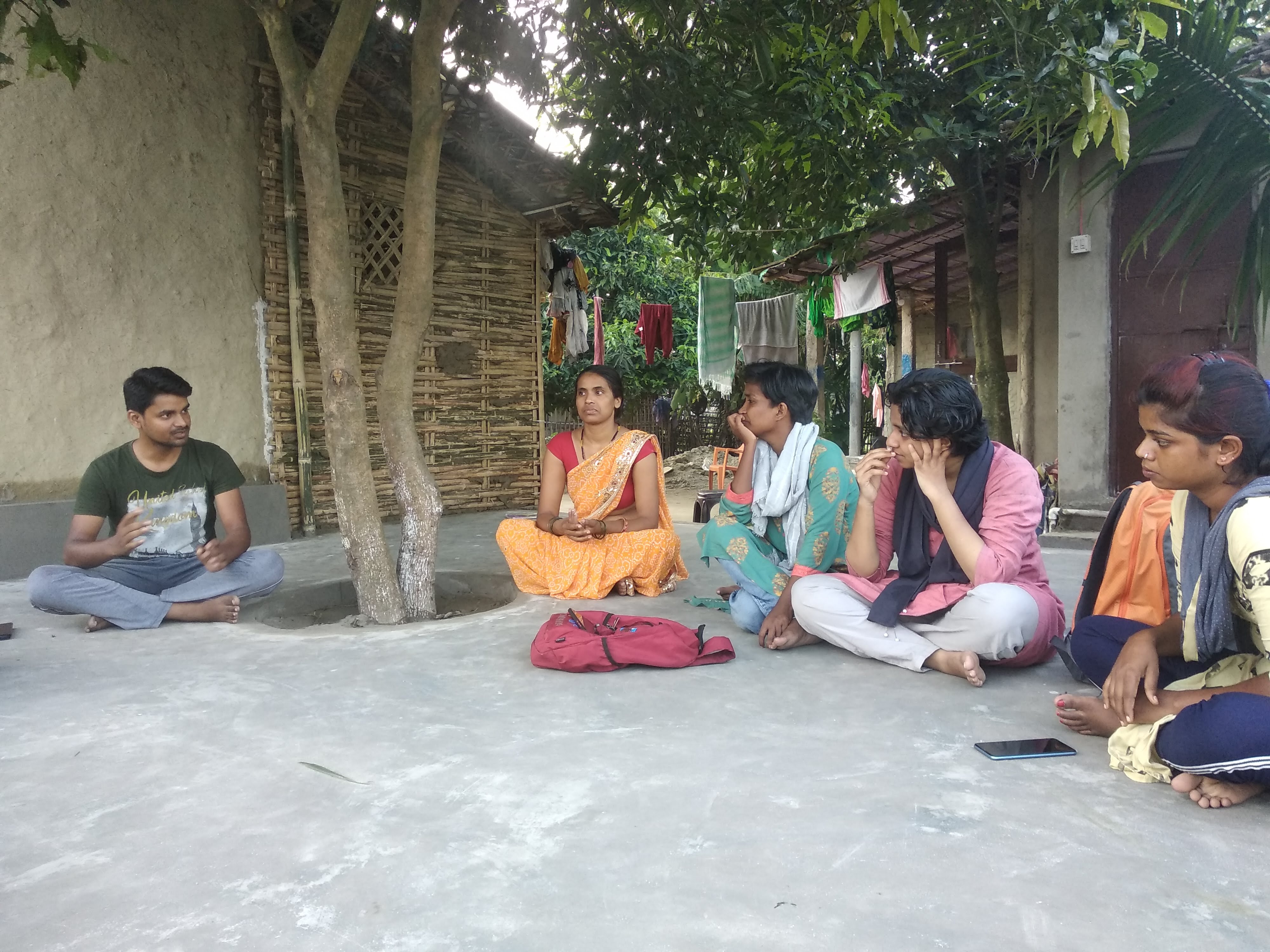
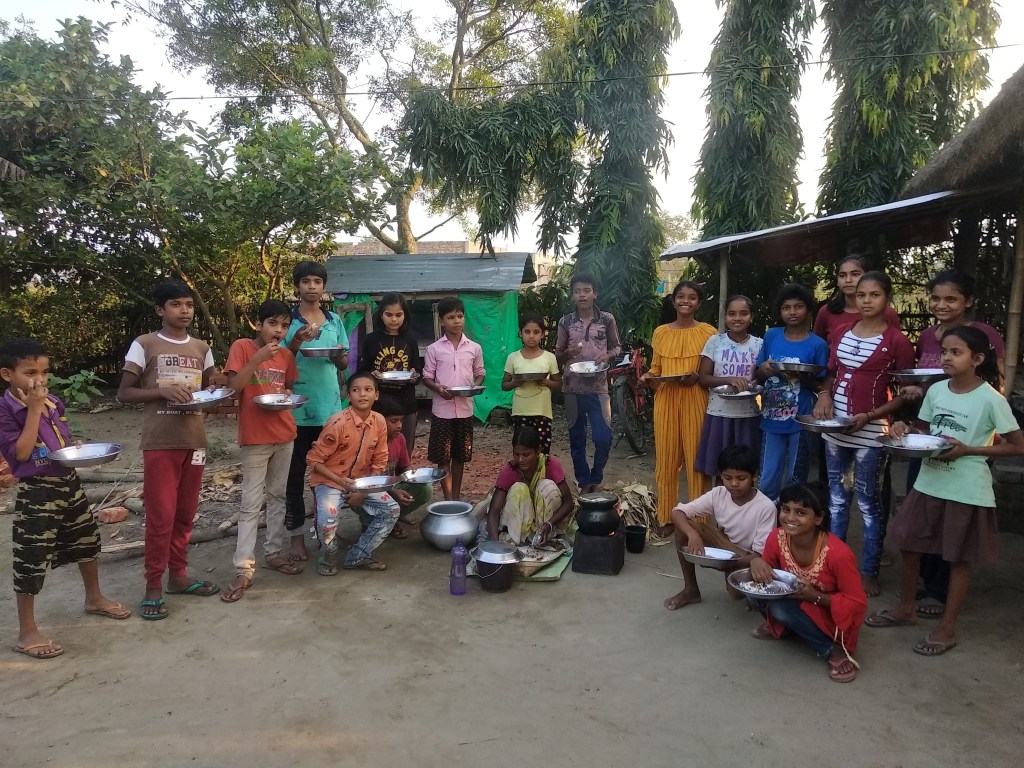
L-R : Discussion on Gandhi Jayanti, captured on the board cloud; Special Shramdan – Senior students make pooris, while others enjoy the cooking together, something so missing in the gendered Indian kitchen; Discussion on learning with friends from Thanal, Kerala, which is started a learning centre in Araria, for marginalised children.
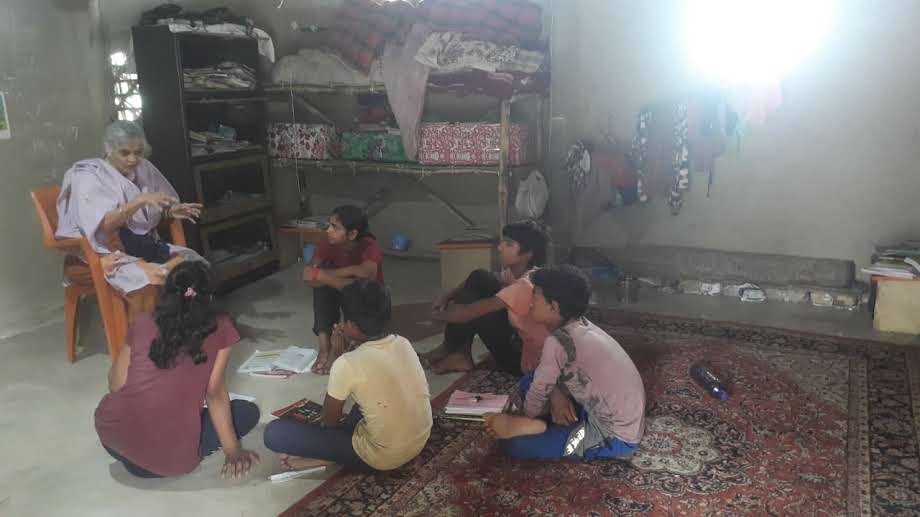
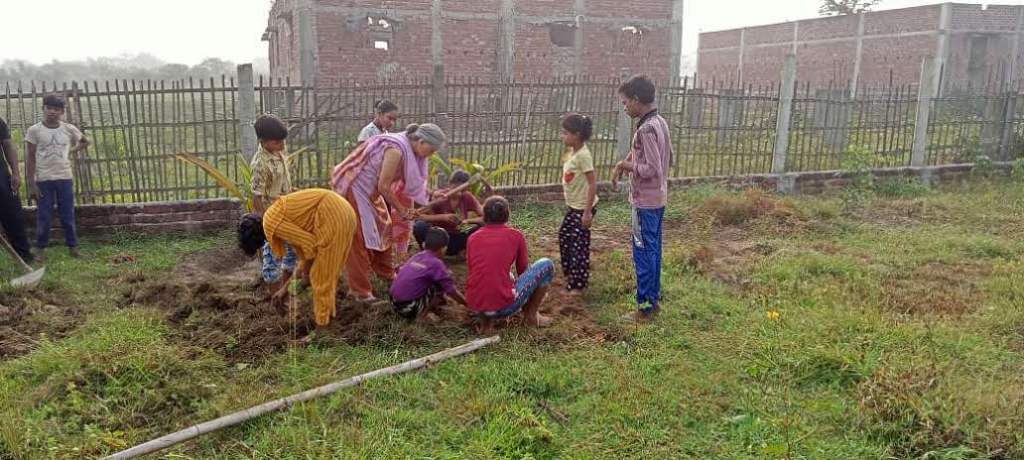
Before the festive season started, Nani visited the centre and spent time making sandwiches with the children, planting trees, playing and story telling, just learning through FUN!
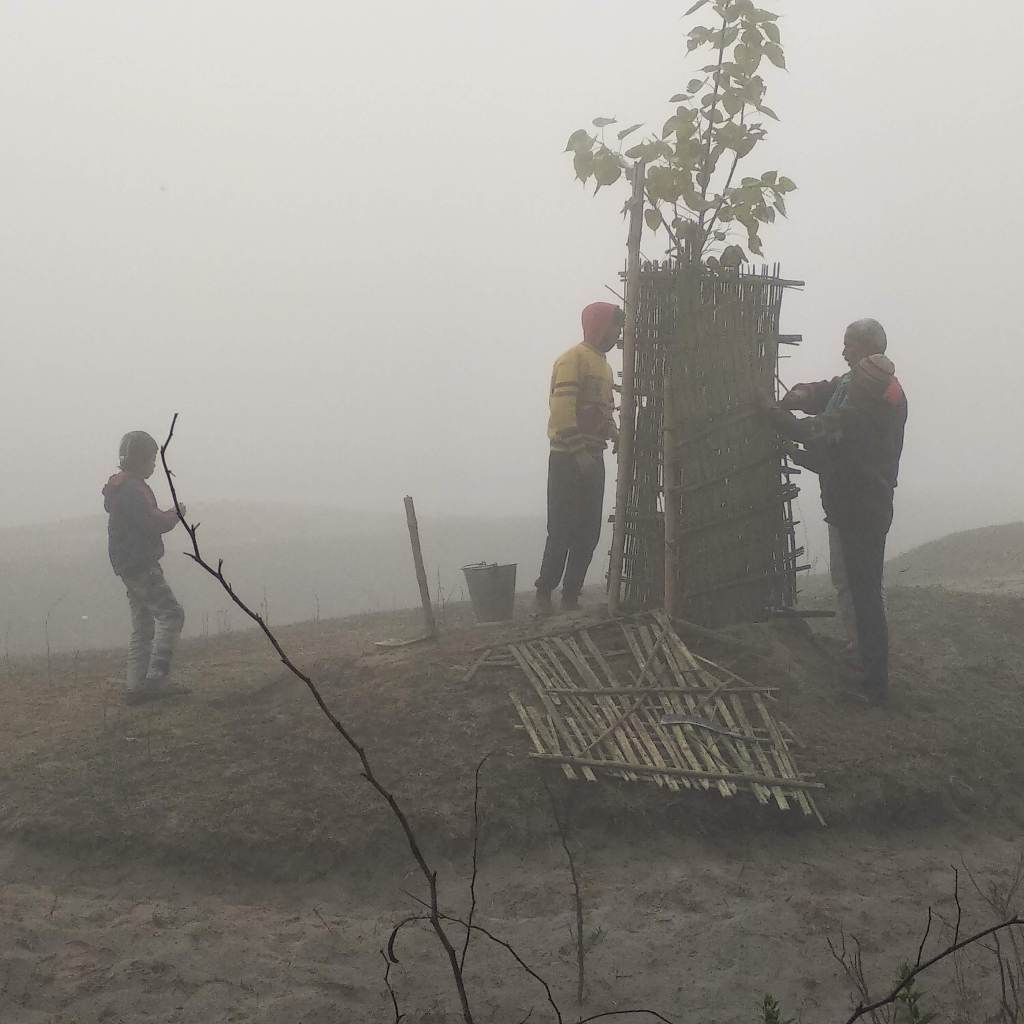
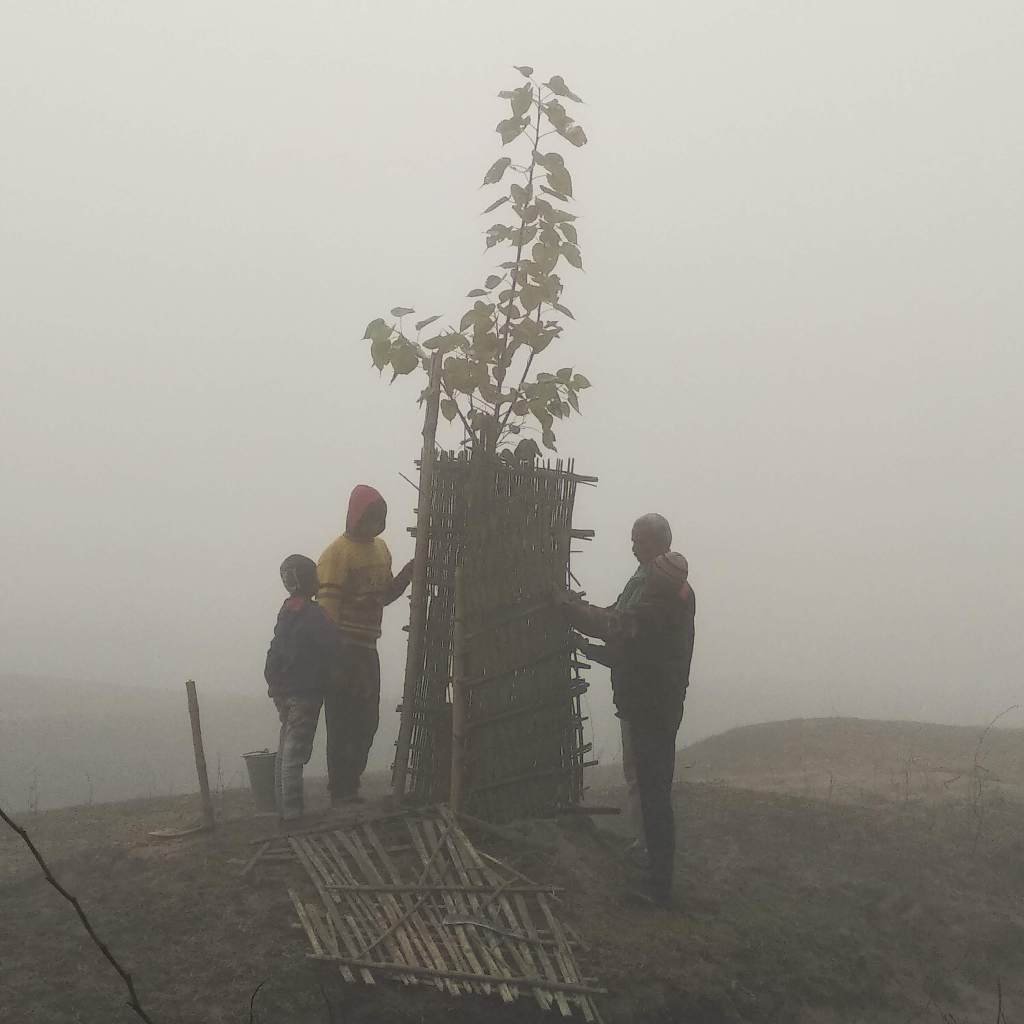
A story telling session with NaniA game of silent trees Nani organised a bhakka party, a tradiitonal rice case of North Bihar Tree Plantation with Nani
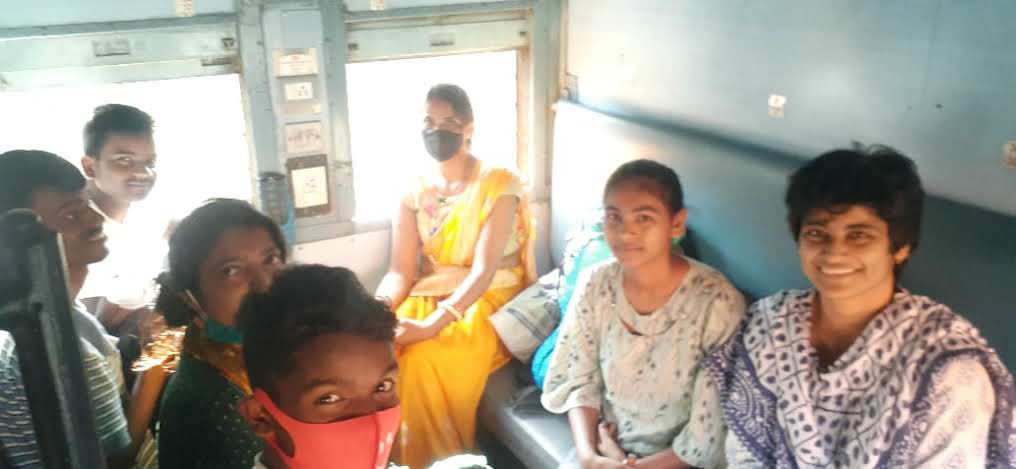
The Bhopal trip was a real eye opener for the TL group. We finally got a glimpse of learning in an organised, systematic play way method, as against the rote learning method. We can’t thank the Muskan and Eklavya Teams enough.
The TL team leaves for Bhopal Interaction at Muskaan Being part of the pres choolers group at Muskaan During the workshop at Eklavya Learning the Ganitmala, Eklavya Nilesh Bhai our Trainer, Eklavya Visit to Sambhavna Trust clinic, Bhopal MP Tribal Museum Visit Sanchi Stupa Visit
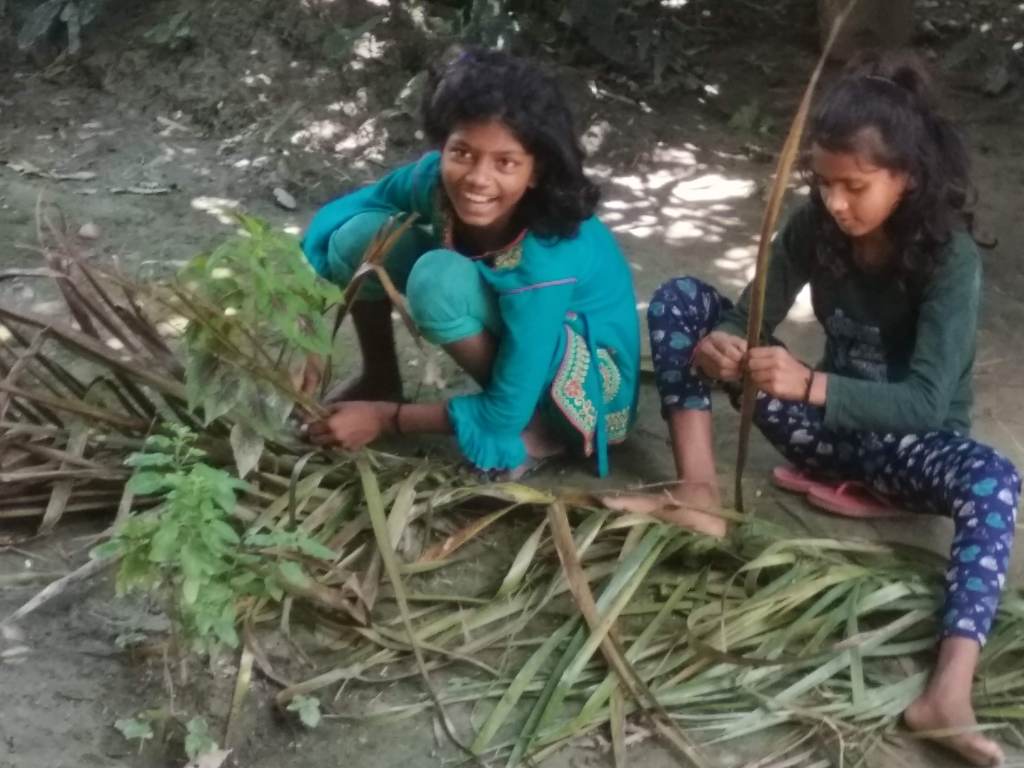
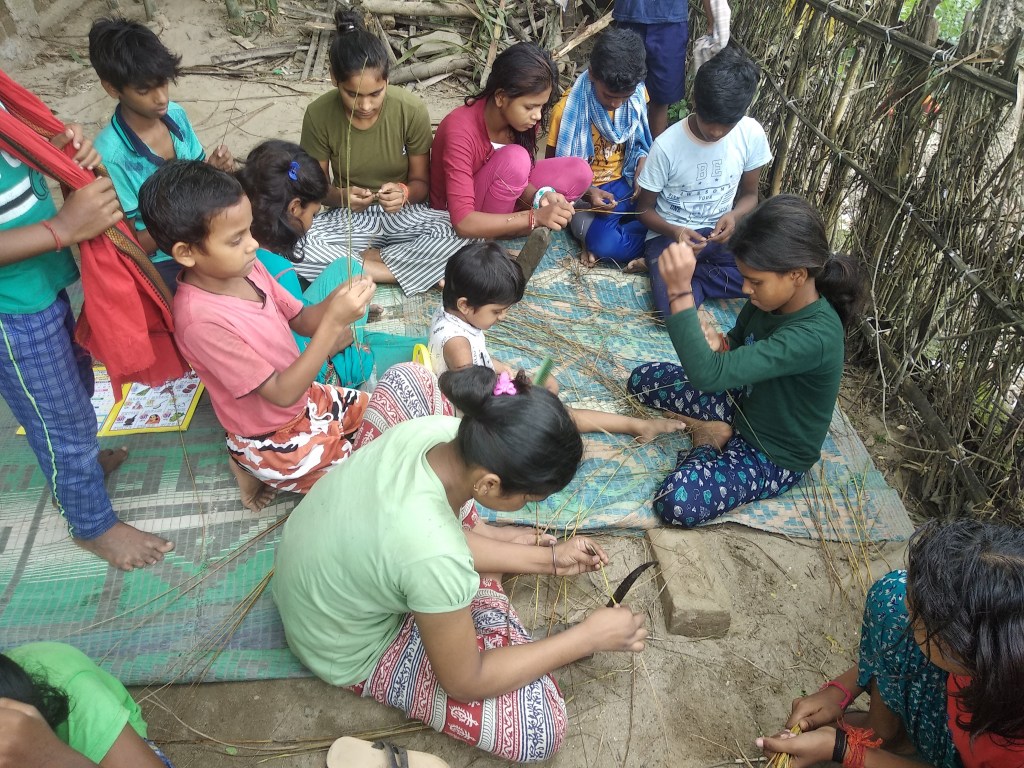
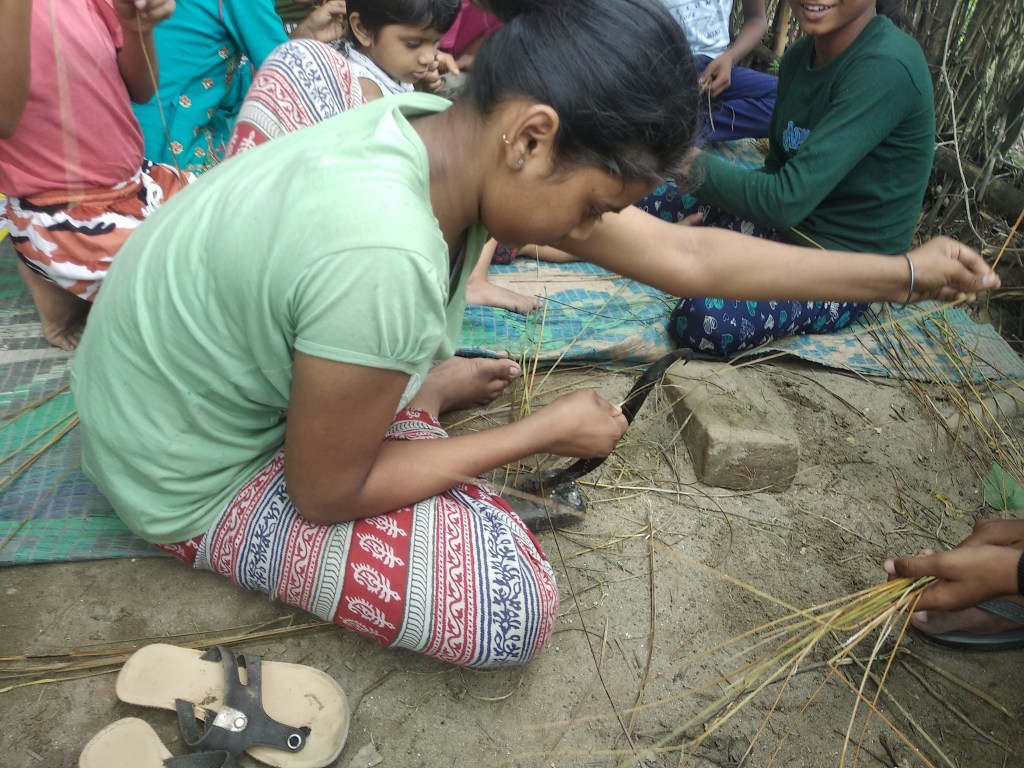
Neetu and Siddhi, lead the broom making training Evryone learns from the team leads, co-students, with valuable skills Bhagyashree doing broom making in full earnetness
The idea that we all learn from each other is beautifully illustrated below, where students help each other learn the making of brooms from palm frond. A skill only a few teacher learners (TL) have.
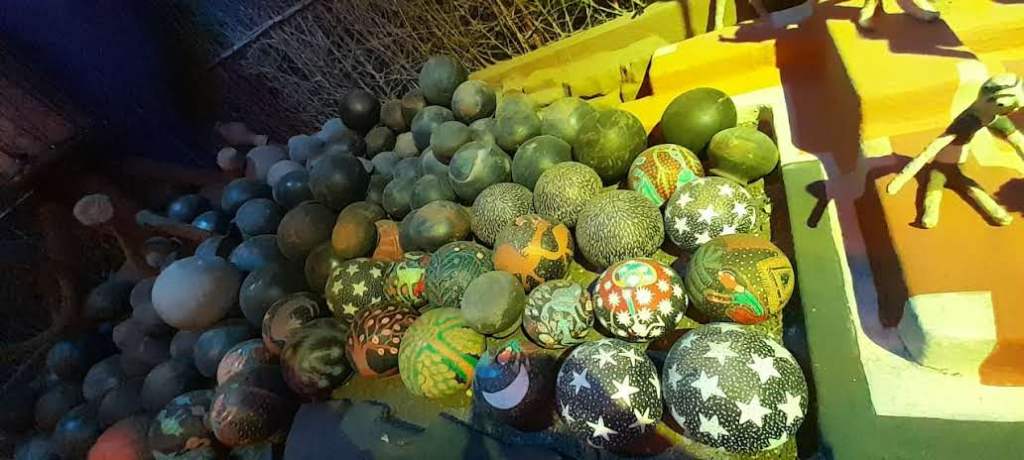
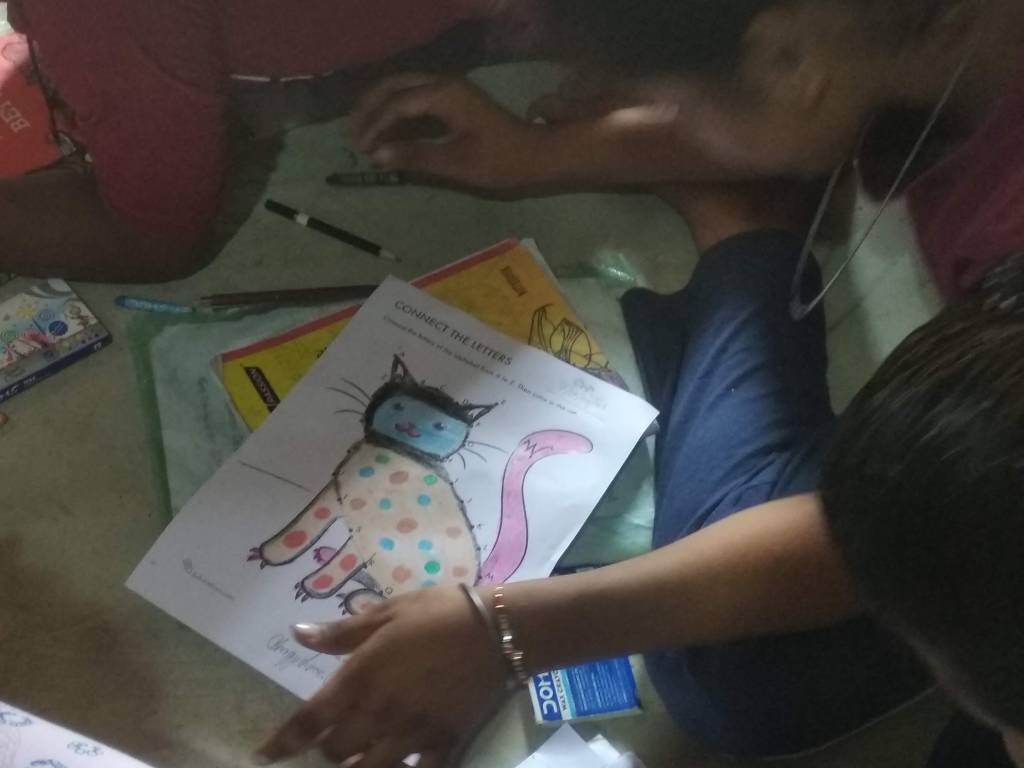
Our children are fascinated with colours, for them a cat on paper is not the usual boring browns, whites, but all the above 🙂
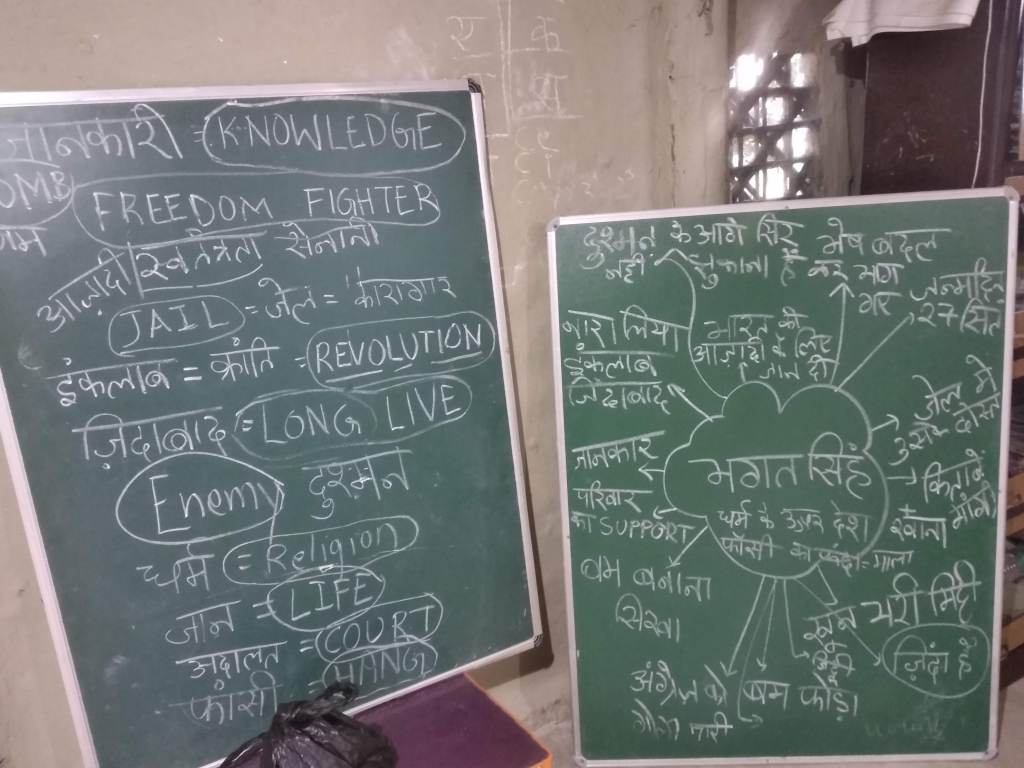
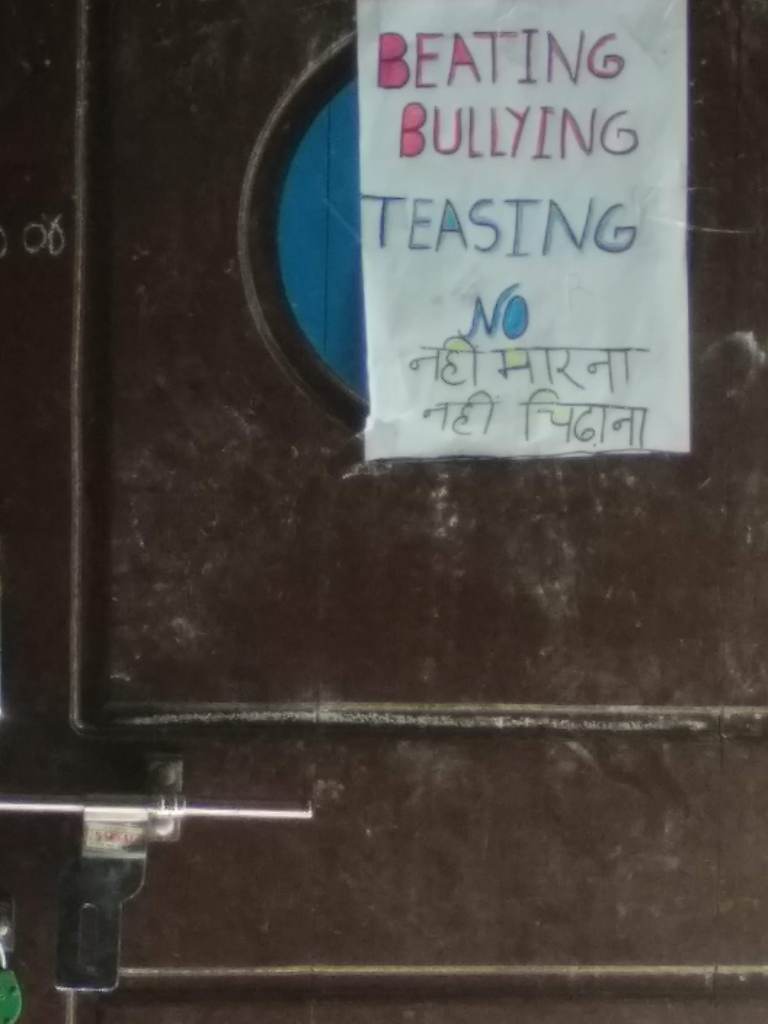
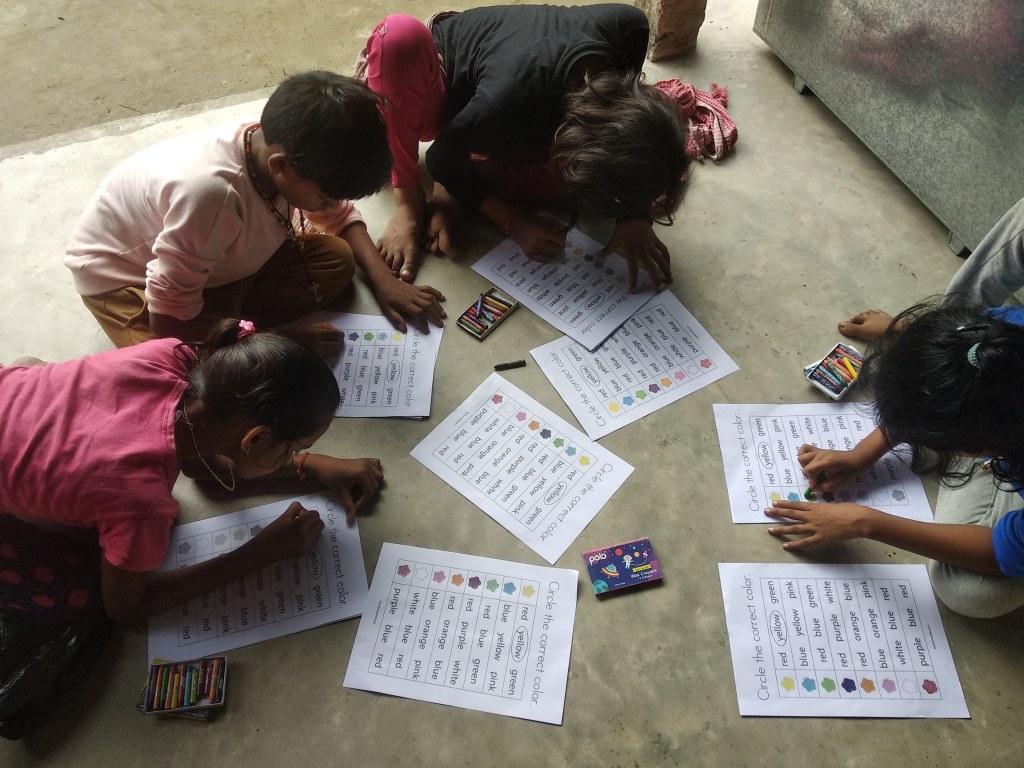
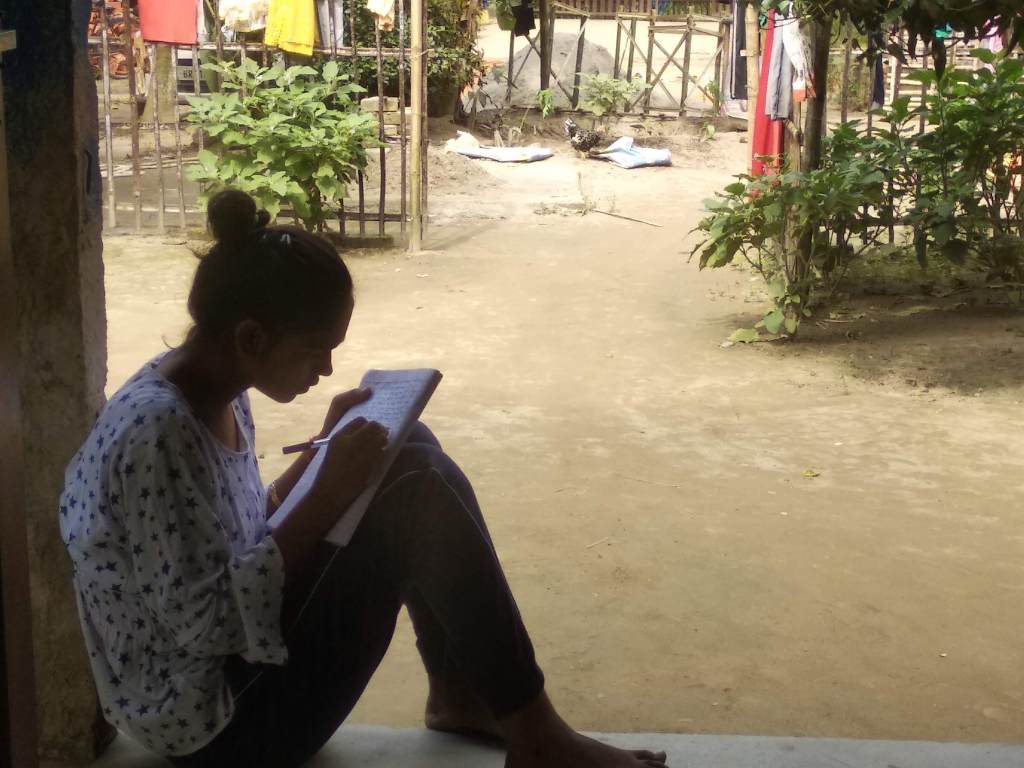
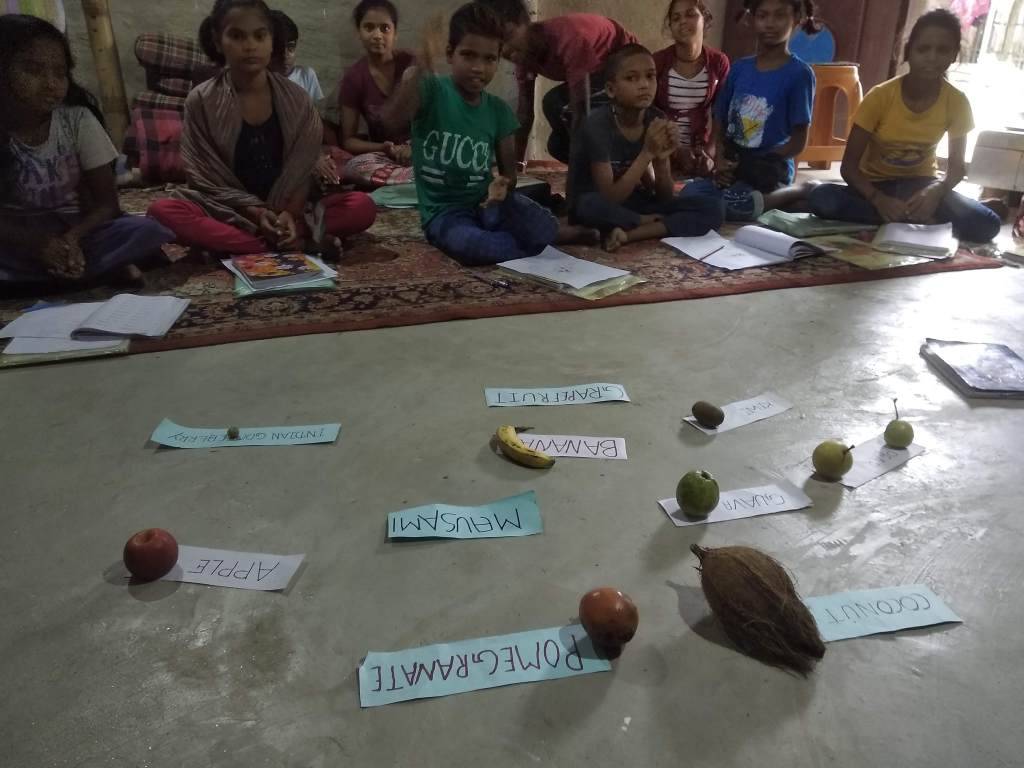
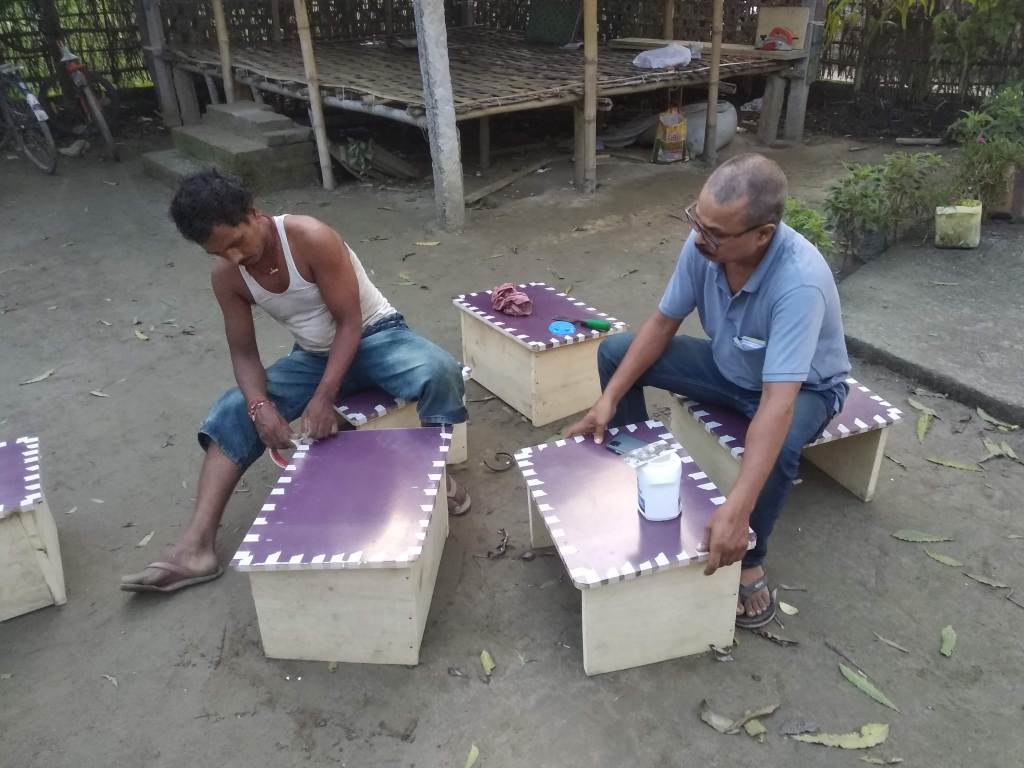
REMEBERING BHAGAT SINGH ON HIS BIRTH ANNIVERSARY DEALING WITH LOSS- SULTAN BHAI IS NOT WITH US BUT WE WILL REMEMBER HIM WITH LOVE, REST IN PEACE SOMETIMES ITS WRITTEN ON THE WALL, AND SOMETIMES ITS ON THE DOOR, LOUD AND CLEAR INDEPENDENCE DAY IN AUGUST AND UNDERSTANDING OUR GEOGRAPHY IN SEPTEMBER COLLECTIVE ENGAGEMENT CHILDREN HELP PREPARE ENGLISH WORKSHEETSMATHS WITH CONCRETE THINGS SELF STUDY LEARNING NAMES OF FRUITS IN ENGLISH, ALL FRUITS ENDED UP IN OUR BELLIES, BECAUSE WE LEARN FROM ALL OUR SENSES WE ALL NEED STUDY TABLES JUNGLE WALK HERBARIUM BRINGING THE WALK LEARNINGS TO THE CLASSROOM FOR VOCABULARY BUILDING
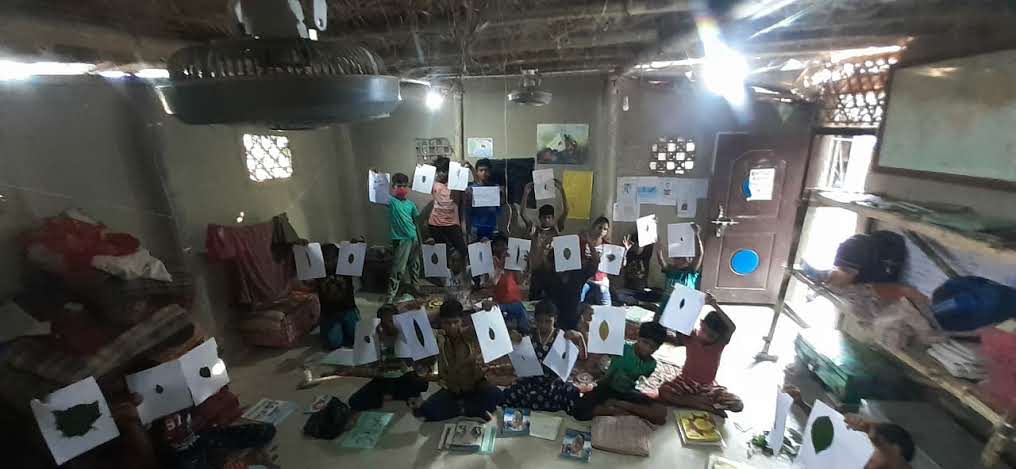
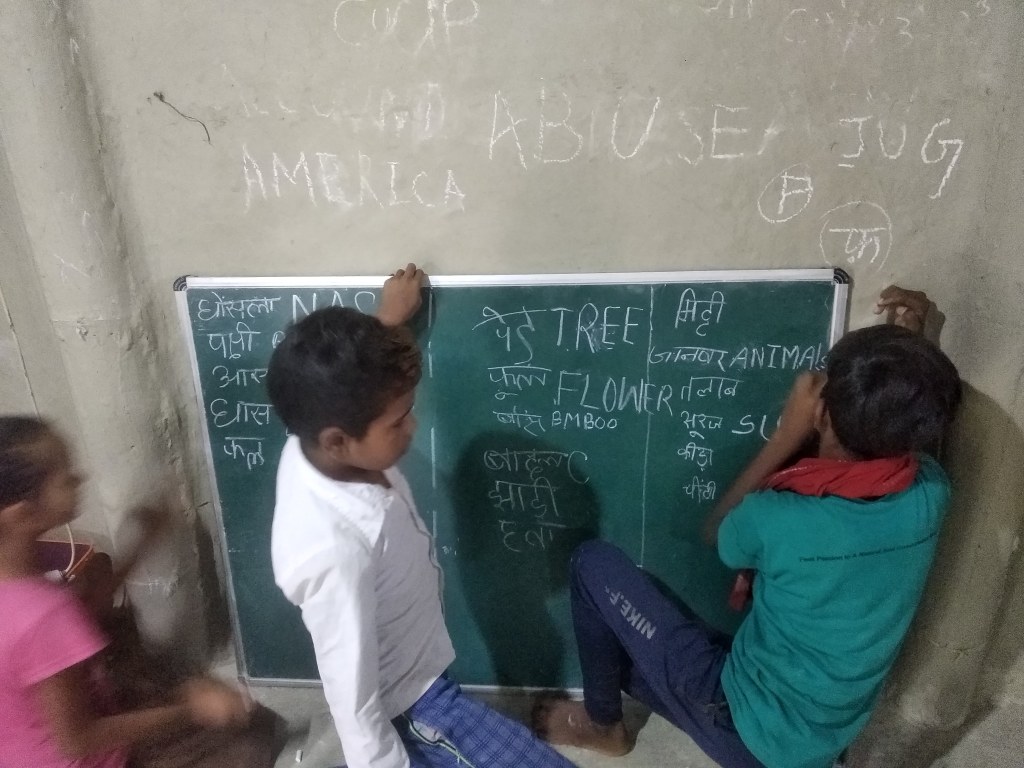
One jungle walk behind the centre, in the jungle vibhag, has many things to contribute to children’s learning. Nature heals and teaches, and when we came back from it our children made a herbarium and put words they used to describe things in the jungle, with english and hindi words, increasing their vocabulary.
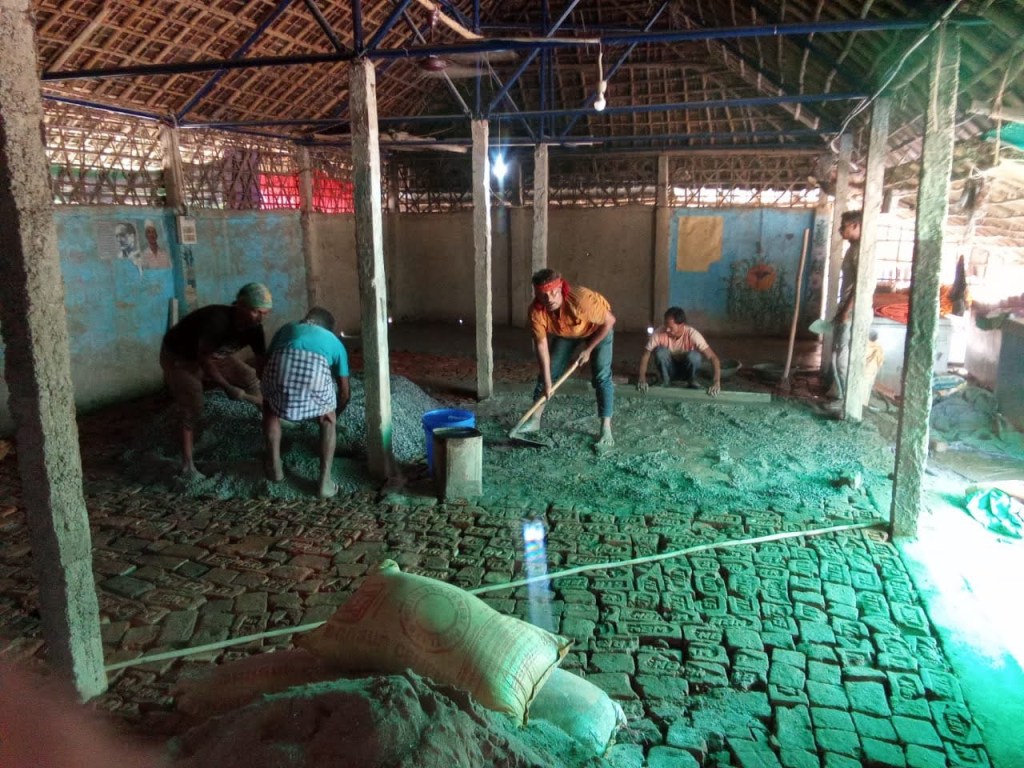
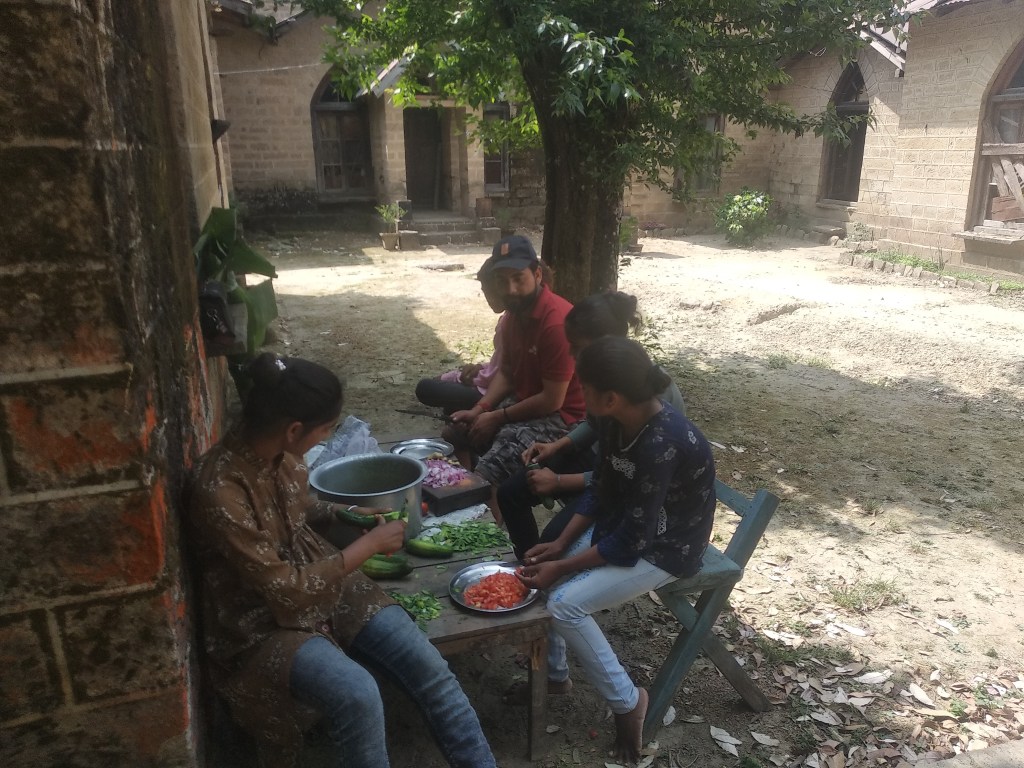
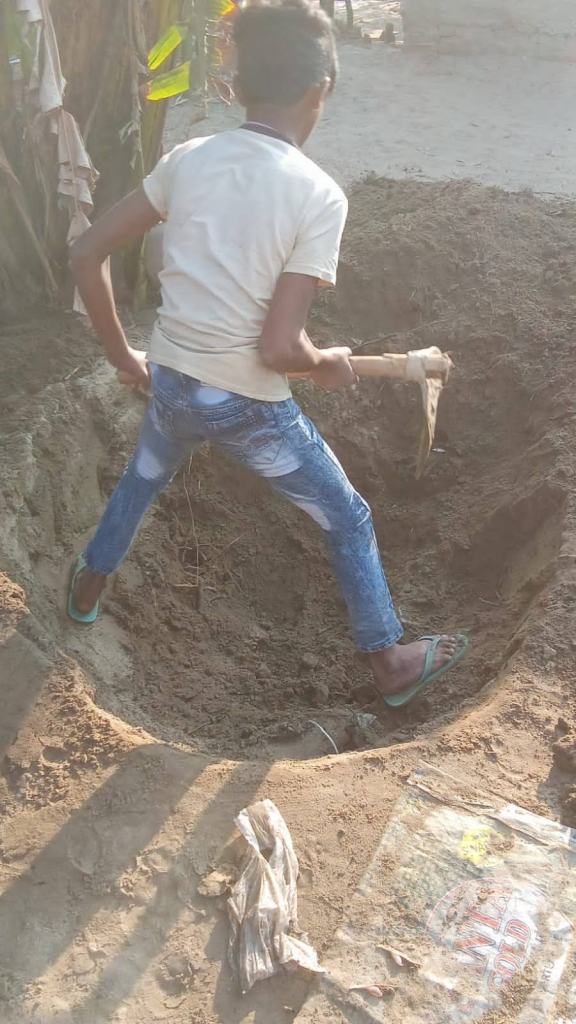
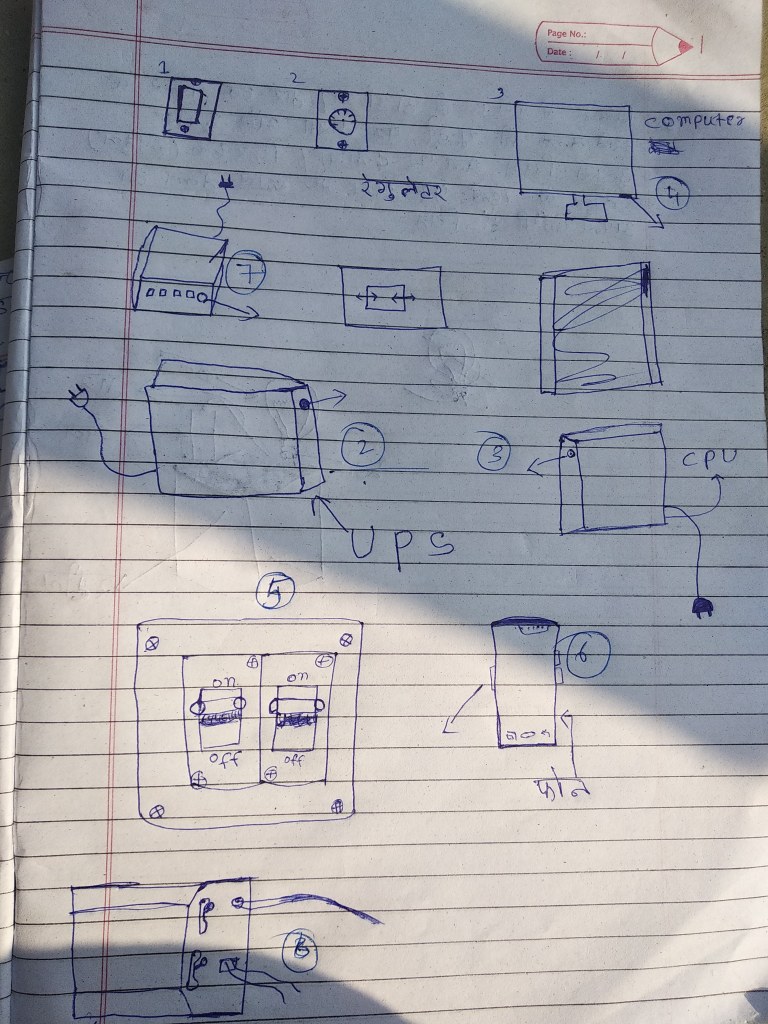
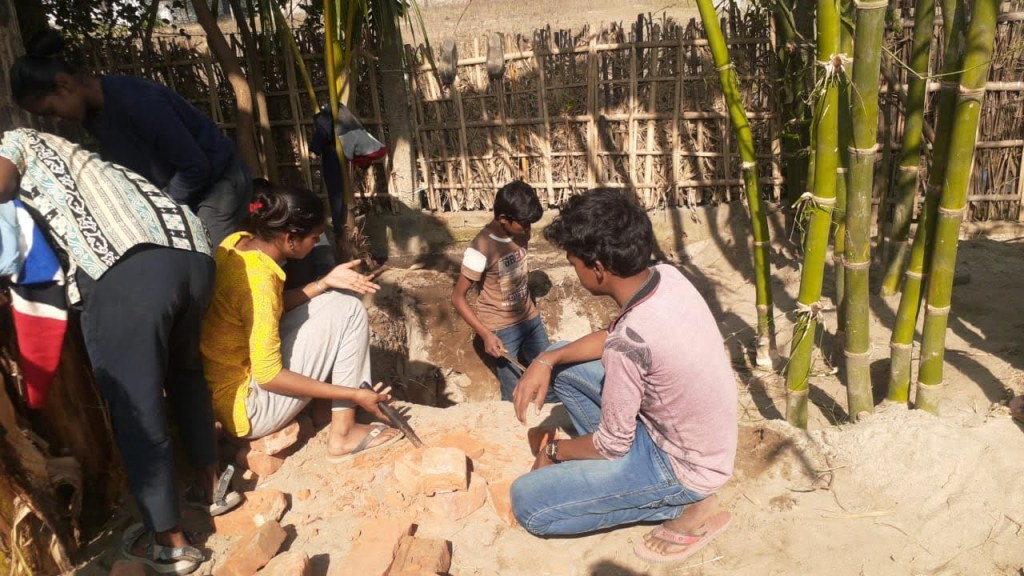
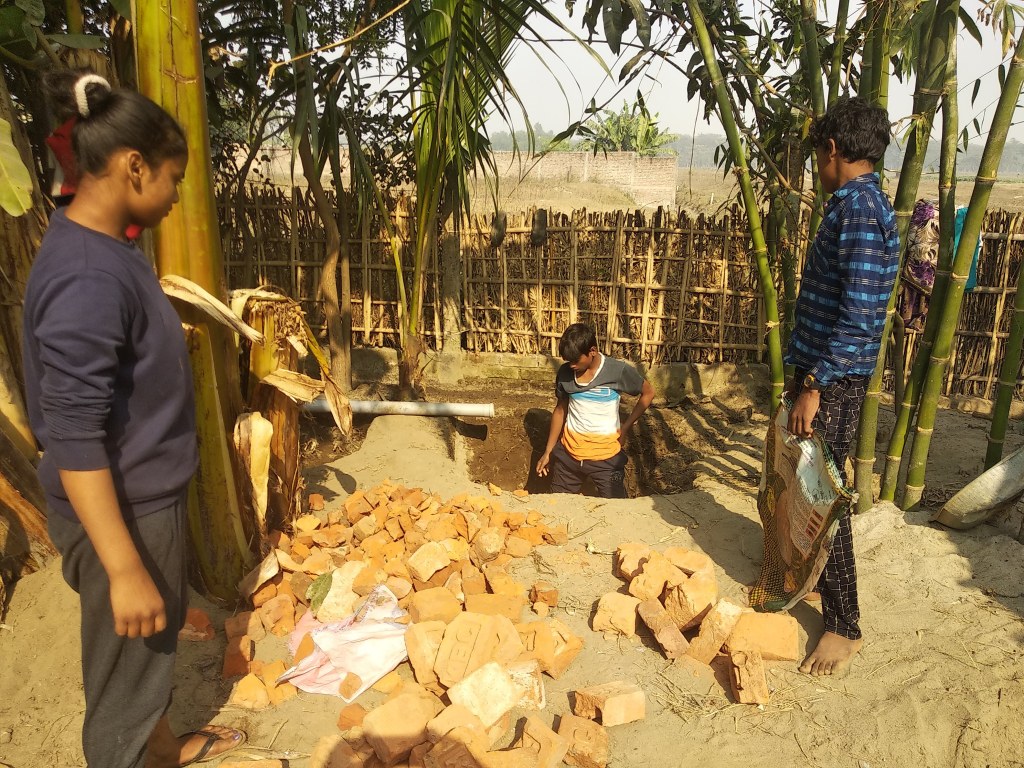
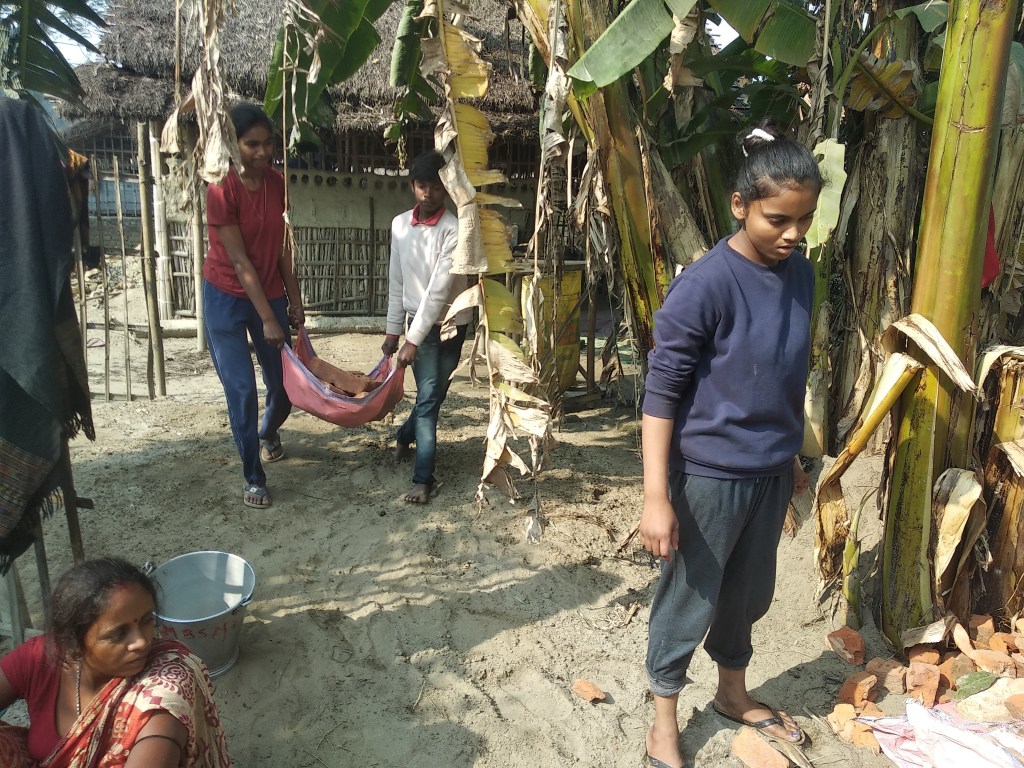
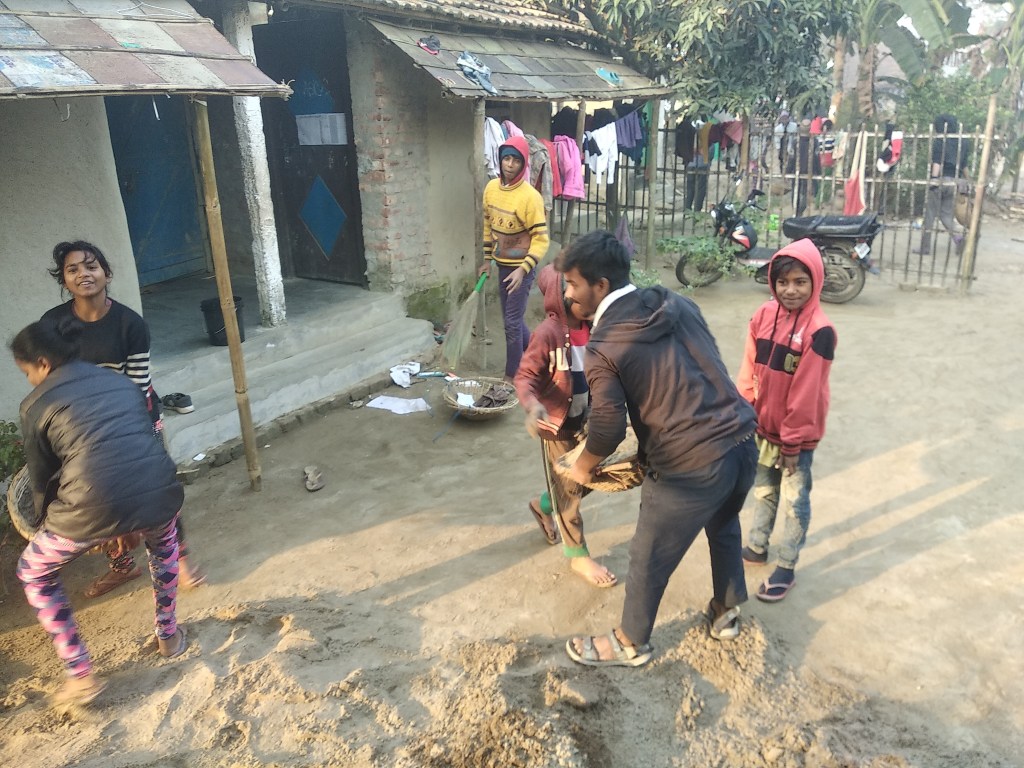
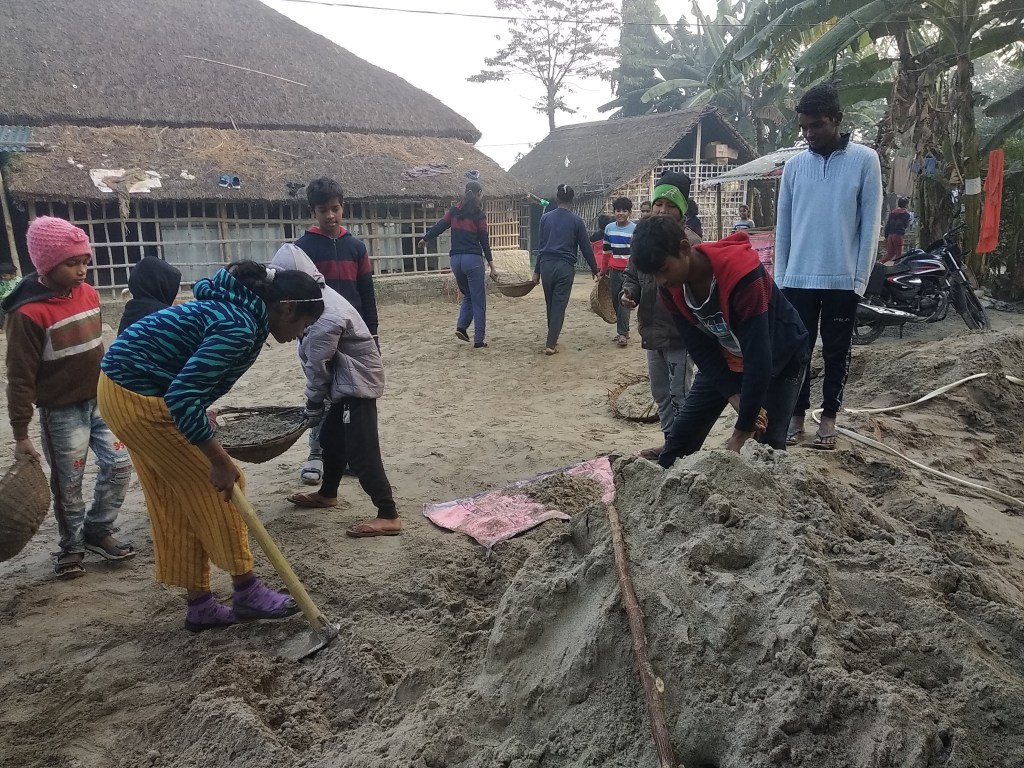
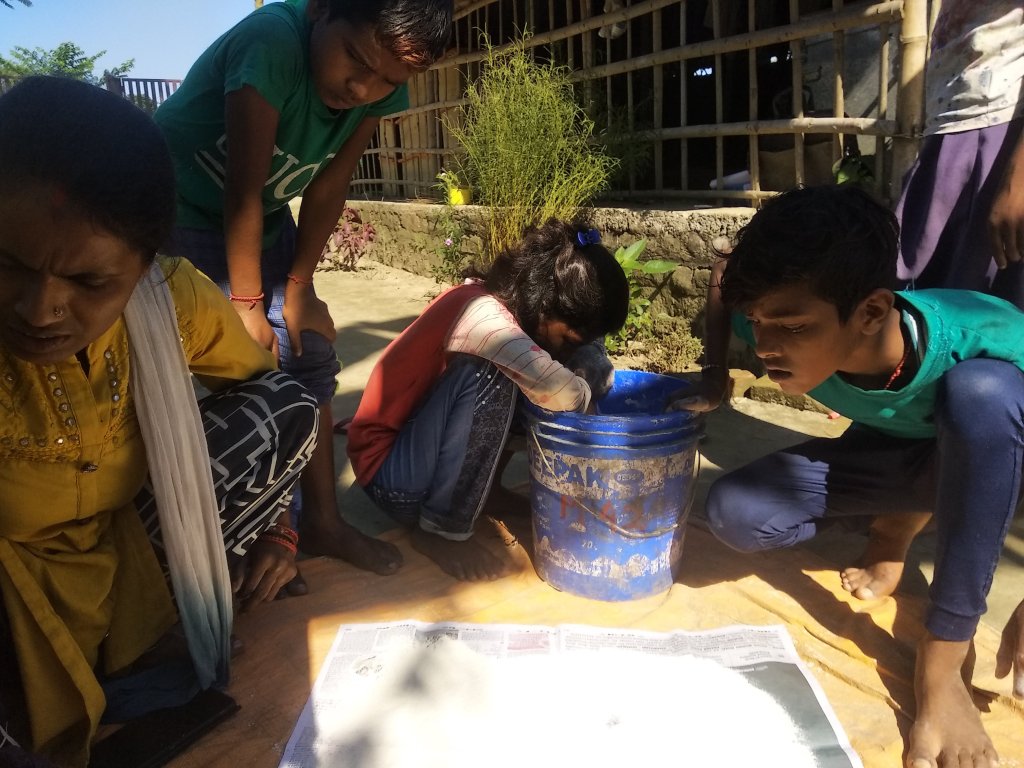
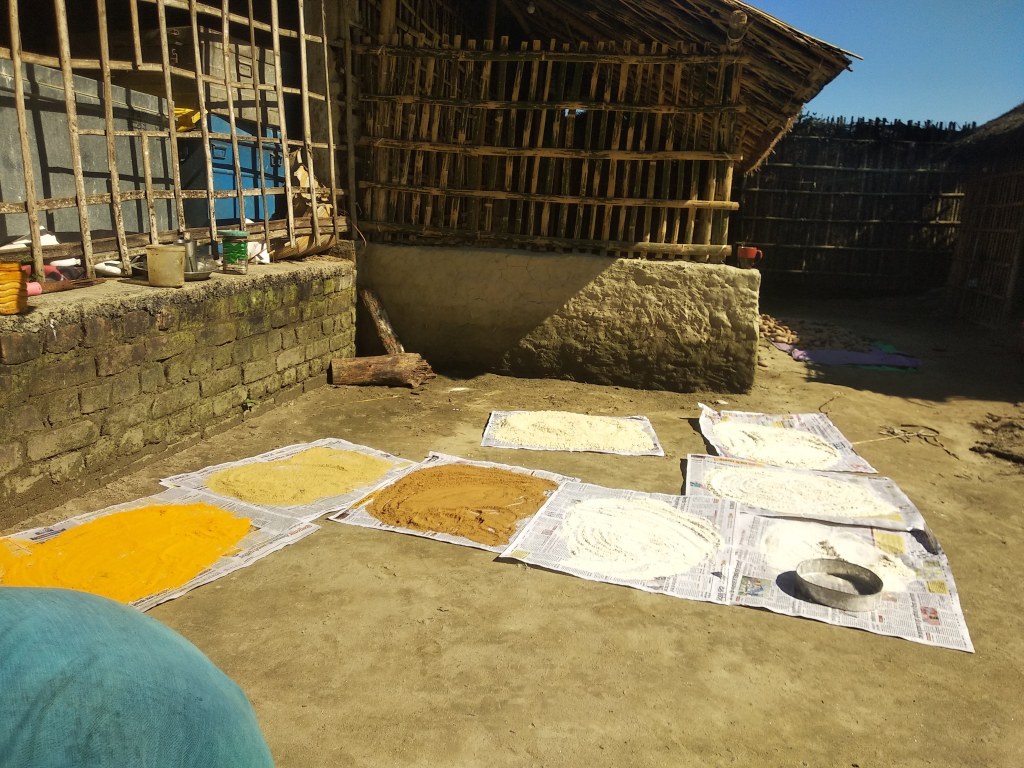
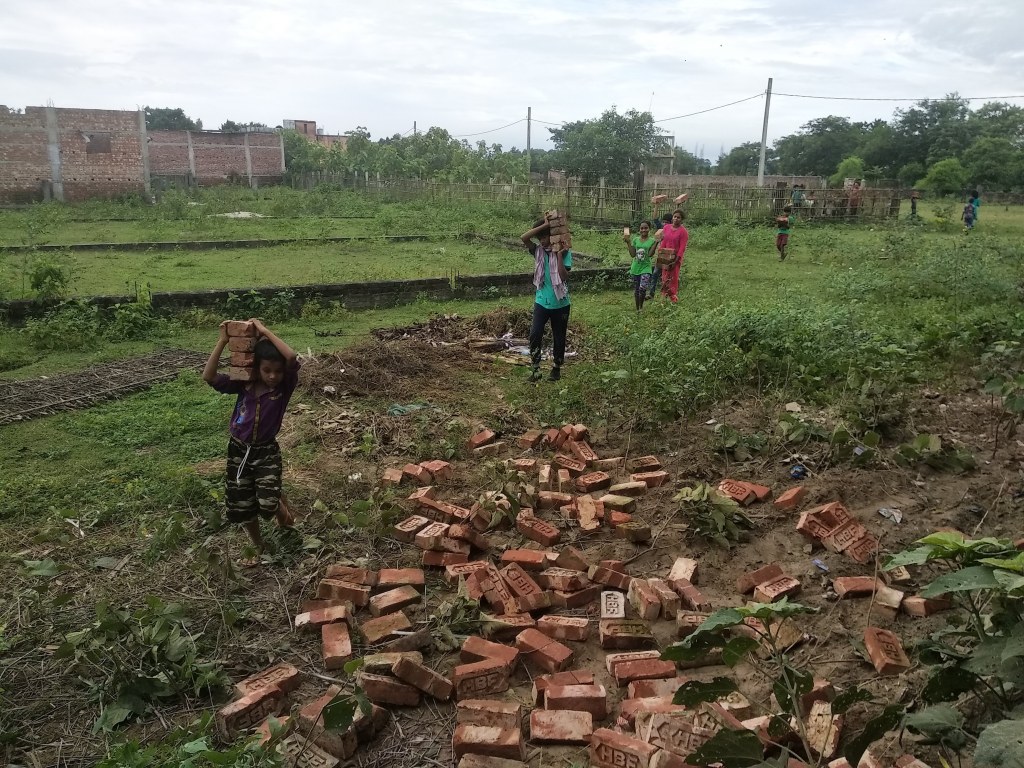
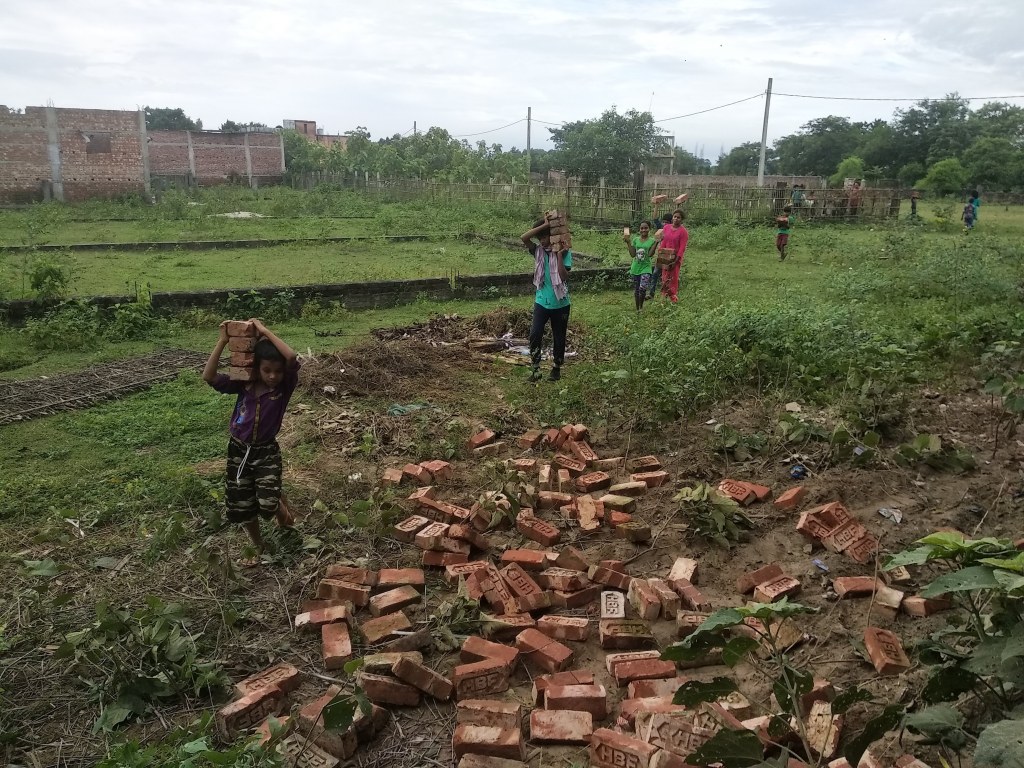
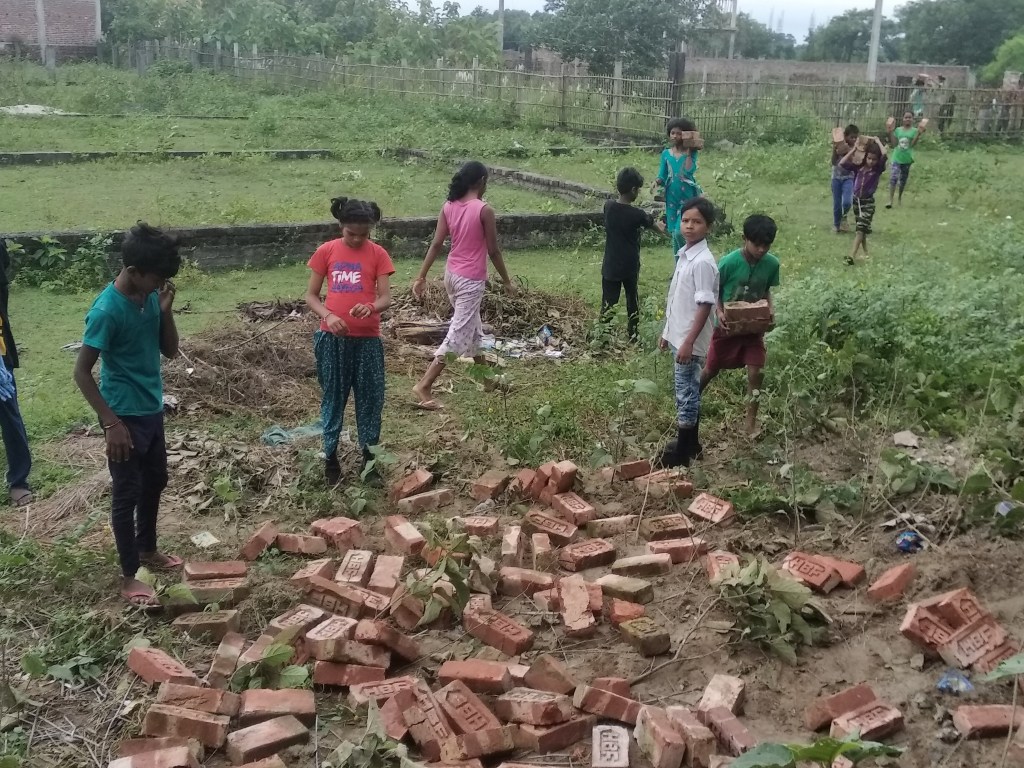
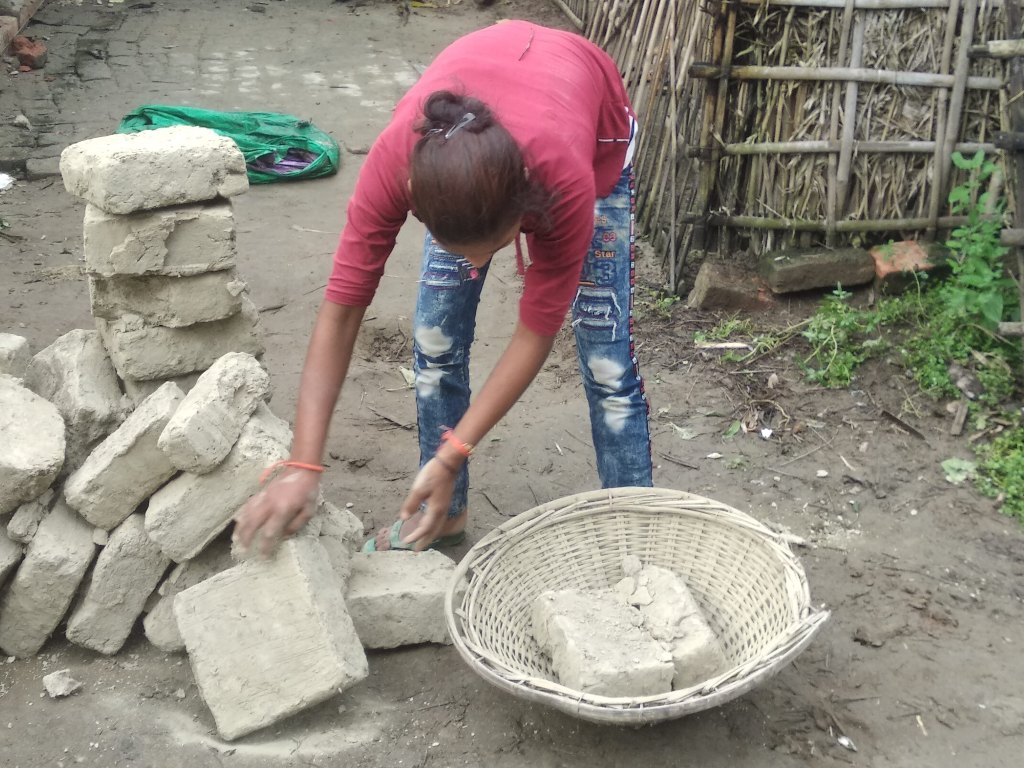
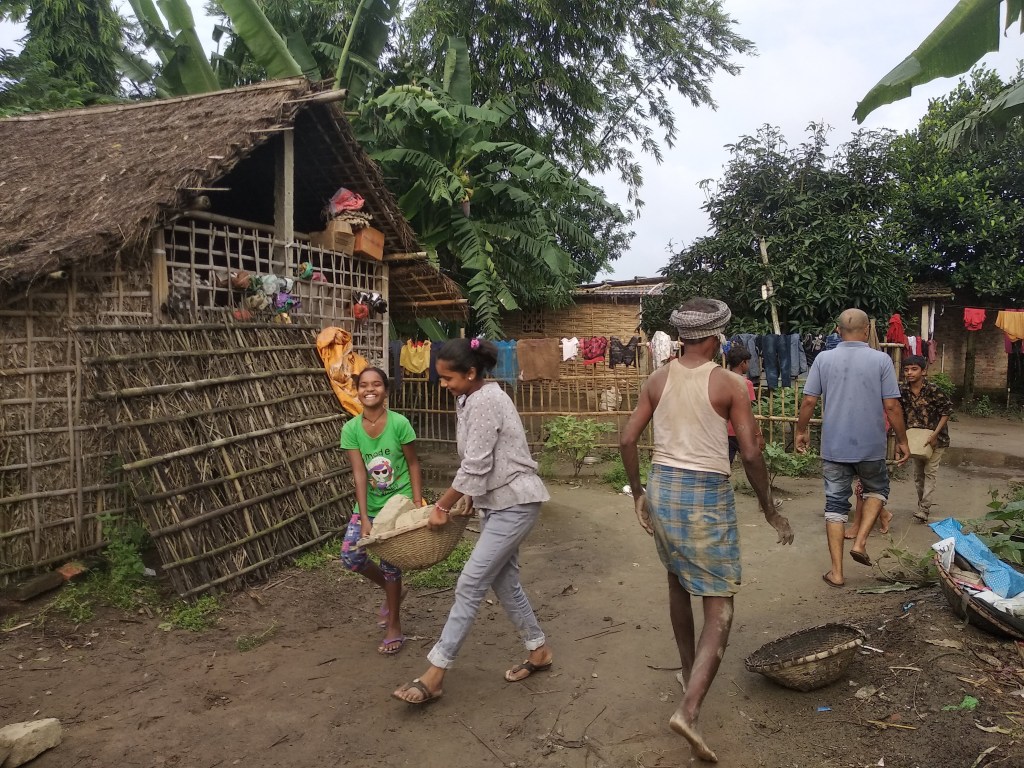
Shram daan can take many forms. Children, clean their rooms, and common spaces, as part of their daily shramdan. In August when we started preparing the computer room their shramdan was in the form of carrying mud bricks and brining down a large wall. This month it came as carrying bricks for finalising the computer room and also as cleaning masalas, and showing them the sun, along with their regular shram daan duties.
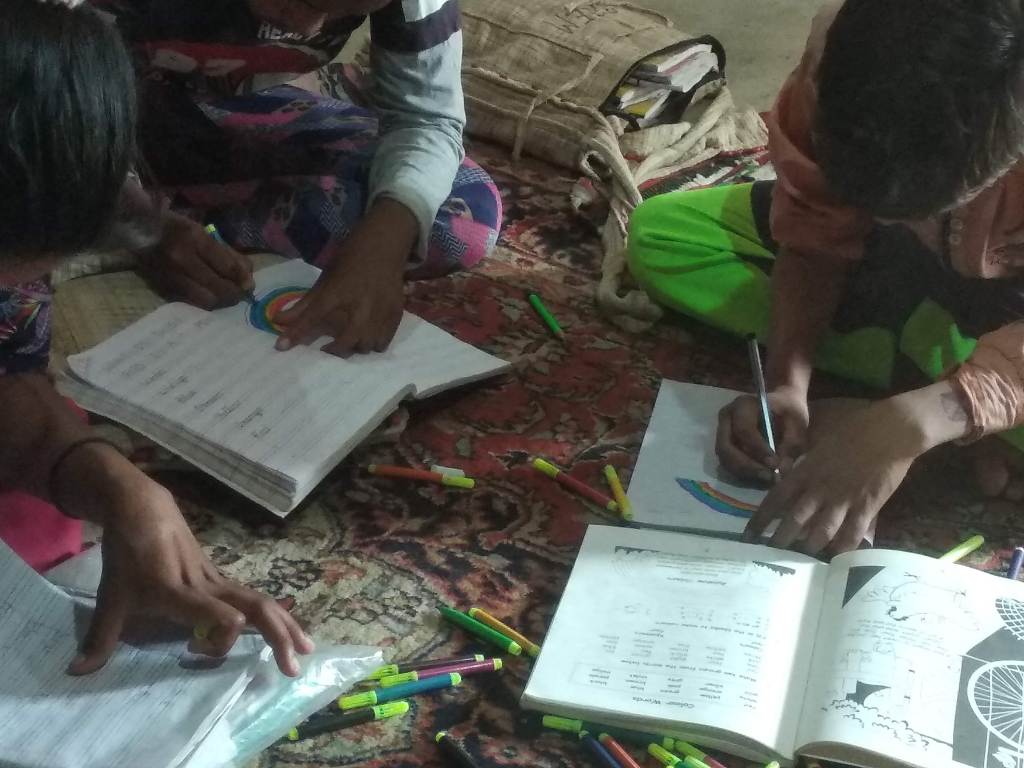
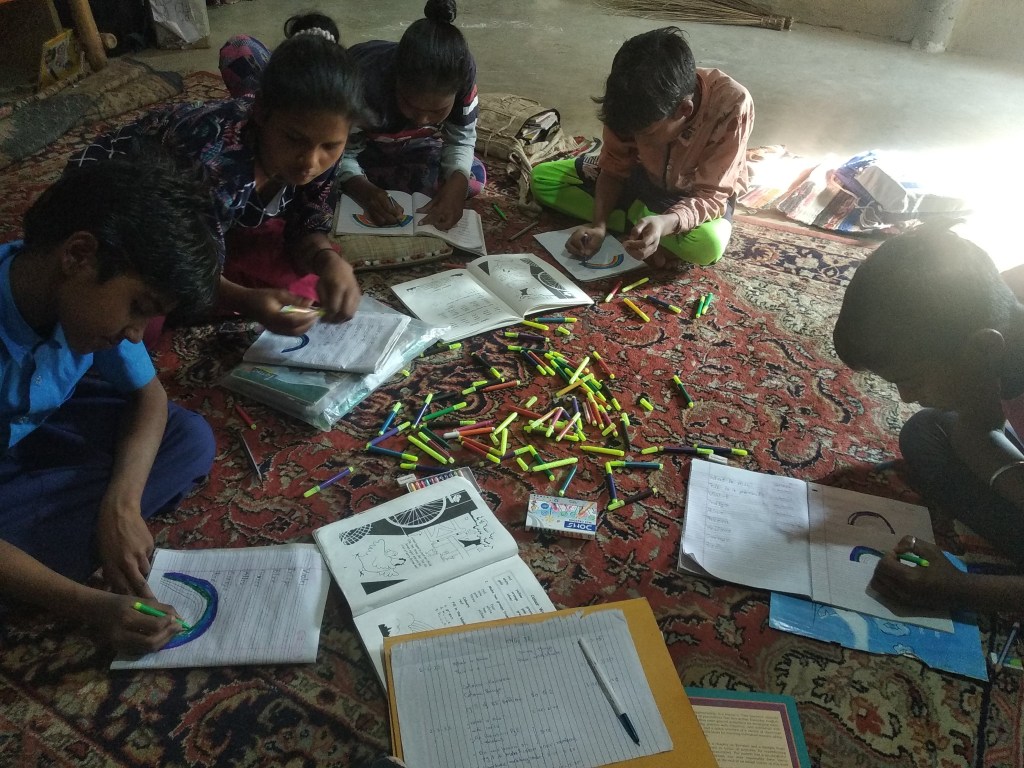
INTERACTING WITH VISITORS TL PLANNING MEETING THE COLOURS OF THE RAINBOW, NOT JUST FROM BOOKS BUT WE RAN OUT OF OUR CLASSES TO SEE THE RAINBOW THANKS TO THE KIDS NANA NANI, AND FRIENDS JANET AND SUMIR, WE ARE READY FOR THE WINTER SEMESTER WITH WARM CLOTHES AND JHOLAS. THE BEAUTIFUL WARM CLOTHES, thank you
We always welcome visitors to the Jeevanshal, and this month Azad bhai and his friend who work in the jail bureaucracy dropped in to chat with the children. They asked if anyone had seen a jail and phut came the reply “i have been there”. This was eleven year old Siddhi, who had been sent to jail with her mother and other family members. Soon we got to know that almost four of our students have been in jail, in similar situations. A sad telling of how things work for the poor and marginalised.
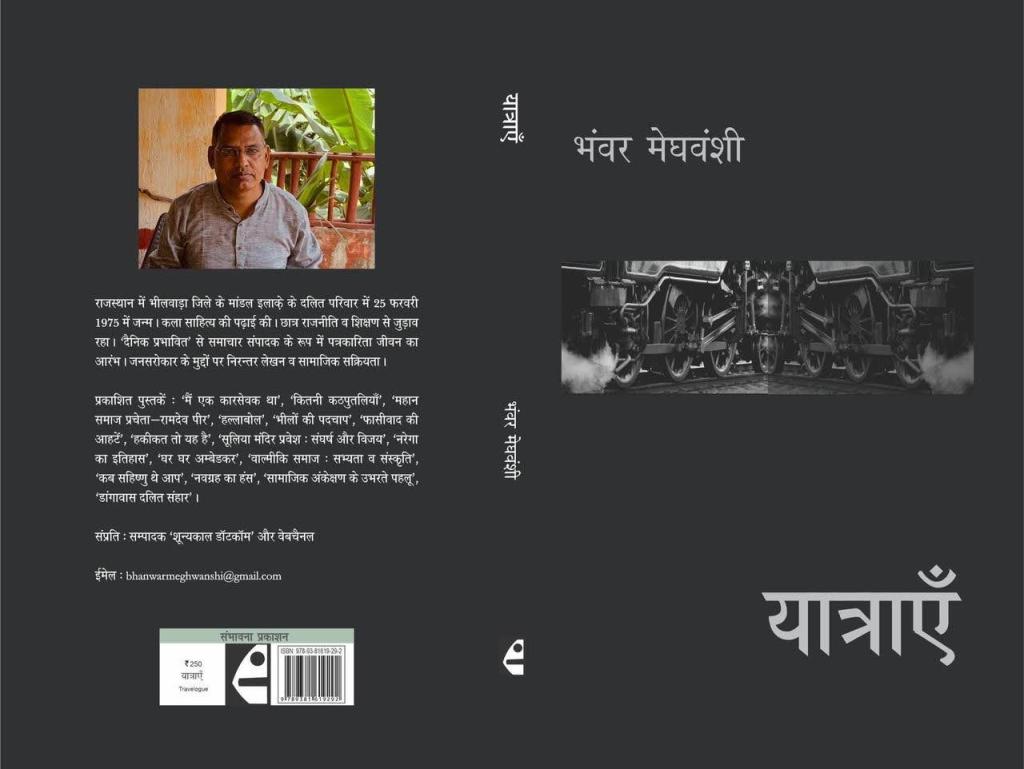
GROUP PHOTO WITH BHANWAR JI BEFORE HE LEFT PARAS BANJARA AND BHANWAR MEGHWANSHI, INTERACT WITH CHILDREN SHARING WITH THEM THEIR OWN CHALLENGES IN ACCESSING FORMAL EDUCATION PARAS LEFT THIS SONG WITH THE CHILDREN, IN THEIR HEARTS AND MINDS YOUNGEST TEAM MEMBERS AT WORKSANGEETA BRINGING THE WALL DOWN SHRAMDAAN TO MAKE THE COMPUTER ROOM
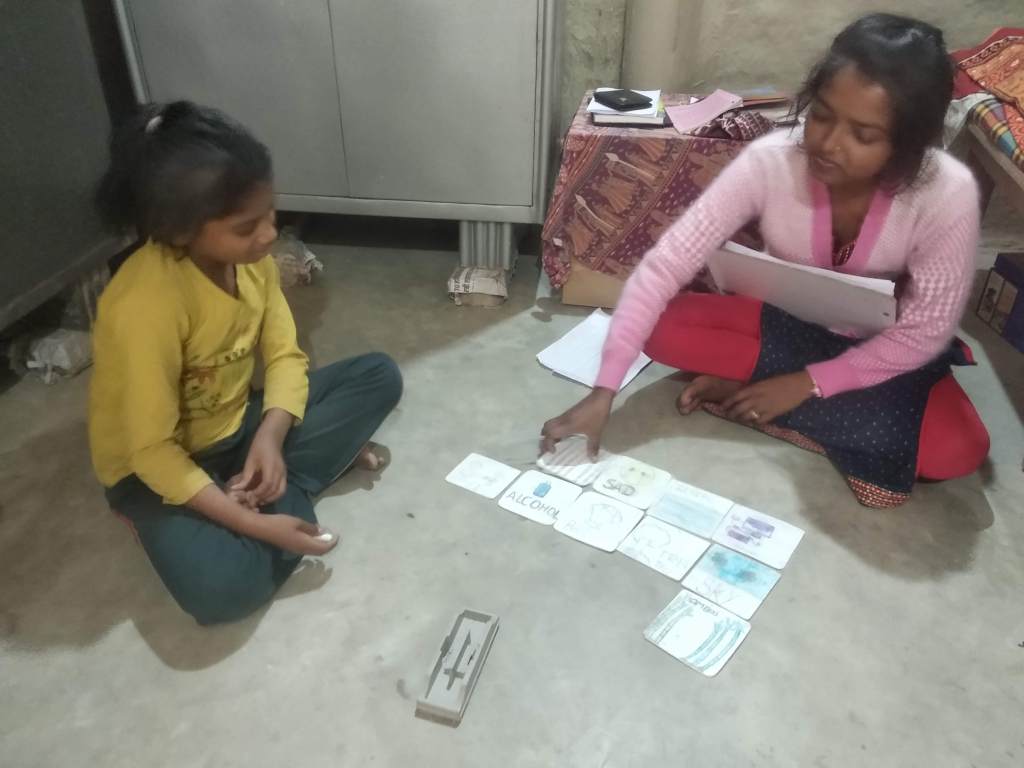
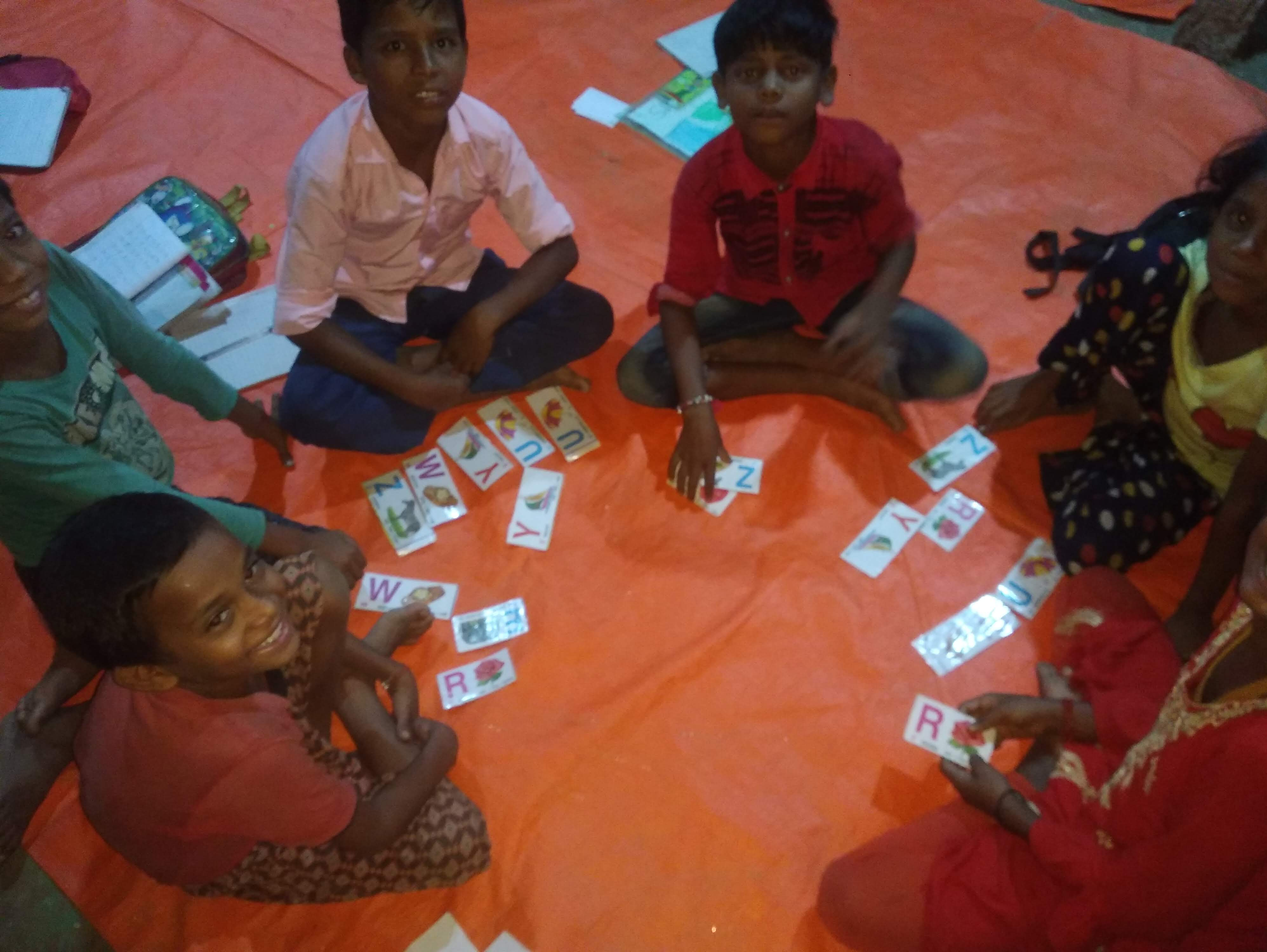
NEW STUDENTS BEING ADMITTED ORIENTATION FOR NEW STUDENTS LEARNING THE ENGLISH ALPHABETS THROUGH A GAME OF CARDS IMMERSION SONGS CONTINUE IN ENGLISH CLASS
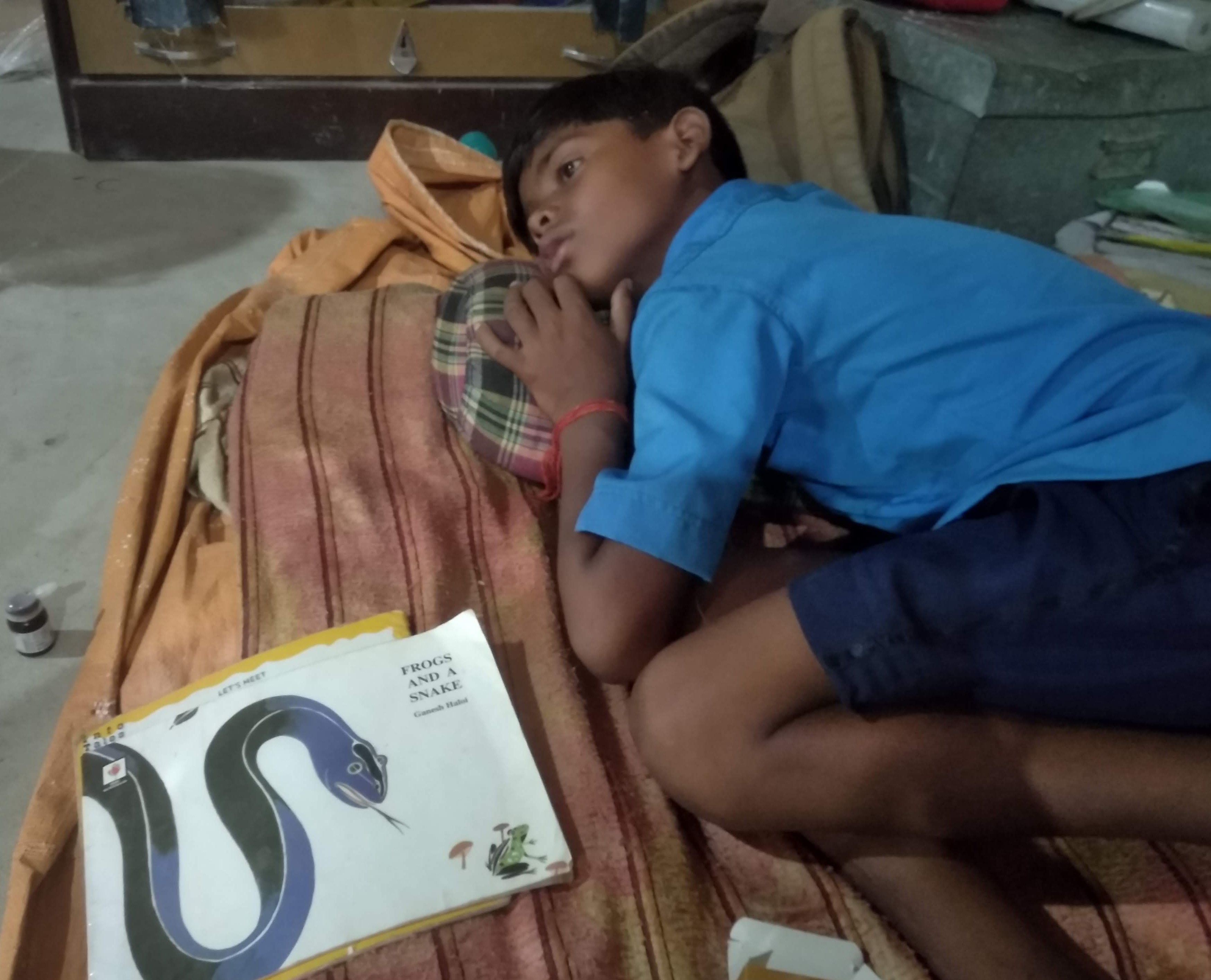
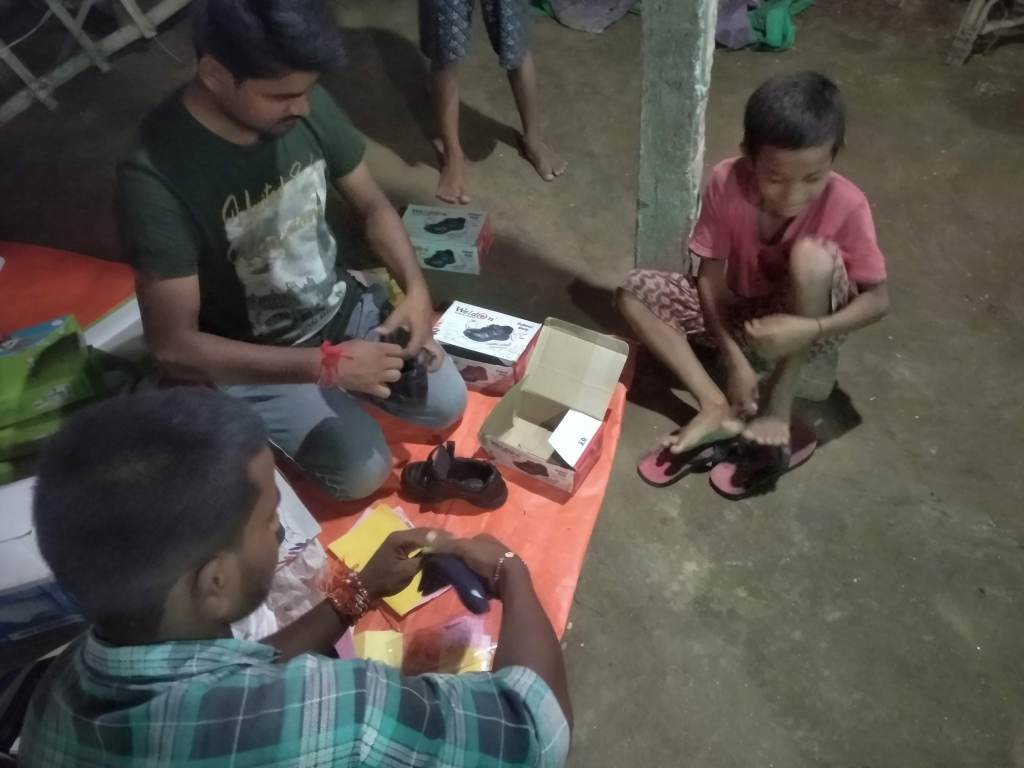
BAUNAN SUFFERING FROM FEVERCOPING WITH ILLNESS INTERACTIONS ACROSS THE BOARD BUSINESSMAN PRAGEET SHARMA GROUP PHOTO WITH PRAGEET CHILLING ON THE CARROM BOARD INTERACTIONS ACROSS THE BOARD, WITH CHANDAN, THE SOCIAL AUDIT RESOURCE PERSON CHILDREN WATCH ODISHI DANCE PERFORMANCE FROM NRITYA GRAM RAKHI CELEBRATIONS, ACROSS CASTE, GENDER AND AGE WE VOUCH CARING SUPPORT TO EACH OTHER THEATRE WORKSHOP WITH MONA DI, AT THE CENTRE SHAHZAD GETS INTO HIS FIRST PAIR OF SHOES EVER SHOES FOR EVERYONE WAITING OUR TURN 🙂JHANDAUTTOLAN – CELEBRATING THE INDEPENDENCE DAY AT THE CENTRE
This is an update on May and June at the MBSNS centre. Along with the regular study, Dhyan, and sports, the highlights for this month included a workshop for children on understanding good and bad touch and a parents learners (facilitators and students) meeting. Focus on learning languages
The Hindi Class – In April, children started with reading simple Hindi text and learning to write summaries. In May and June, they began engaging with the language in new ways. Children prepared a song in Hindi, which they chose from the songs they had heard at the centre. They prepared the song ‘tu zinda hai toh zindagi ki jeet mein yakin kar’. They also prepared a play with Abhimanyu’s help. It had been over a month since the children moved into the centre, and they started missing their parents. Due to the covid protocol, children were not allowed to meet the parents while at the centre. Although they were allowed to call home on Sundays, a new activity of writing letters to the family was also initiated. Engaging in these activities gave children a sense of achievement, which they could be proud of. Their previous engagement around learning was restricted to just reading and writing, which did not give them that sense of achievement.
In these months, some concepts of grammar were also introduced like सर्वनाम and विशेषण (pronouns and adjectives). At the same time, working on phonetics is a continuous process as few sounds in regional language are quite intermixed in pronunciation like र (Ra) and ड (Da), स (Sa) and श (Sha).
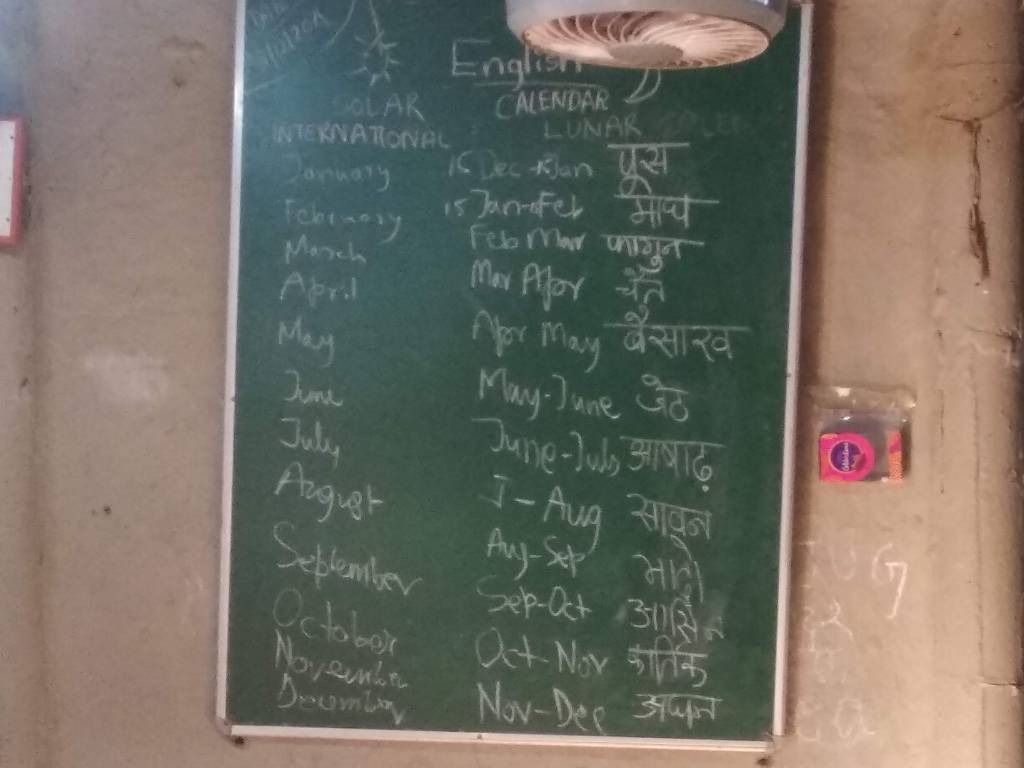
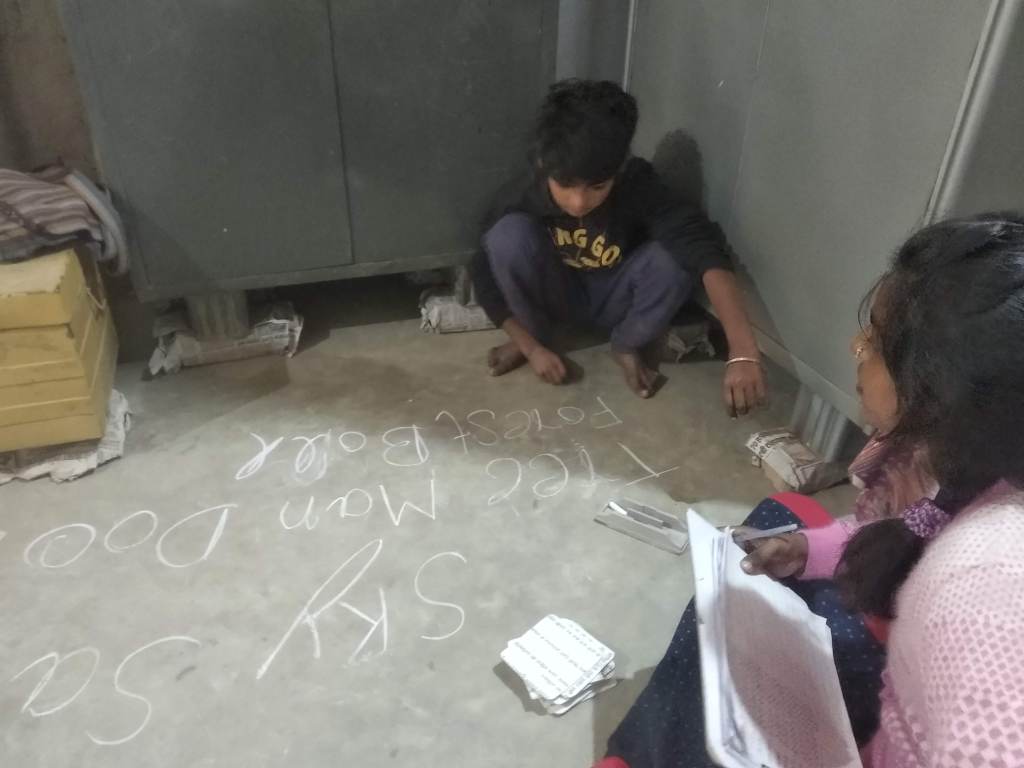
The English Class- In April children learned the basics of phonetics and vocabulary building exercises in English. We made our first phonetic videos and completed all 26 alphabets by June.
In May and June, the two-hour English slot was reorganized into three parts – immersion songs, the introduction of a new concept, and reading or writing groups or games (depending on what children chose).
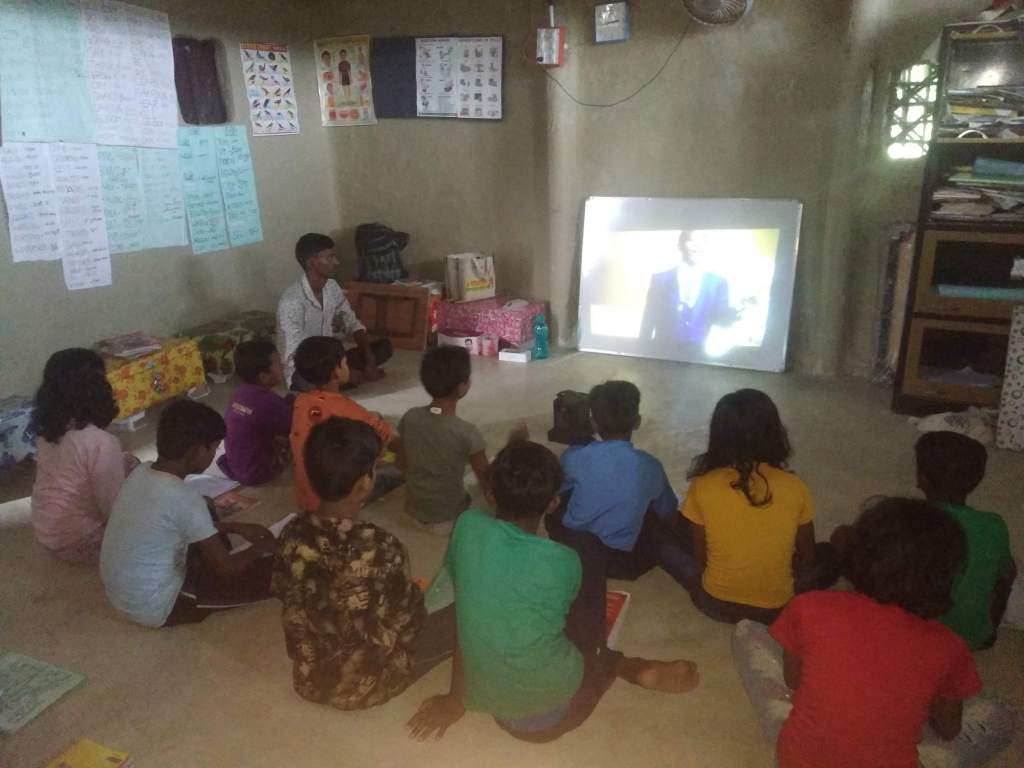
The children have come a long way since April. When they came to the centre, they knew alphabets and could read three-letter words without understanding the meaning. In these last two months, they now sing along a selection of 6 songs displayed on a projector screen. This repertoire of songs has 3-4 nursery rhymes like Old Mac Donald had a farm, to anthems like Imagine (by John Lennon), what a wonderful world (Louis Armstrong), the sound of silence (Simon & Garfunkel), and action songs like Ram sum sum. These two months focused on understanding and learning nouns, pronouns, verbs, prepositions, and other parts of speech through fun and interesting activities like charades and other games.
13th June was a special day. It was the first parents meeting at the centre. In some cases, both parents could not come due to financial constraints. For example, Jaikrishnaji could not come because he had to tend to the mango orchard, which they have leased this year. Reeta Devi and Hareram Bhaiya had similar financial constraints, while Sanjay Paswan has migrated to Bengal for work. In other cases, younger siblings came, enthusiastic and clingy, curious about their older sibling’s new home – The Centre.
The centre facilitators shared their idea of holistic education with the parents. Abhimanyu emphasized the need for parents to interact with teachers and caregivers, as this provided a two-way interaction and allowed for a common aim for their children. He shared how all children were bright and a joy to work with. He also reiterated that children enjoyed learning and there was more to learning than just memorization. Mithun further talked about the schedule at the centre and how each child followed the same and sometimes went over and above the schedule putting in additional shram daan (manual work) or study hours. He talked about pedagogy and interactions with respective teachers of English, Hindi, Maths, Science, and Computers. Sangeeta talked about children’s well-being and different learning styles.
Everybody, including children, parents, and facilitators, introduced themselves. This was followed by a skit that children had prepared as part of their Hindi class. Over the last two months, older children have written stories in their English class, which was also typed in their computer class. Each child chose one story which they read in English and then explained in Hindi. This was followed by the children giving their parents a copy of the compilation of stories named “Our First Book” and a letter each child had written to their parents in Hindi class. This session ended with children singing the song “tu zinda hai to zindagi ki jeet men yakeeen kar.”
After the children left, the parents and caretakers sat for an open session, in which parents gave their feedback and discussed their children’s wellbeing at the centre. Most were very happy to see that their children had adjusted well and did not want to leave the centre to go home. They were also impressed by the confidence they saw in their children. All of them were convinced they wanted their children to continue at the centre. We also discussed holidays and the academic calendar, emphasizing that we did not want children to take frequent leaves. Parents suggested holidays during the festive season, and together we have worked out a holiday calendar till 15th March 2022. Mandavi, one of the mothers asked if all parents should contribute to the running of the centre and it was decided that each would do what they can. For example, those who were daily wage labourers would try and give sharm daan at the centre; those with more stable incomes would try contributing financially; and those with farming would contribute in kind.
The Personal Safety Workshop
On 9th June, we organized a workshop on personal safety facilitated by Mithun and Abhimanyu. The workshop used a module from Arpan, aimed at preventing child sexual abuse. It introduced the idea of good and bad touch and explained the need to reach out for help from adults in their trusted circle.
Tree Plantation
Love is a special quality that children have, and their love has no boundaries. This thought is beautifully captured in a famous Hindi song “जो भी प्यार से मिला हम उसी के हो लिए” (becoming one with everyone who meets us with love). The centre has a patch for planting trees and a small plot marked for farming. From the very first day, children have loved the idea of planting, watering, and caring for plants. They have also found different levels of connections with the stray dogs, who have found a home at the centre, by petting, feeding and hugging them. This is their silent connection with nature – plants and dogs. A world dominated by the anthropocentric view has made nature peripheral to our existence; we hope children growing up at the centre will be able to find their connection with nature. It is with this thought in mind that children were part of a plantation drive this monsoon, taking ownership and responsibility of attending to one tree they planted.
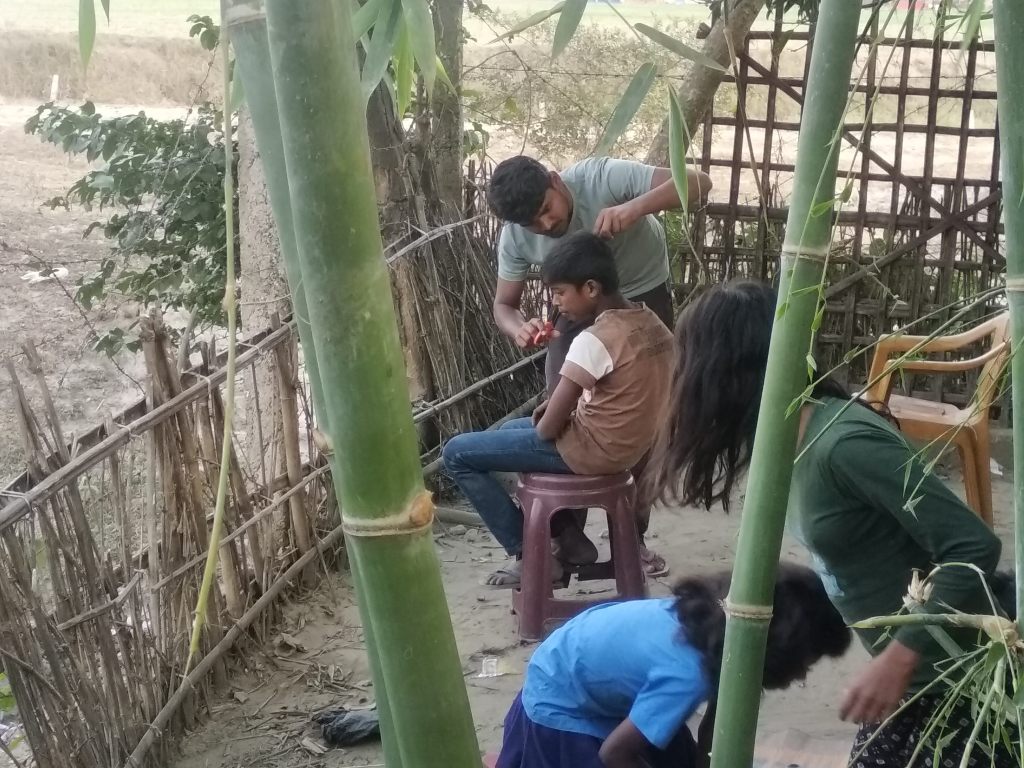
And so it goes on … learning in and out of classrooms. In the spirit of holistic education, children continue to engage with physical exercises, sports like athletics, kho kho and kabaddi in the evening, and Dhyan. Though mostly the everyday shram daan involves cleaning and working in the field and caring for trees on campus, but sometimes children find creative ways of doing shram daan. For instance, Rani decided to be the centre barber, styling children’s hair. Not only was it a creative pursuit but it also meant we could limit the outside exposure of the centre inhabitants during these COVID-19 times- one hairstyle at a time!
As the world begins to open up, and we slowly begin to return to a post-pandemic world, we are pleased to announce the return of the Youth Internship –a flagship program of the JJSS that has run since 2015. Sharing a couple of glimpses from past internships here.
Interns from batches 1-4 gather for a follow-up workshop on caste oppression.Interns from 2019 in their daily meditation circle before starting their day of fun and learning.
This internship is a unique opportunity for young people between the ages of 16-24 years to come together, make new friendships, learn new skills, find themselves and open their eyes to new ways of looking at the world. The annual residential intensive workshop is eagerly awaited by all in the union as it is a time where promising young people from the villages come together for month of fun, challenge and learning. Whether it stepping out of the house for the first time or finding their own voice and learning to facilitate games for children across communities, or doing the important work of confronting our own biases of gender, caste, religion and class, this internship is a lifechanging experience for everyone involved.
In 2020, the pandemic did not allow us to do the internship. But this year, we have been flooded with inquiries from eager young people about the same. Recognising the importance of this flagship program, we have decided to go ahead with the internship this year with necessary COVID precautions in place. The internship will run from July 15 – August 15 with restricted number of participants and field trips. Selections are underway and glimpses from the interview process can be seen here:
INTERVIEW DAY: The team orients prospective interns before the interview.
Running a month-long residential program requires resources and for that, we need YOUR help! Please help us make the internship happen. We need to raise a little over Rs. 1 lakh. As in the past couple of years, the internship will be hosted and run by the Mosamat Budhiya Shiksha Nirman Sangathan (MBSNS) centre, a sisterly organisation of the JJSS. Please contact Tanmay 8092118525 or Kamayani for details on how to donate.
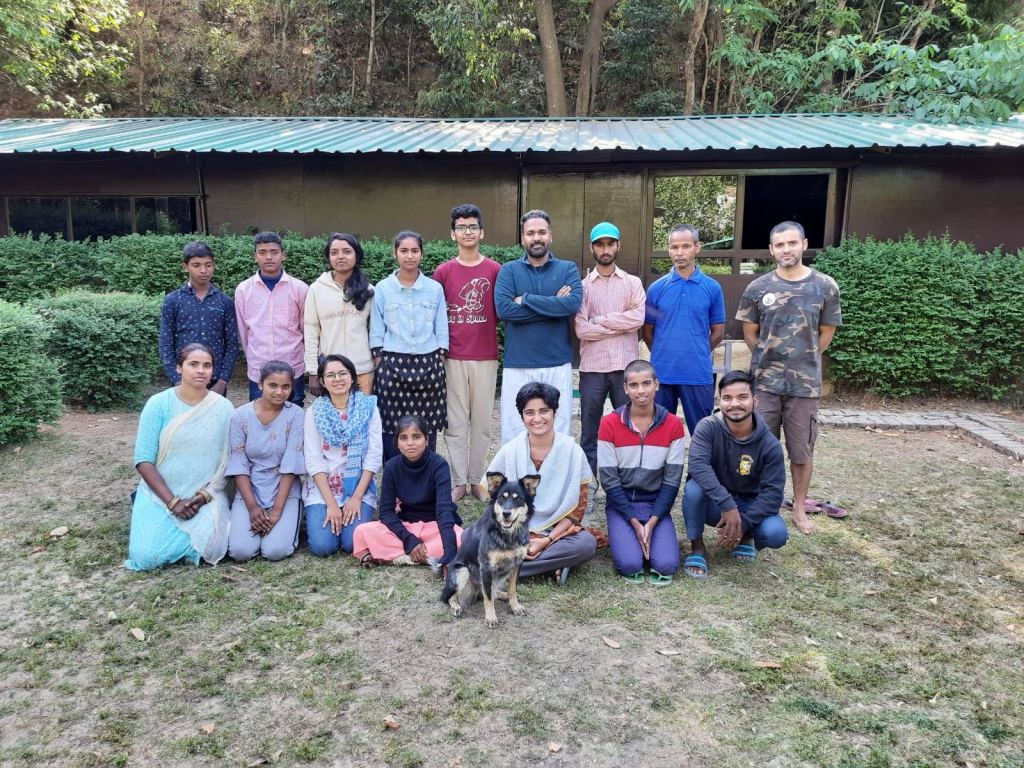
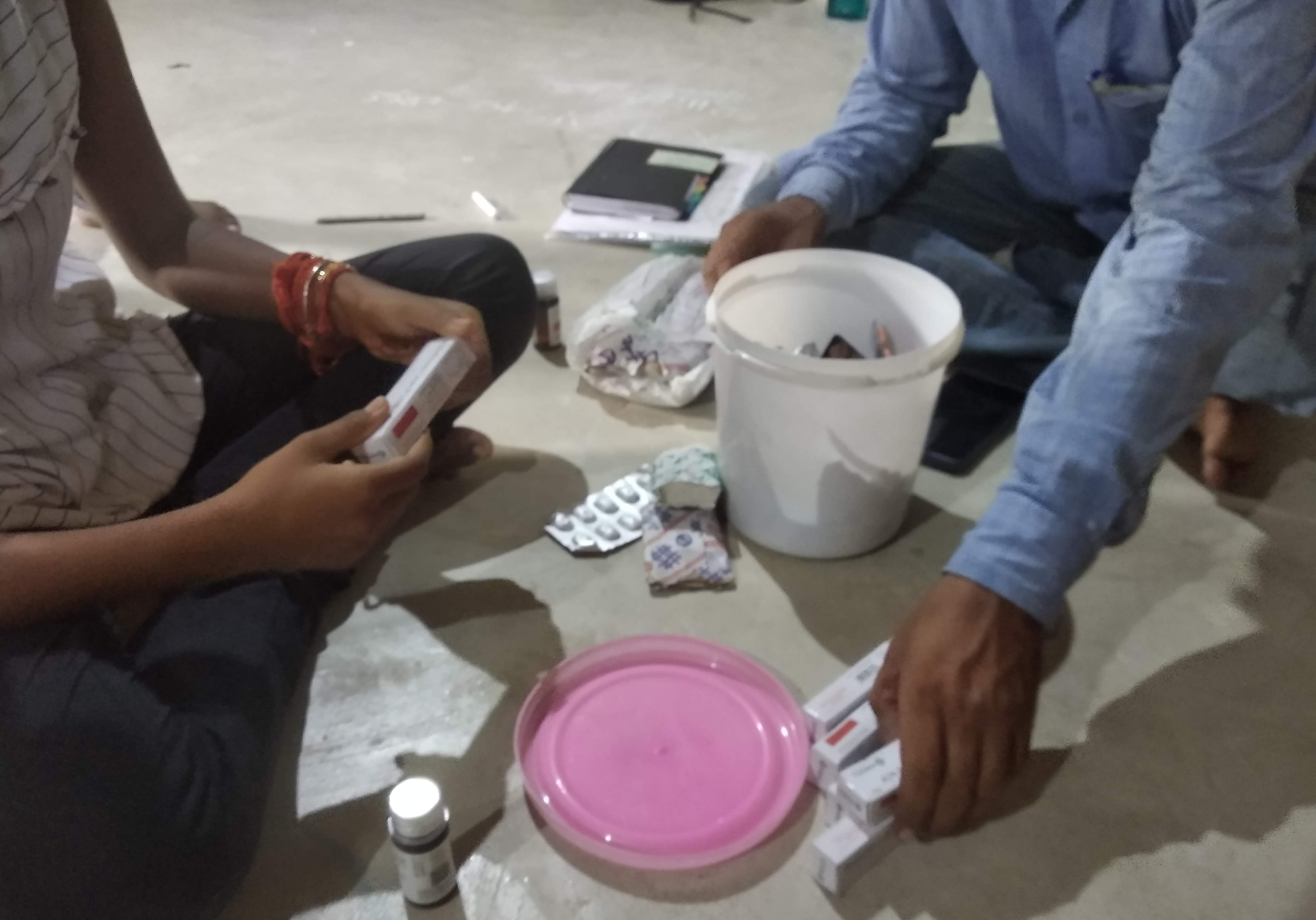
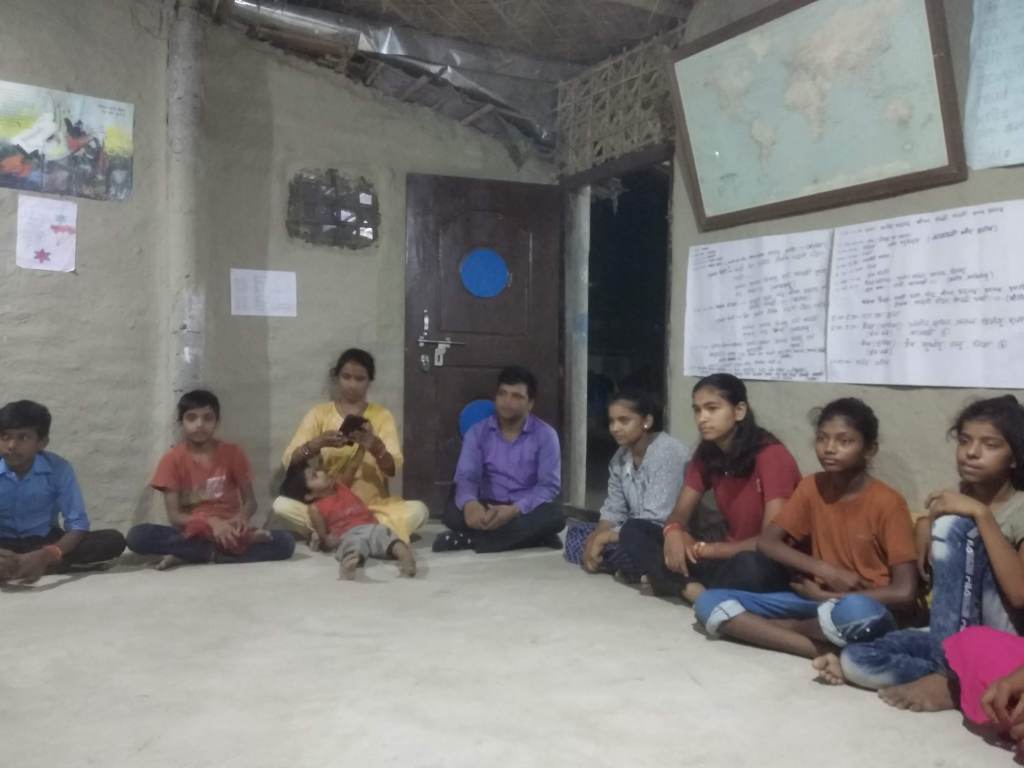
Thanks to everyone’s support, despite covid, we have been able to make some progress. Keeping the covid protocol in place, eleven students are at the centre. There is no school to go to, but there is an able team of facilitators and care givers, from Abhimanyu, Mithun, Sangeeta and Shankar ji, who have been available full time at the centre, to Subhash and kamayani, who come in for helping at specific hours in learning exercises. In addition there are volunteers who drop in and help, recently we had Tanmay and Sultan Bhai spend time with the children. You can see Sultan Bhai in this action video* with the children and read about ART classes at the jeevanshala, facilitated by Tanmay, here.**
A TYPICAL DAY AT THE JEEVANSHALA
BREAKFAST AT HE CENTRE
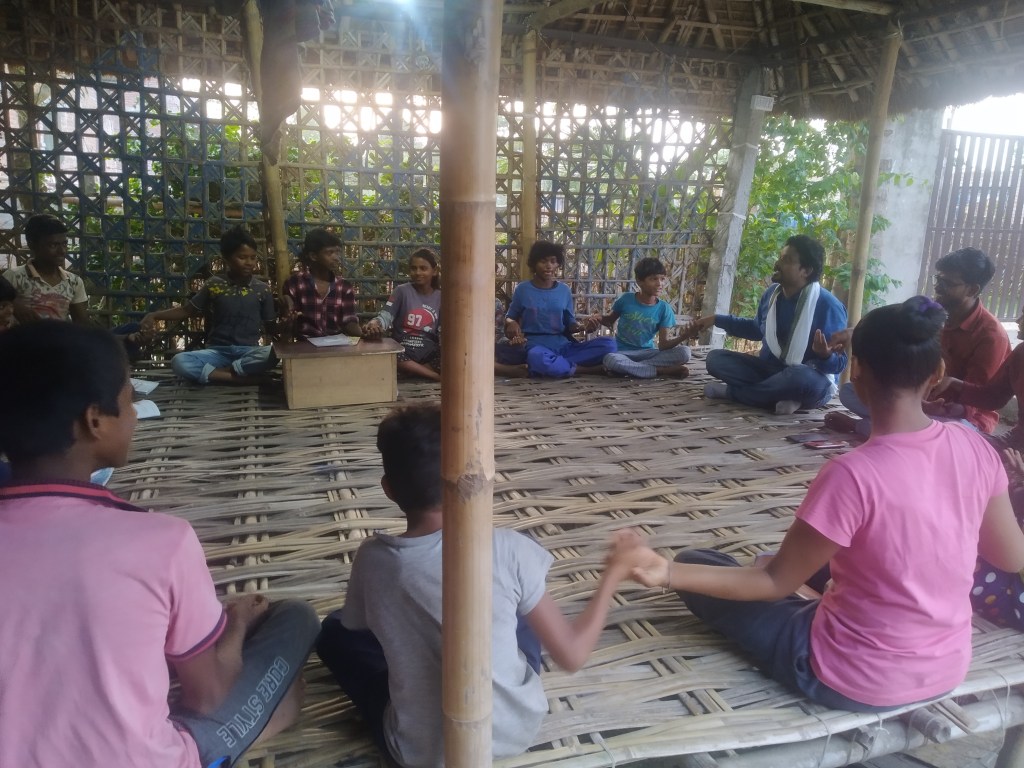
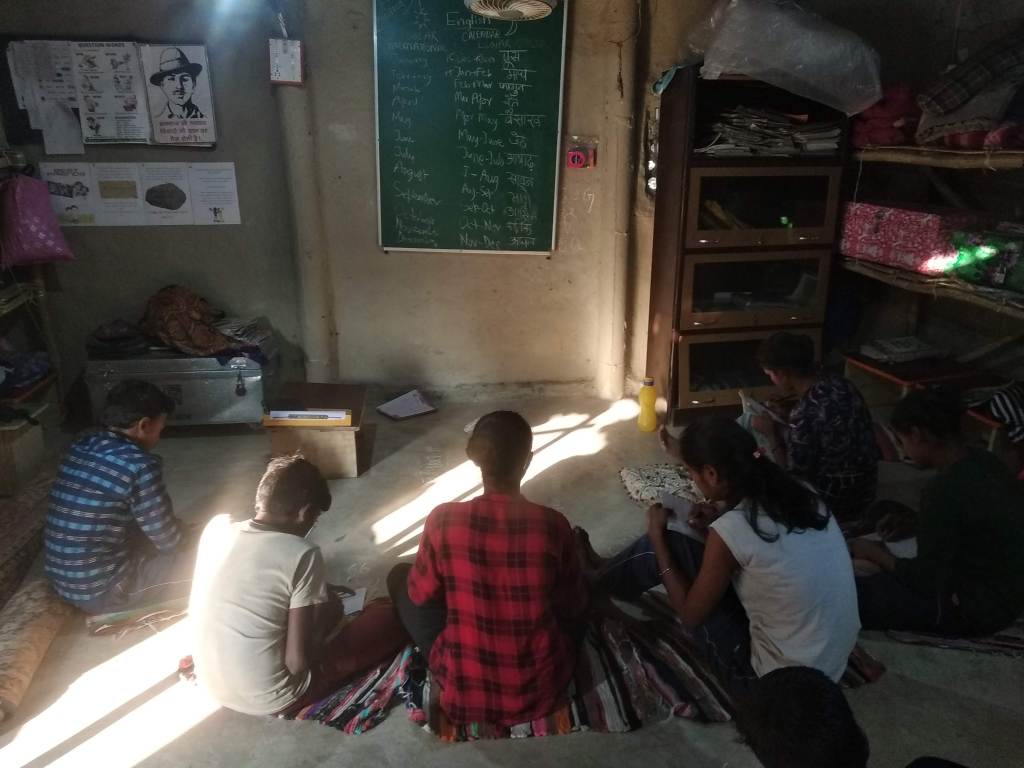
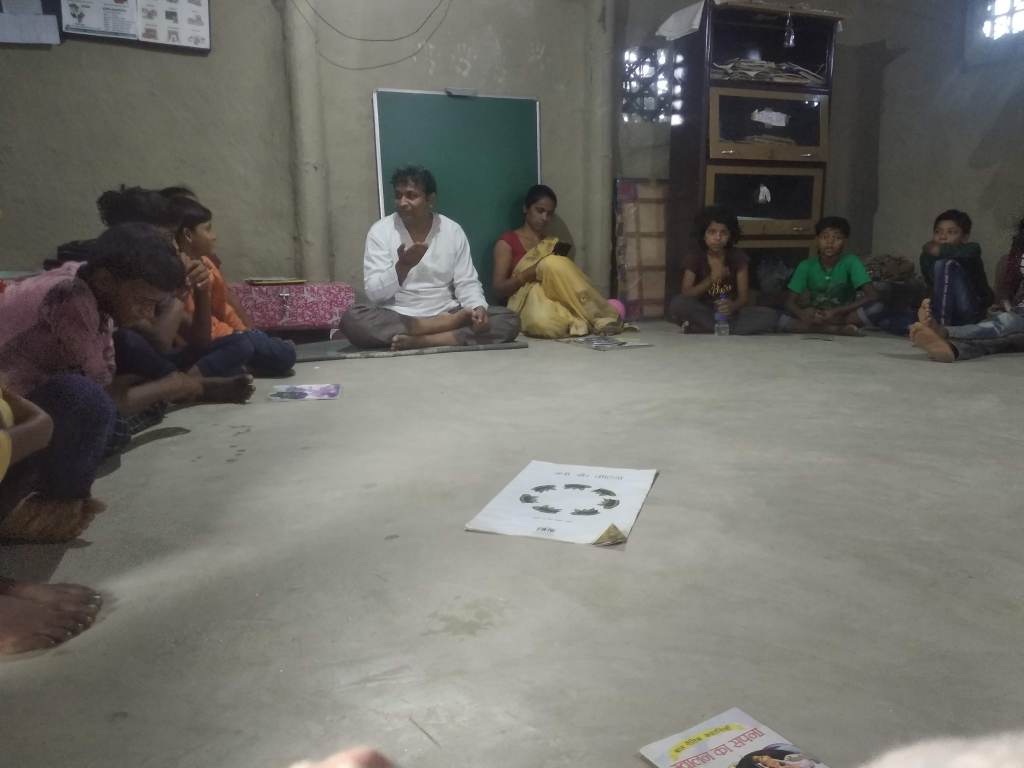
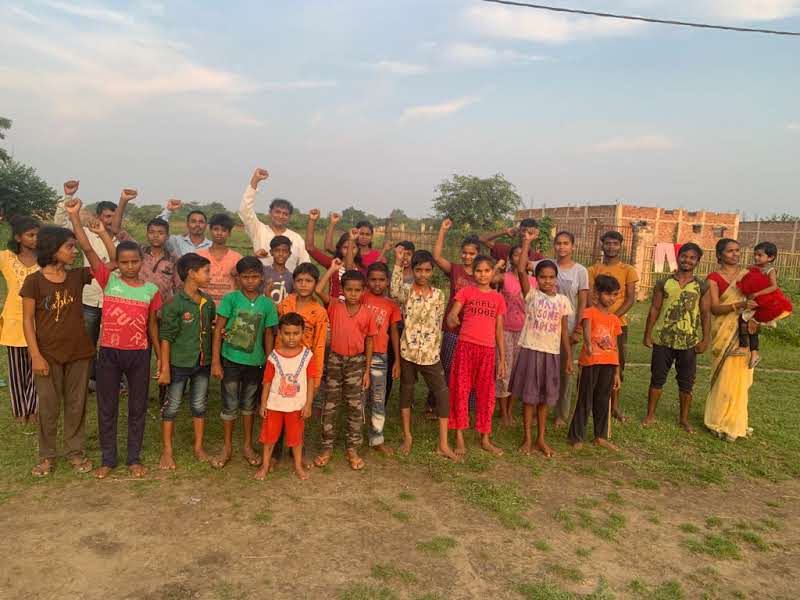
The children, 7 girls and 4 boys in the ages of 10 and 12, are staying full time at the centre. Their day starts with morning exercises and dhyaan, followed by cleaning of their rooms and shram daan (which includes cleaning the centre grounds, watering plants and trees, preparing mud for walls etc.). After a healthy but light breakfast of choora, moorhi, ankurit (sprouted) or cooked chana, the children sit for their first formal lesson for the day. This is the hindi class, facilitated by Abhimanyu. In this class they read a short story and then summarize it on their own words, enhancing their grasp on the language and improving their imagination. Based upon this summary, the discussion opens up on grammar and usage of hindi language. In parallel to this children also have their baths and put out their clothes to dry.
HINDI CLASS ON THE MACHAN
Soon after Subhash ji and Mithun, take on children in two separate batches. Subhash ji focuses on Maths and Science learning, based on syllabus and text books. Mithun is trying to ensure that all children develop basic computer literacy, and get over their fear of this device. Four computers are installed with games for children. Some of the older children are learning to type, also strengthening their grasp of the English alphabet and language.
COMUTER MASTI WITH MITHUN BHAIYA
MATHS AND SCIENCE WITH SUBHASH JI
The afternoon break is more of a break for the adults, the children eat and just sit around the tiny carom board they have or run around with their small football, if its not too hot.
LEARNING ENGLISH AS A SECOND LANGUAGE
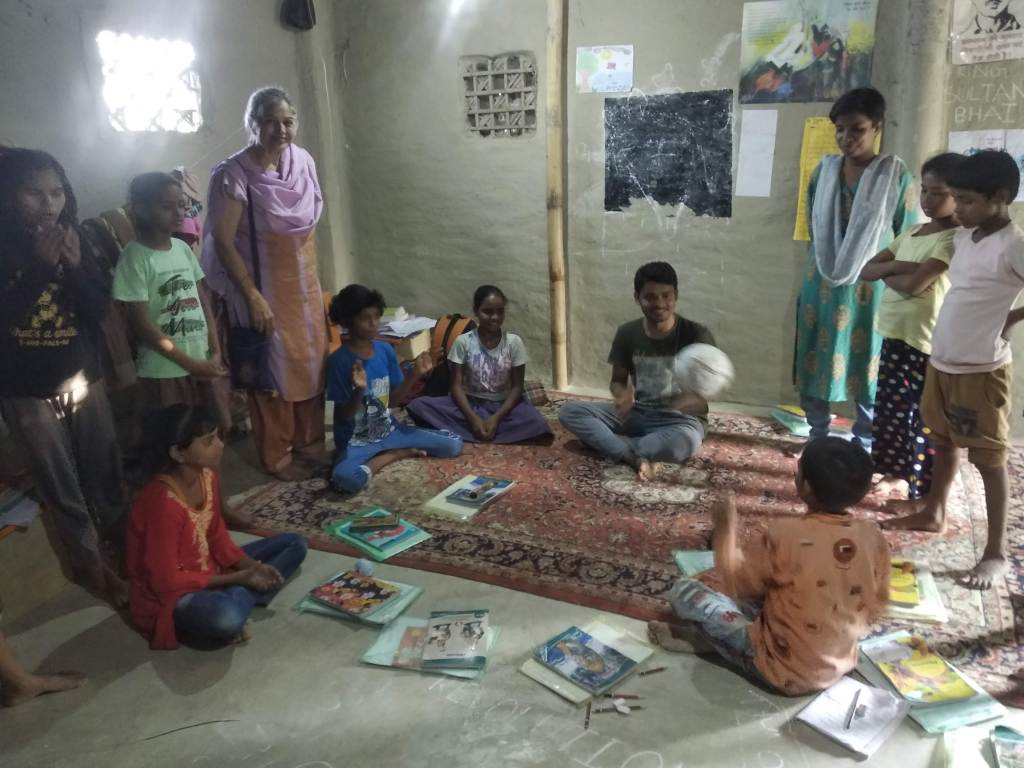
Children are learning English as a second language and it is a rigorous two hours, full of physical activity, games and fun, as also doing hand outs and work sheets. So far the children have scripted a play with the characters in a family (mother, grandmother, father, grandfather, brother, sister and others). The script of the play as played by the children was written down by Mithun and can be read here.*** 11 children came to us one month ago of which 7 could read upto three letter words. However, they did not know the meaning of the words. Some of them despite being able to read English, said “Hamen angrezi nahi aati” (We don’t know English). And I remember one of the parents being there when the kids did the play with two introductory lines “I am P. I am the ‘mother’ in this play.” And one of the parents who happened to be there watching said “Ab P bhi angrezi bolne laga”. The sense of pride was evident. There was one more interesting development, while learning the English alphabets phonetically, we realized some or in fact most of the stories were very alienating like the one about “Jack” and “Jelly” in the “refrigerator”. For children from villages in North Bihar, this story made no sense, so we asked the children if they want to make their own videos, they agreed and in the last week we have made videos for alphabets J,K,L,M,N,P,R and S, which can be found here.**** We also watched some videos, two of these were especially beautiful, telling the story of a caterpillar becoming a butterfly. You can see these here and here.******
PEER LEARNING HINDI, MATHS ASSESSMENT WITH PRATHAM
OUTDOORS AT THE JEEVANSHALA
After a hectic day, the children spend their energies on the field, playing games like kho-kho, dodge ball and kabbadi. Sports like kabaddi and kho kho enhance their team work and also create a favorable environment for girls and boys playing together. Sports like these also help girls in getting over their inhibitions and shame around the body, drilled into them from an early age, encouraging them to discover and display their strength.
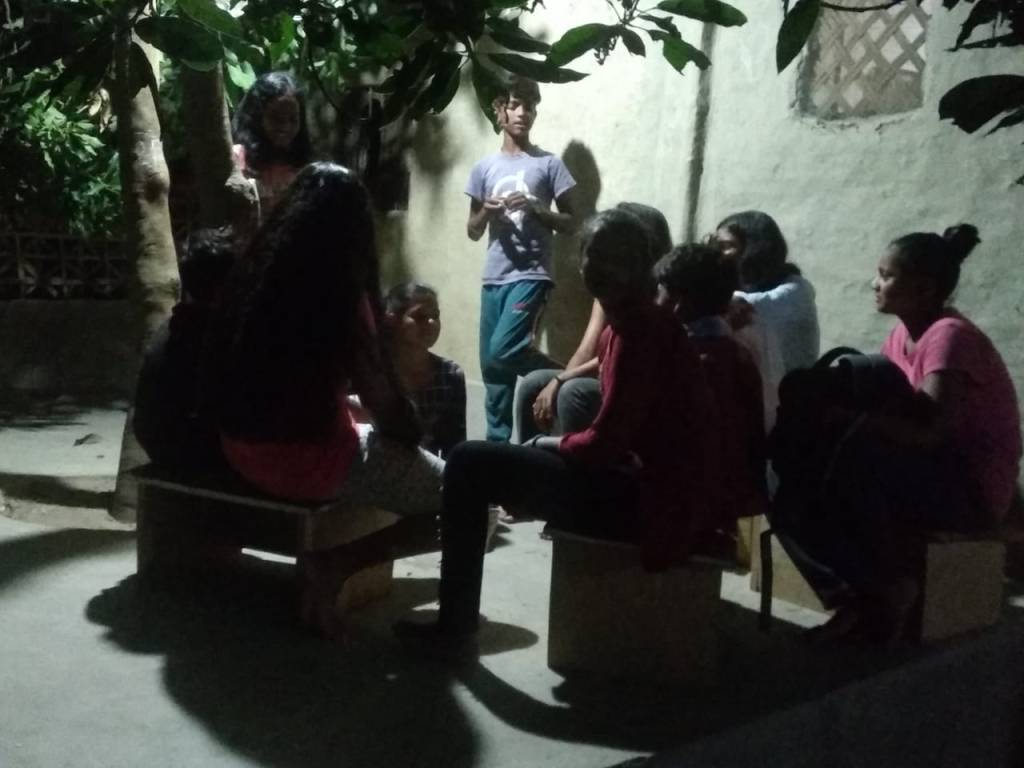
After this there is a short meeting to discuss the day long activities, any issues or problems. There is also a self study period assimilating the days work and completing tasks they have been given through the day, ably guided by Sangeeta and Mithun.
MARKING SPECIAL DAYS THROUGH THE MONTH
This month also gave us a lot of opportunity to talk about other things, we celebrated Ambedkar Jayanti on 14th April, talking about Dr. Ambedkar’s childhood, when he was like our little children at the centre. His zeal for education and his commitment to the upliftment of the downtrodden and highlighting the problem of caste was talked about.
We also discussed the idea behind the month of Ramzan, and the festivities of Eid that follow. Abu Sufiyan who is fasting, came to the centre to talk to the children and then we all shared iftari together.
IFTAR WITH BHAI ABU SUFIYAN
This month (1st May) started with the children understanding why May Day is celebrated. We watched a video shot by village children and also sang the famous song – “Workers United Will Never be Defeated”. Video of the village children can be seen here.
We are looking forward to send you more interesting updates in the coming months.
Here is a small write up from tanmay and Mithun, facilitators in the English class
So we started with a bowl of chits with 10 person names, 10 animals, 10 places and 10 things (total 40 chits). In the first round, children had to go around greeting each other. It looked a bit like this:
“Hello, what is your name?”
“My name is stick” or my name is Katihar or My name is book” or my name is kamayani or My name is jackal.
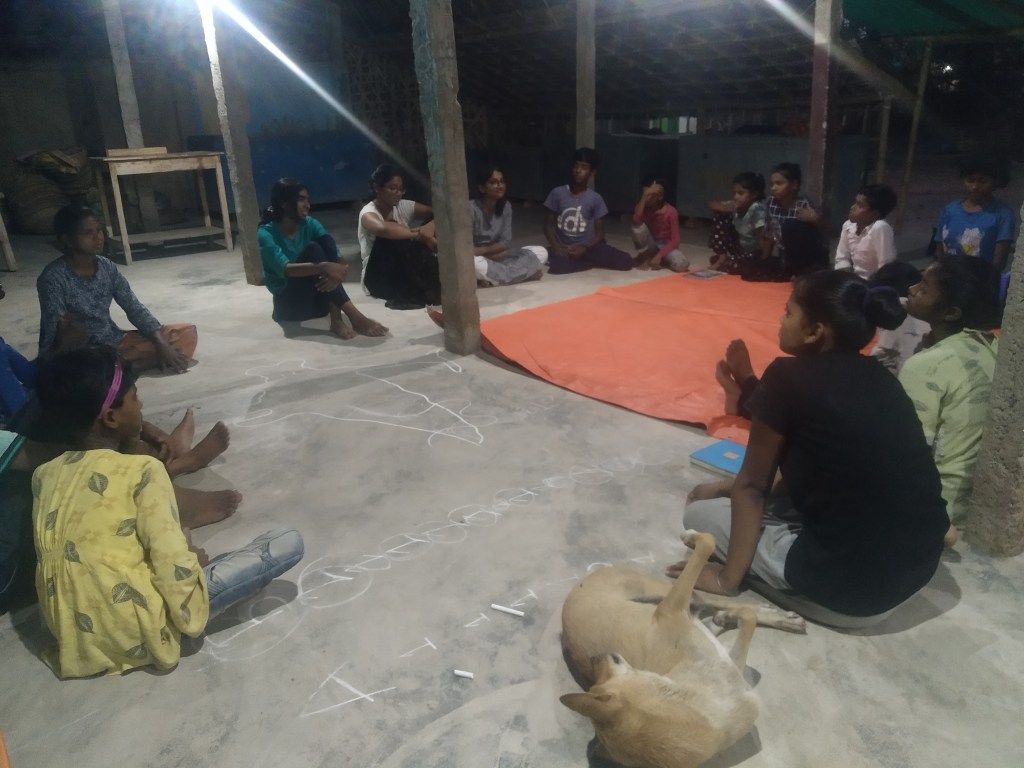
4 corners of the classroom were marked with name, place, animal, thing. And students had to run to the corner that they thought their new name came under. (So dog would go to animal, kamayani would go to person, bombay to place and so on). We repeated this 3 times. Each time, answers were discussed and those who had gotten it wrong could move over to the correct corner.
Next we did an excerCise –where we listed all the pronouns we could remember. Turned out we remembered only the subject pronouns….but many needed reminding of that also.
We went around the room and expressed what pronouns we would like used for ourselves. We talked about the importance of respecting the choice of someone’s pronoun. Sagar chose to be referred to as she..and we practised using she for sagar. We also said that sagar can change pronouns at anytime and there would be no judgement.
We tried using pronouns in a sentence, talking abt our classmates and people we knew.
While it started with us asking: “How is abhimanyu? Is he fine?
It quickly changed to kids teasing each other saying.. you are a dog. You are a goat (referring back to our first game)
Or we are lions. :P.
Tannu and rani said things like.. I am strong. We are happy.
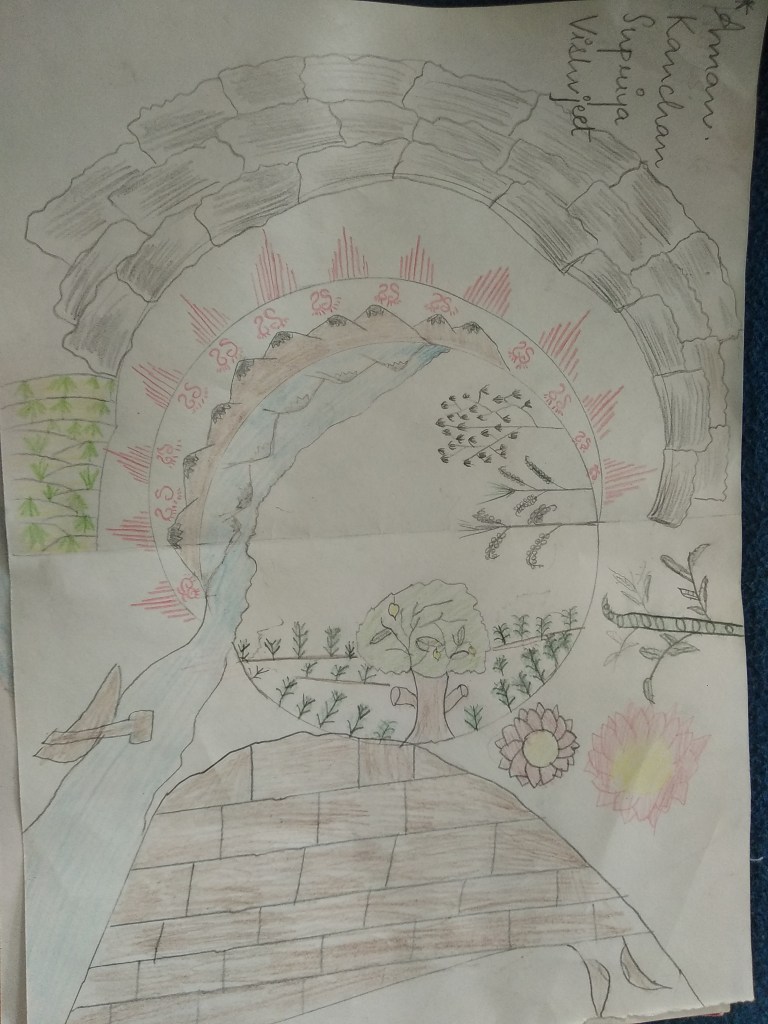
The children also have had a few art classes where they worked on expressing their creativity through colours and lines. At the beginning of each class, students are given drawing prompts such a scenery or animals. Once, they were introduced to shapes (circle, rectangle, square and triangle) and asked to draw as many different everyday objects as possible, using these shapes.
Most recently, the students learnt the art of zentangle.
Zentangles are designs that simple repetative patterns. You can do zentangle designs within a larger outline or combine them together on their own with no defined outline. What is great about zentangle art is that It doesn’t have to be complicated to be beautiful. Some images of the children’s zentangle art are attached.
This is the script of a play the children came up with, when making use of English words, learnt for family relations like mother, father, uncle, aunt, sister, brother and others. Mithun jotted down the script exactly as how the the children did it.